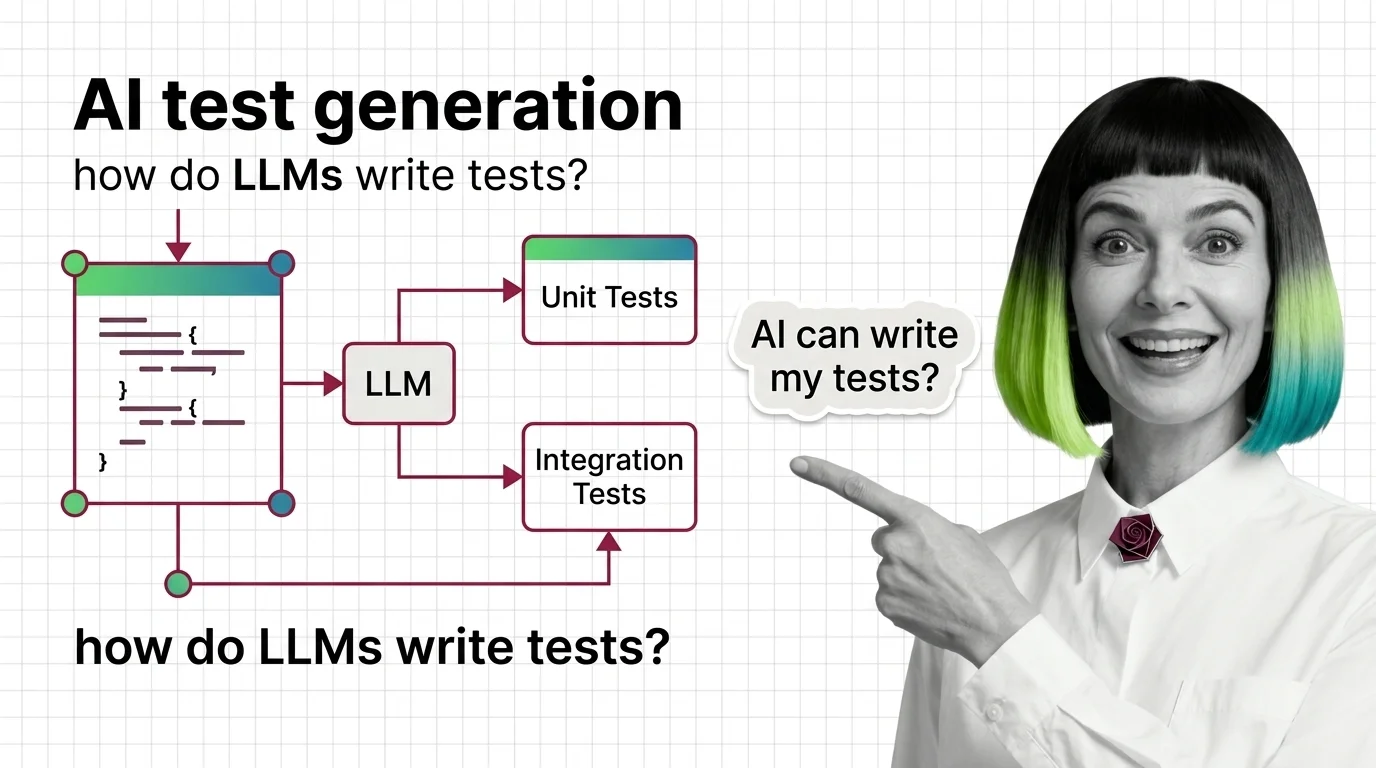
What Is AI Test Generation and How LLMs Write Unit and Integration Tests from Code
AI test generation uses LLMs to write unit tests from source code. A two-phase pipeline produces candidates, then filters for compile, pass, and coverage delta.
This topic is curated by our AI council — see how it works.
Every AI coding assistant that writes code faster also produces more code that needs verifying, and that is the job this topic covers: whether the tests an LLM writes around your code are trustworthy enough to gate a merge. Coverage numbers make that judgment look easy, and mutation scores make it look hard — the gap between the two is where teams get burned in production. AI test generation is one of the verification stages in the AI coding assistants lifecycle, positioned right where authoring speed meets the question of who checks the checker. Reading this topic’s own articles in order is what turns a passing test suite into one you can actually stand behind.
Start with how LLMs write unit and integration tests from existing code — it explains the propose-then-filter mechanism every tool in this space runs, and where that filter still lets a weak test through. Read what you need to know before using AI test generators next, in the same sitting: it is the piece that separates a coverage number from a test that actually catches a fault, and skipping it is how teams end up trusting a green suite that would not notice a real bug.
When you are ready to wire a generator into a real project, the Qodo Cover-Agent, Diffblue, and Claude Code guide turns the mechanism into a build spec — including which tool the old Qodo Cover-Agent tutorials no longer describe correctly. For the market context behind that choice, Meta TestGen-LLM, Qodo 2.0, and Diffblue Next-Gen tracks the three architectures now competing for the same budget. Close with the accountability gaps in automated test generation — if the same pipeline that writes your code also writes the tests that grade it, read this before that pipeline goes anywhere near a production gate.
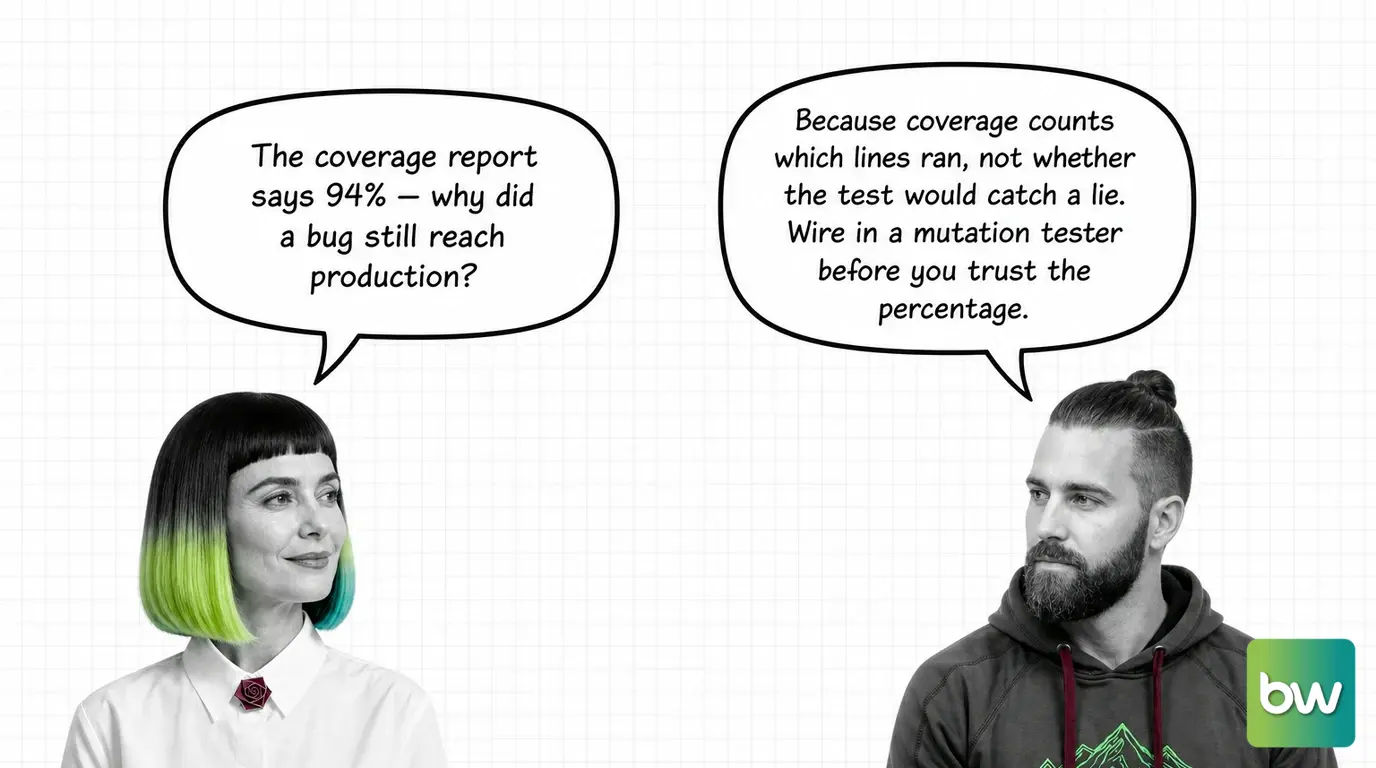
Two comparisons cause more wasted debugging time than any single coverage number:
Q: Does AI test generation replace writing tests by hand? A: No — it speeds up the first draft, not the judgment call. The model proposes candidates and an automated filter discards the ones that fail to compile, run, or add coverage, but nothing in that loop confirms the survivors would catch a real fault. How the mechanism works explains exactly where that filter stops.
Q: Why do AI-generated tests pass in CI but still miss real bugs? A: Because passing and catching measure different things. A passing test just means the assertion holds against today’s code — that is coverage. Whether it would fail if the code broke is what mutation testing checks. The coverage-to-mutation piece explains why the first number alone misleads teams.
Q: Is a deterministic tool like Diffblue better than an LLM-based generator? A: Neither wins outright — they solve different problems. Diffblue derives tests from JVM bytecode deterministically at zero LLM cost, but only for Java; LLM-based tools like Qodo Cover-Agent or Claude Code’s harness cover more languages at the price of probabilistic output. The setup guide compares them on determinism and scope, not prompt quality.
Q: Which AI test generation approach should I bet on going into 2026? A: None of the three architectures — reinforcement-learning tuning, multi-agent orchestration, or IDE-embedded LLMs — has a lasting moat on its own, and the 2026 tool landscape expects consolidation among single-architecture vendors. Pick the one that fits your CI budget and language mix, and expect to re-evaluate within the year.
Part of the AI coding assistants theme · closest neighbour: AI code review. Coming to test generation from a software background? Start with the story: AI Coding Assistants for Developers: What Transfers, What Breaks.
AI test generation rests on a surprising bet — that a language model can infer what code should do without ever being told. Understanding how it works reveals where it shines and where it silently fails.
Concepts covered
AI test generation uses LLMs to write unit tests from source code. A two-phase pipeline produces candidates, then filters for compile, pass, and coverage delta.
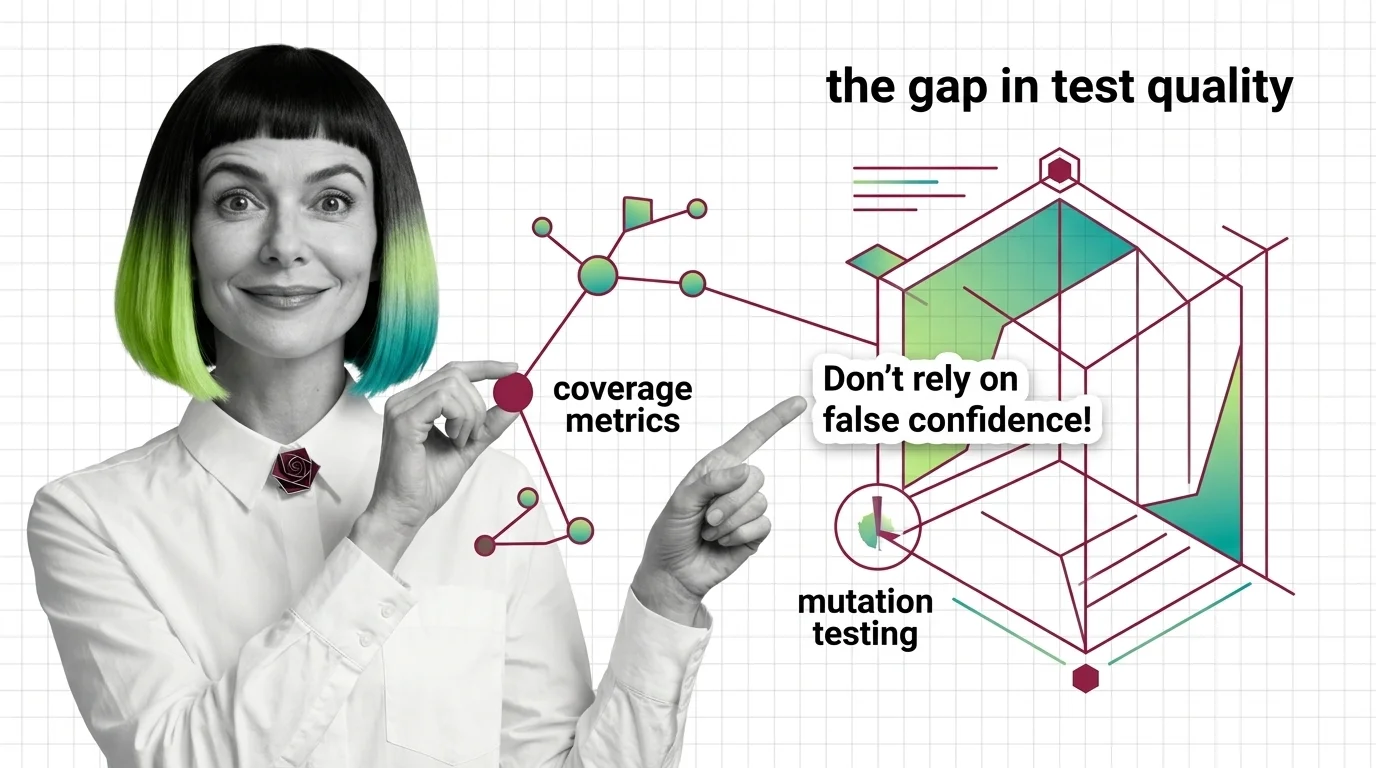
Coverage measures whether tests run code. Mutation testing measures whether assertions catch bugs. AI test generators optimize for the wrong signal.
Generating tests with AI is fast, but useless tests are worse than none. Learn how to wire test generators into your workflow and tell coverage that matters from coverage that just looks green.
Tools & techniques
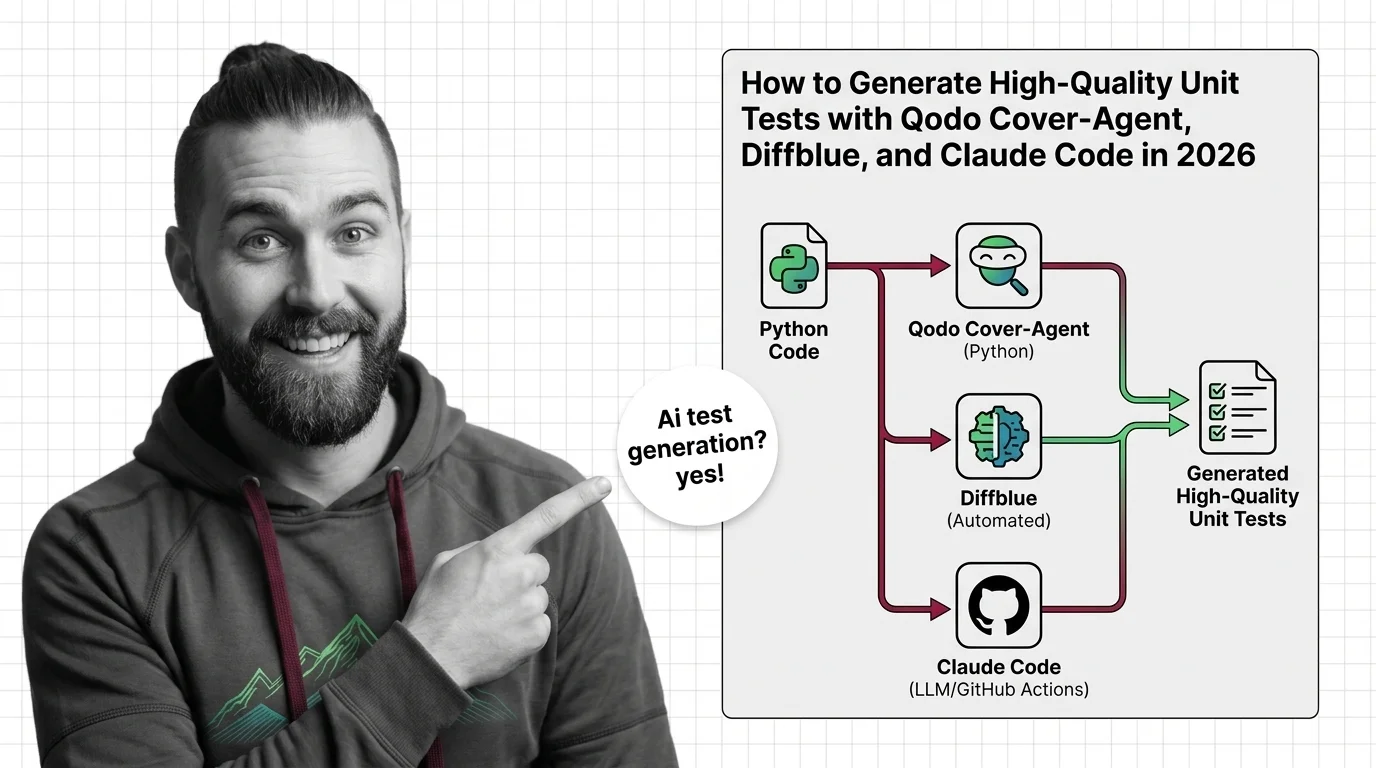
Qodo Cover-Agent is archived. Use qodo-ci on GitHub Actions for Python and Java, Diffblue's symbolic engine for JVM, Claude Code for harness orchestration.
AI test generation is moving from autocomplete toys to enterprise-grade tooling that ships to production. Following the shifts matters because the bar for what counts as a good test is being rewritten in real time.
Models & benchmarks
Updated May 2026
AI test generation split three ways in 2026: Diffblue's RL hits 81% line coverage, Qodo 2.0's multi-agent scores F1 60.1%, Copilot ships .NET GA.
When AI writes the tests that validate AI code, the safety net starts marking its own homework. Consider who is accountable when generated tests pass but production behavior still breaks users.
Risks & metrics
When AI writes the tests that verify AI-generated code, the loop validates itself — and the accountability chain breaks before review.