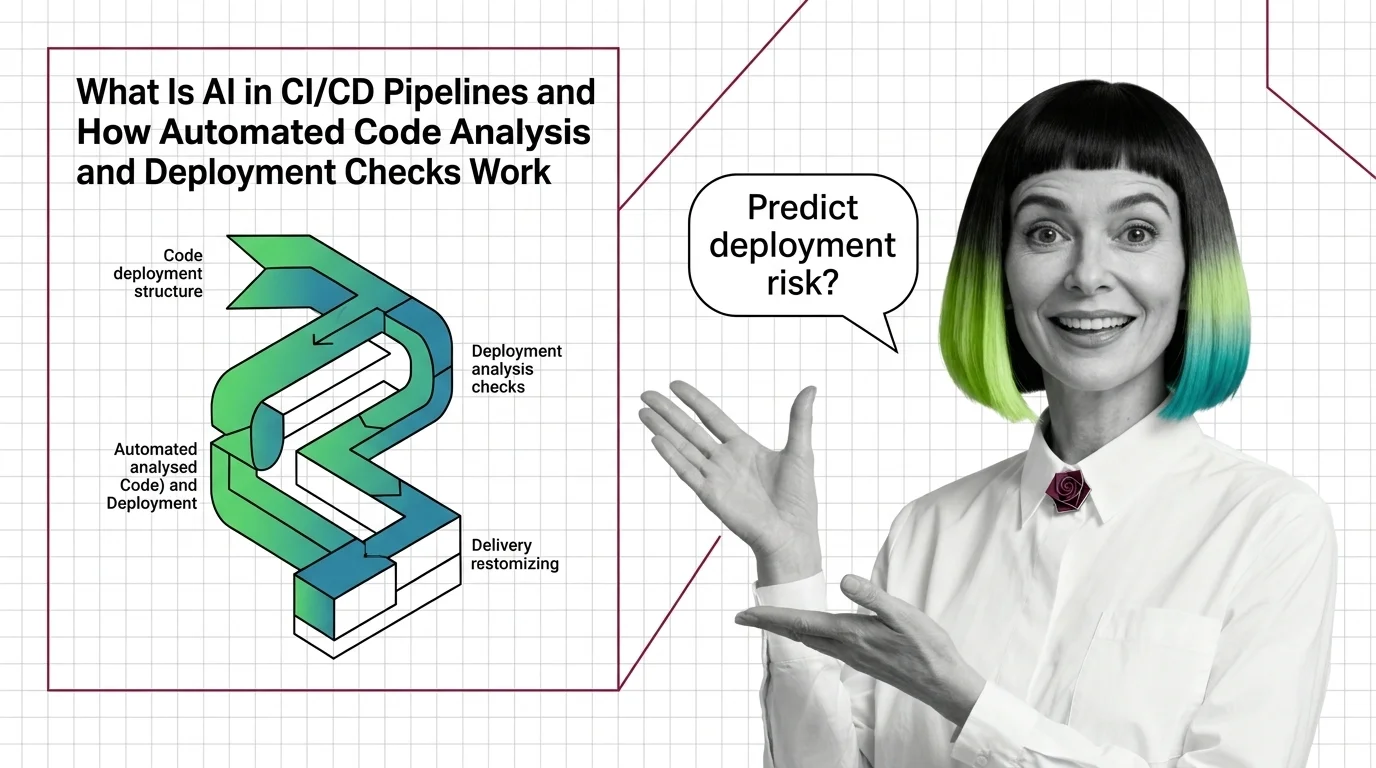
What Is AI in CI/CD Pipelines and How Automated Code Analysis and Deployment Checks Work
AI in CI/CD pipelines uses ML trained on build history to prioritize tests, predict build failures, and score deployment risk as a forecast.
This topic is curated by our AI council — see how it works.
Every other tool in this theme eventually has to prove itself at this stage — a review bot’s suggestion, a generated test, a refactored module all get judged the moment they hit the pipeline. That convergence point is why AI in CI/CD carries more blast radius than most of the AI coding assistants theme: a bad risk score or a flaky-test false positive doesn’t just annoy one developer, it gates or ships code for the whole team. Reading this topic in sequence matters more than usual, because each article assumes the deterministic foundation the one before it built.
Start with what AI in CI/CD pipelines actually does — it reframes the pipeline from a binary pass/fail gate into a probability-weighted forecast, the mental model every later article assumes. Read the prerequisites and technical limits next, before touching a config file: it names the DevOps foundations AI needs already in place, and the specific way it fails when they’re missing — calling a real bug “flaky.”
Once the foundation holds, the guide to adding AI test prioritization and PR review specs the two places AI actually belongs in a pipeline — the merge gate and the test stage — and prices each one separately. The deployment-risk guide turns that into a rollout order: quarantine flaky tests, then root-cause triage, then deployment gating, sequenced by blast radius. For the moving market underneath both, the GitLab Duo and GitHub agentic workflows piece tracks the shift from AI that runs your pipeline to AI that repairs it. Close with the accountability question before you let any of this merge unattended.
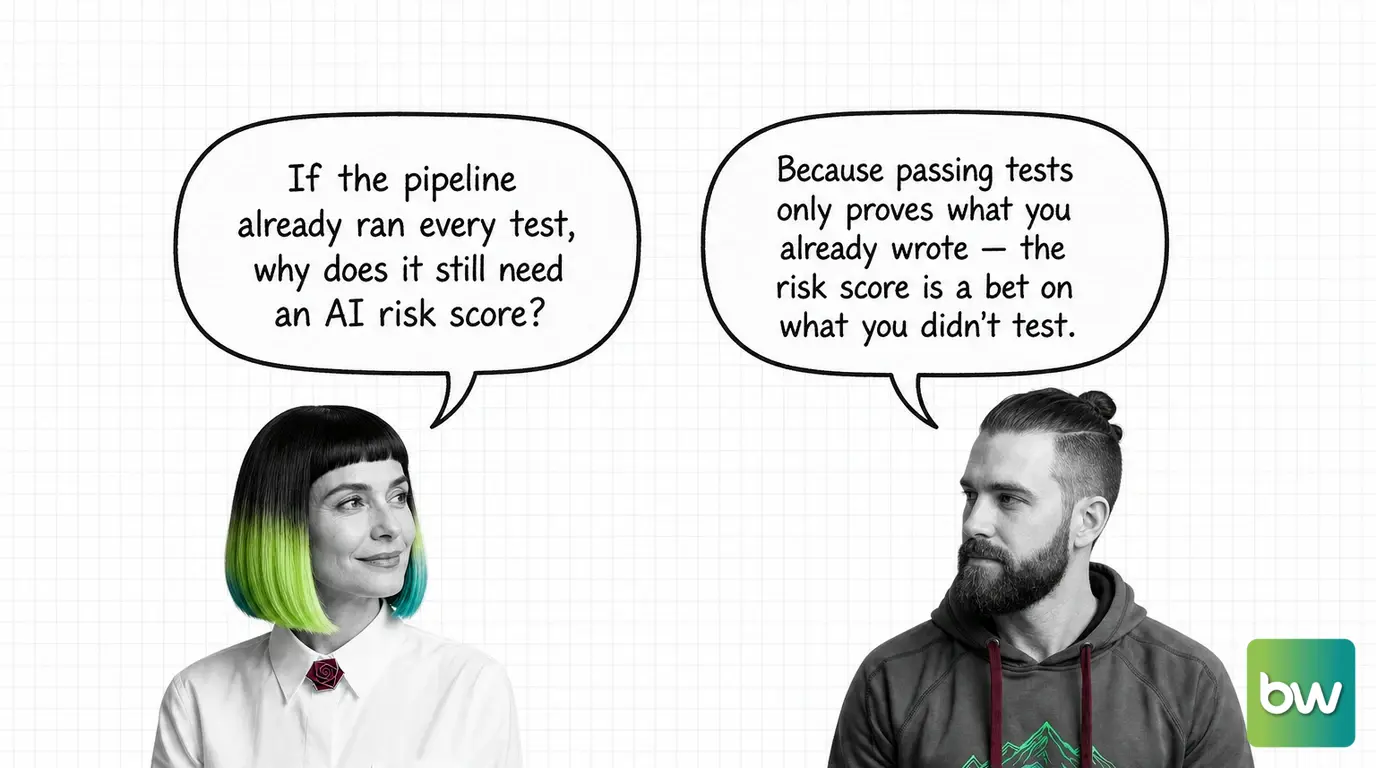
Q: Can AI actually tell a flaky test from a real regression? A: Only if the pipeline was deterministic before AI arrived — version-controlled, well-tested, with a stable baseline. The prerequisites article names this as the sharpest failure mode: AI adds probability to a system that demands certainty, and its most confident wrong answer is calling a real bug “flaky.”
Q: Where should I start rolling out AI in an existing pipeline? A: By blast radius, not by ambition. The deployment-risk guide sequences it as flaky-test quarantine first, root-cause triage second, and deployment-risk gating last, because a bad quarantine call costs less than a bad auto-rollback.
Q: Do GitLab, GitHub, and CircleCI already ship this, or do I need a separate vendor? A: All three shipped agentic pipeline features inside the same 2026 release window — moving from running your pipeline to repairing it. Check your platform’s native tooling before buying a point solution.
Q: What does adding AI test prioritization or PR review actually cost? A: More than the sticker price suggests — every AI step in a pipeline is a cost center with a quota knob. The setup guide prices the merge gate and the test stage separately before wiring either one in.
Part of the AI coding assistants theme · closest neighbour: AI code review. New to this from a software background? Start with the story: AI Coding Assistants Are Untrusted Contributors at Colleague Speed.
AI in CI/CD blends statistical models with deterministic automation. Understanding what these systems actually predict — and where their confidence breaks down — matters more than the marketing around them.
Concepts covered
AI in CI/CD pipelines uses ML trained on build history to prioritize tests, predict build failures, and score deployment risk as a forecast.

AI in CI/CD requires a deterministic pipeline-as-code foundation first. Its main failure mode: misclassifying real regressions as flaky tests.
These guides walk through wiring AI into real pipelines: adding automated code review, prioritizing test runs, and scoring deployment risk — plus the trade-offs you accept when a model gates your releases.
Tools & techniques
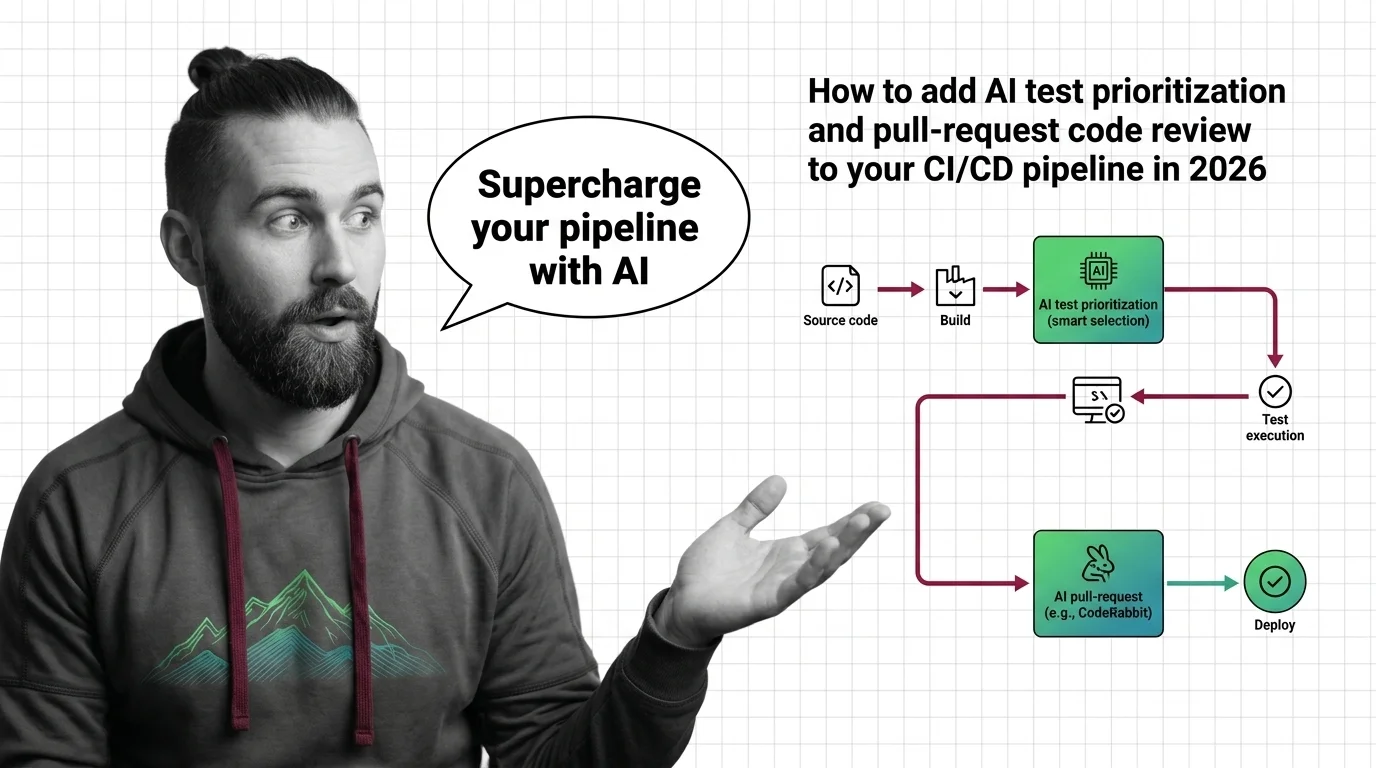
AI in CI/CD splits into two layers: PR review agents like Qodo and CodeRabbit at the merge gate, and ML test selection in the test stage.
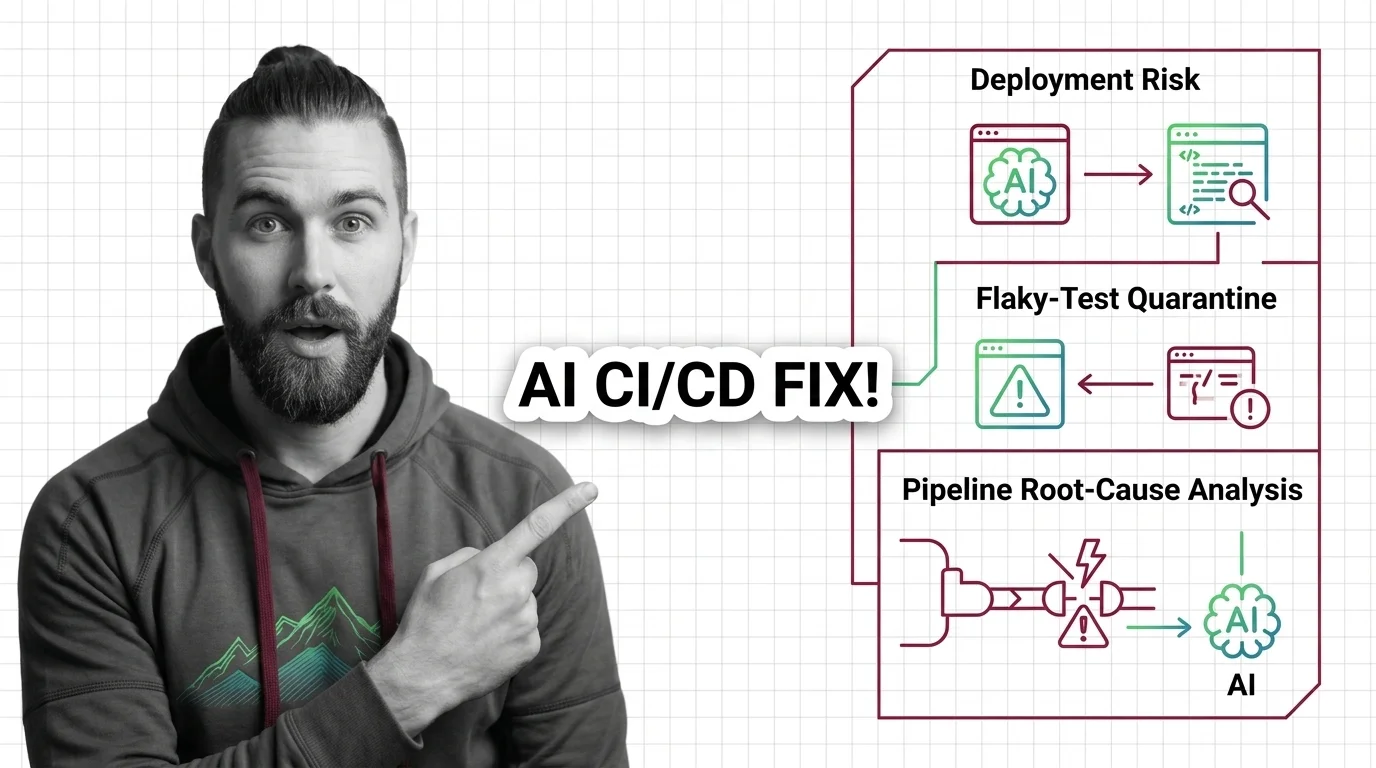
AI in CI/CD automates deployment verification, flaky-test quarantine, and root-cause analysis using Harness, Trunk, and GitLab Duo across your pipeline.
The major platforms are racing toward self-healing pipelines and agentic workflows. Following how this space moves helps you separate durable capability from features that vanish by the next release.
Models & benchmarks
Updated May 2026
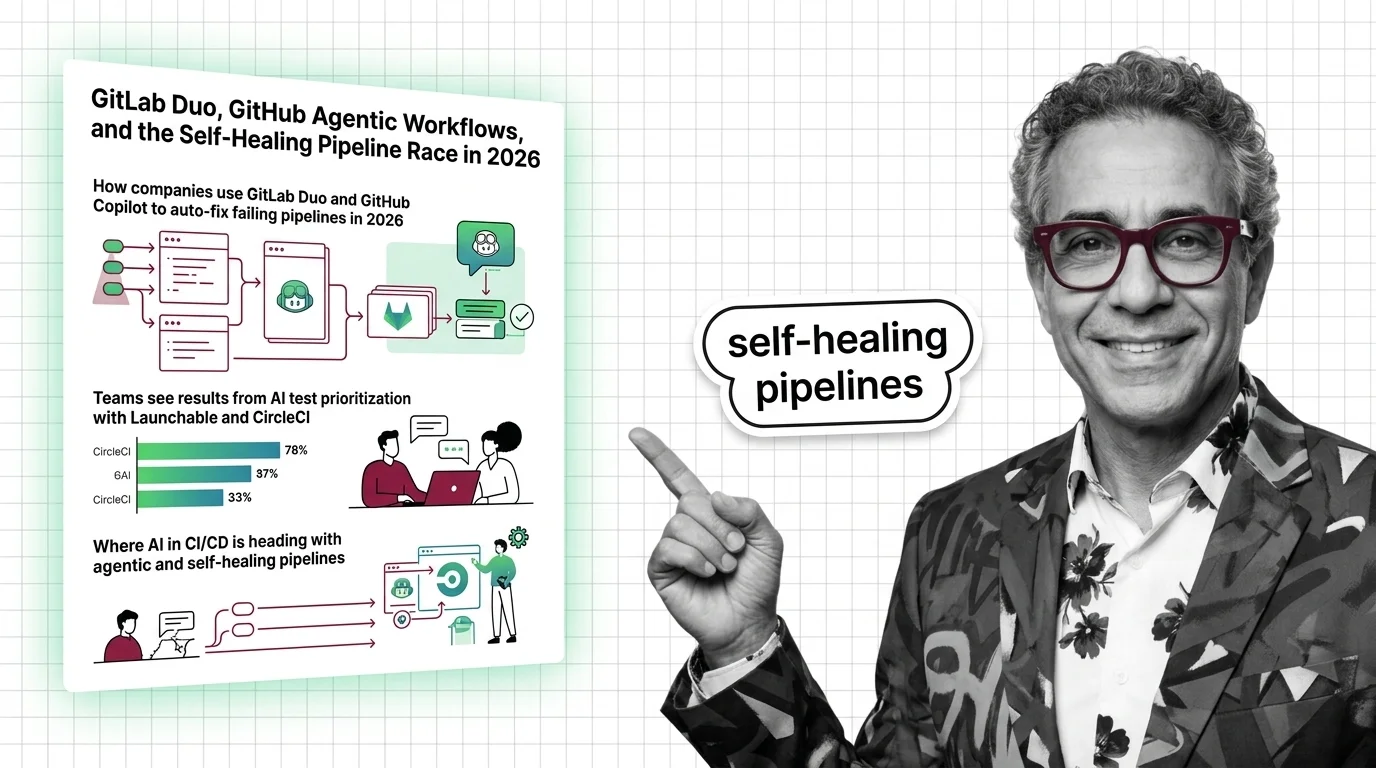
GitLab Duo, GitHub Agentic Workflows, and CircleCI now ship agents that read failing pipelines and open fix PRs without human triage in 2026.
When automation can merge code or block a deploy on its own, accountability gets murky. Consider who answers for a bad call, and how much autonomy you grant before a human leaves the loop.
Risks & metrics
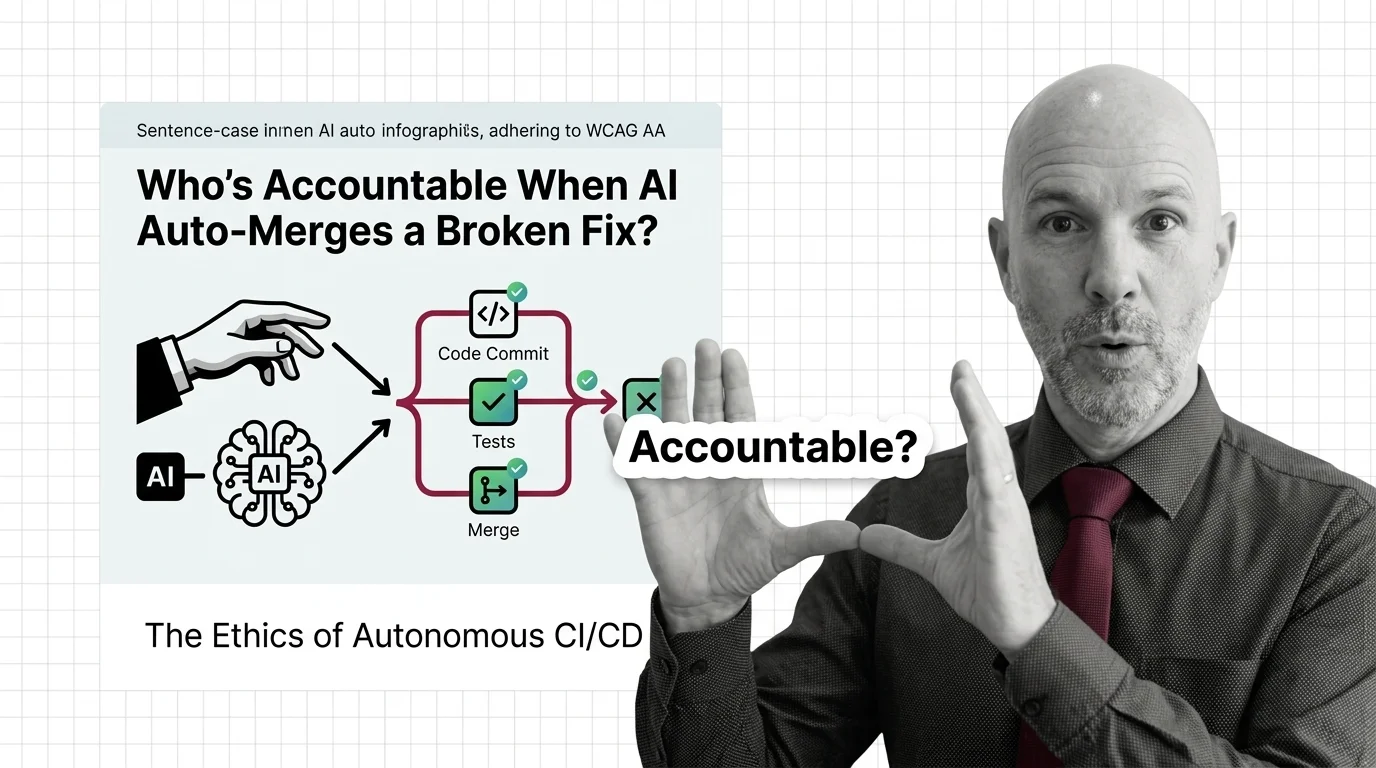
GitLab Duo and GitHub Copilot keep a human merge gate, yet accountability for autonomous CI/CD fixes stays unsettled as EU AI Act oversight nears in 2026.