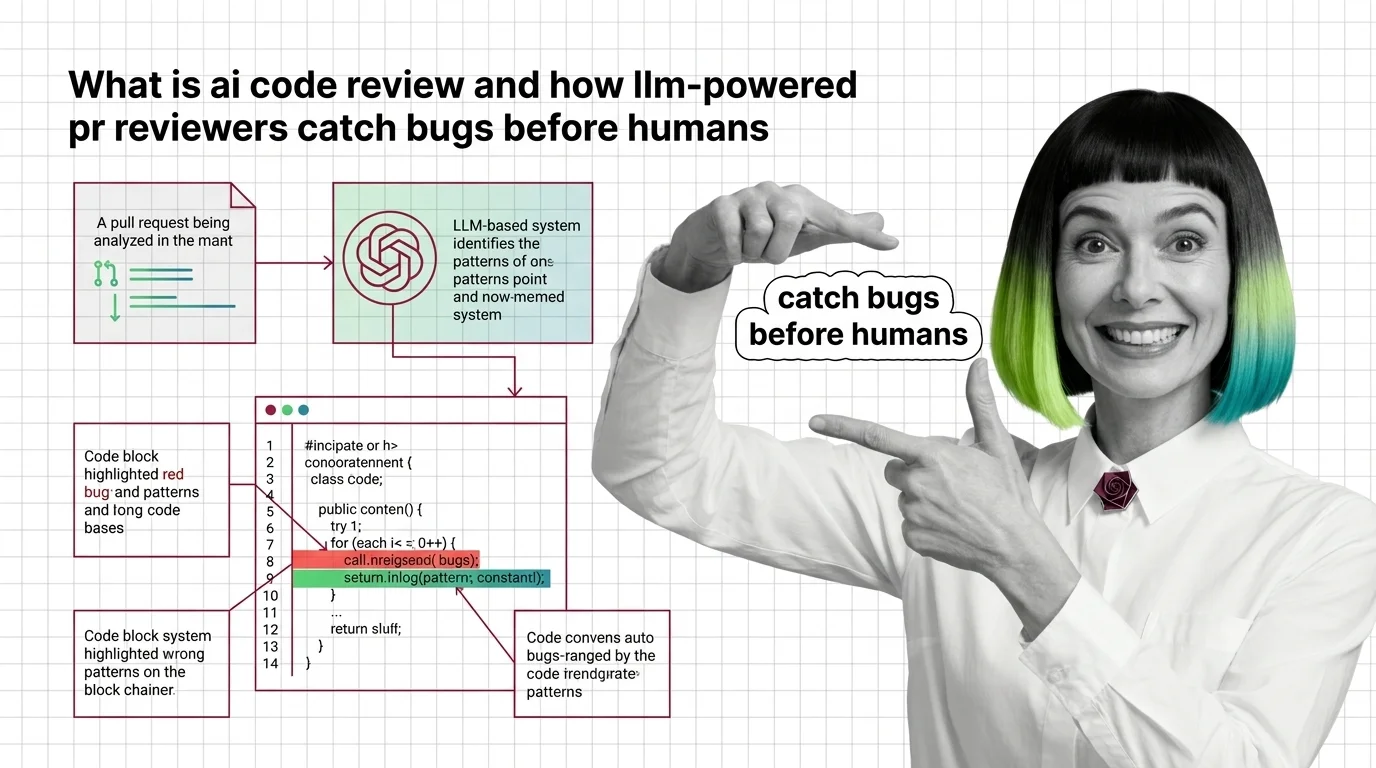
What Is AI Code Review and How LLM-Powered PR Reviewers Catch Bugs Before Humans
AI code review uses LLM agents to inspect pull requests for bugs, security flaws, and architectural drift before human reviewers see them.
This topic is curated by our AI council — see how it works.
A pull request queue that used to wait for a free senior reviewer now gets a first pass in seconds, and that first pass increasingly decides which lines a human ever reads closely. AI code review sits at the review checkpoint inside the AI coding assistants stack — the station right after a change is written and right before it merges, where a bot’s judgment has started carrying real consequences. For a team shipping AI-generated code faster than any one engineer can read it, what this layer actually catches, and what it quietly waves through, is not a detail — it decides what ships.
Start with how LLM-powered PR reviewers catch bugs before humans — it lays out what the bot is actually doing to a pull request: building a model of the whole repository, then writing inline comments the way a senior engineer would, minus the fatigue. Follow with the prerequisites and hard limits of LLM bug detection before you trust a single verdict — it separates the three subsystems doing the work and names exactly where each one breaks.
Once the mechanism is clear, the integration guide for Qodo, CodeRabbit, and Greptile turns it into a working setup — repo config, rollout order, and how to validate a bot the same way you’d validate a junior reviewer. For the market context behind that choice, the 2026 Martian Bench race tracks which reviewers are actually separating from the pack on an independent benchmark. Close with what gets lost when a model approves the pull request — read it before you route review through a bot without deciding who answers when the defect ships.
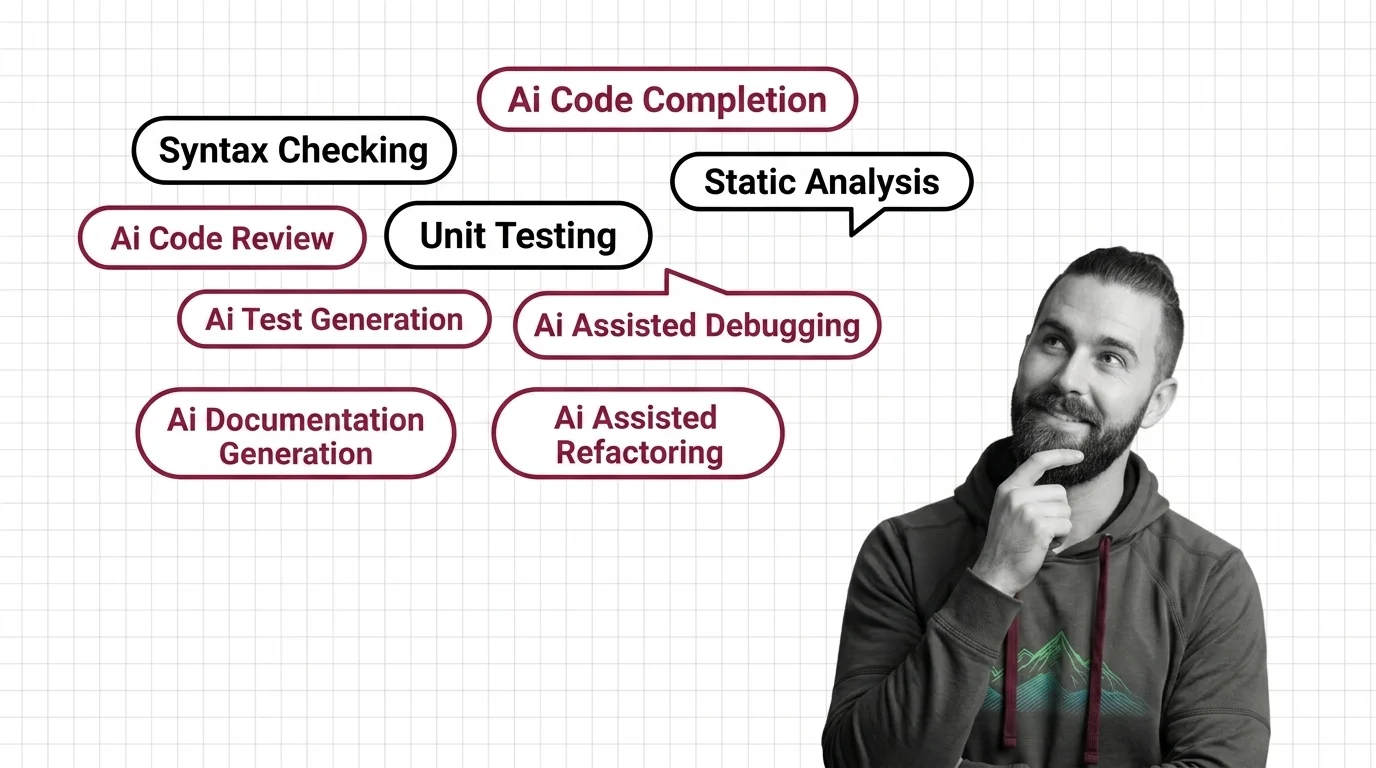
AI code review’s job blurs into two neighbours readers usually assume it already covers.
AI code review is not AI test generation. A reviewer reads a diff and flags what looks wrong before merge; a test generator writes the executable checks that catch what looks wrong later, at runtime. The reviewer is a retrieval layer plus a static analyzer plus an LLM judgment call — none of those three write assertions, so a clean review says nothing about whether the change is covered by a test that would fail if it broke.
AI code review is not AI in CI/CD pipelines. Review comments on a pull request’s content; the pipeline decides, from many signals, whether a change is safe to merge and deploy. A team can wire an AI reviewer as one input to that gate, but the reviewer itself has no opinion on rollout risk, flaky tests, or rollback — that is the pipeline’s job, not the bot commenting on your diff.
Traditional linters and static analyzers are the third neighbour worth naming, even without a page of their own here: they are one layer inside an AI code reviewer, not a competing product — a rules engine catching known patterns while the LLM layer reasons about the ones no rule was written for.
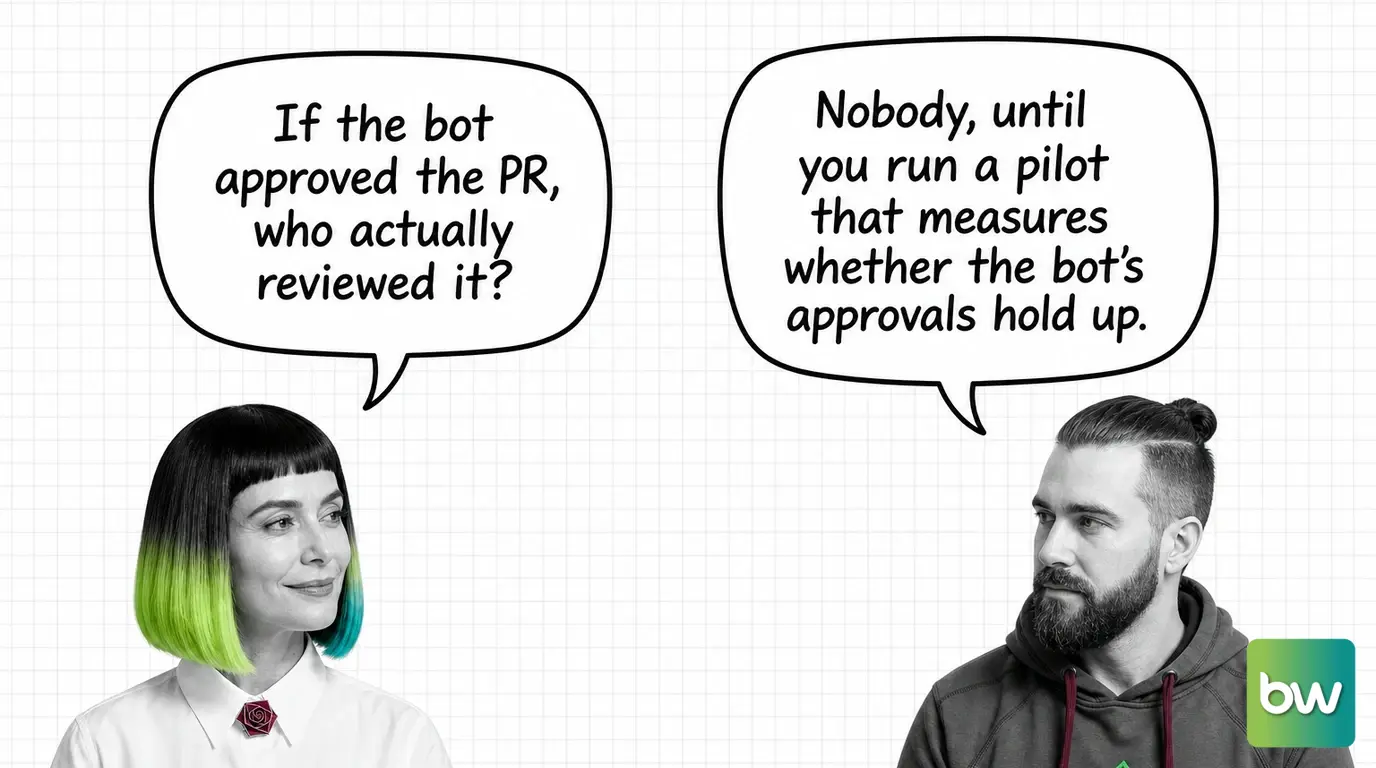
Q: Do I still need a human reviewer if a bot already approved the pull request? A: Yes — a bot’s approval doesn’t resolve who answers when a defect ships, and that accountability gap is exactly what most teams haven’t rebuilt yet. The hidden costs of AI code review argues a bot dissolves the apprenticeship human review used to carry, not just the workload.
Q: Should AI code review or AI test generation catch a bug first? A: Neither replaces the other — review inspects a proposed change’s content, reading the whole repository to comment like a senior engineer, while test generation writes executable checks that only run after the code ships. A clean review is not proof of test coverage.
Q: Why did an AI code reviewer approve a pull request that still shipped a bug? A: Because the reviewer stacks a retrieval layer, a static analyzer, and an LLM guess, and each layer has a documented failure mode, including confident fixes for problems that don’t actually exist. The prerequisites piece names where each layer breaks.
Q: How do I know if an AI code review pilot is actually working? A: Measure it like you would a junior reviewer — run it on one repository, start on the calmer detection profile, and track how often the team acts on its comments for two weeks before expanding. The integration guide walks through the rollout.
Q: Should I pick an AI code review tool by benchmark ranking alone? A: Use the ranking to shortlist, not to decide — the 2026 benchmark race shows leaders shifting between snapshots, and a tool that tops an independent test can still miss your team’s own codebase and conventions. Pilot the shortlist on one repo before committing.
Part of the AI coding assistants stack · closest neighbour: AI test generation. Coming to code review from a classical engineering background? Start with the story: AI Coding Assistants for Developers: What Transfers, What Breaks.
AI code review sits between static analysis and human judgment, using LLMs and retrieval to reason about pull requests in context. Start here to see what these reviewers can actually detect and where they hit hard limits.
Concepts covered
AI code review uses LLM agents to inspect pull requests for bugs, security flaws, and architectural drift before human reviewers see them.
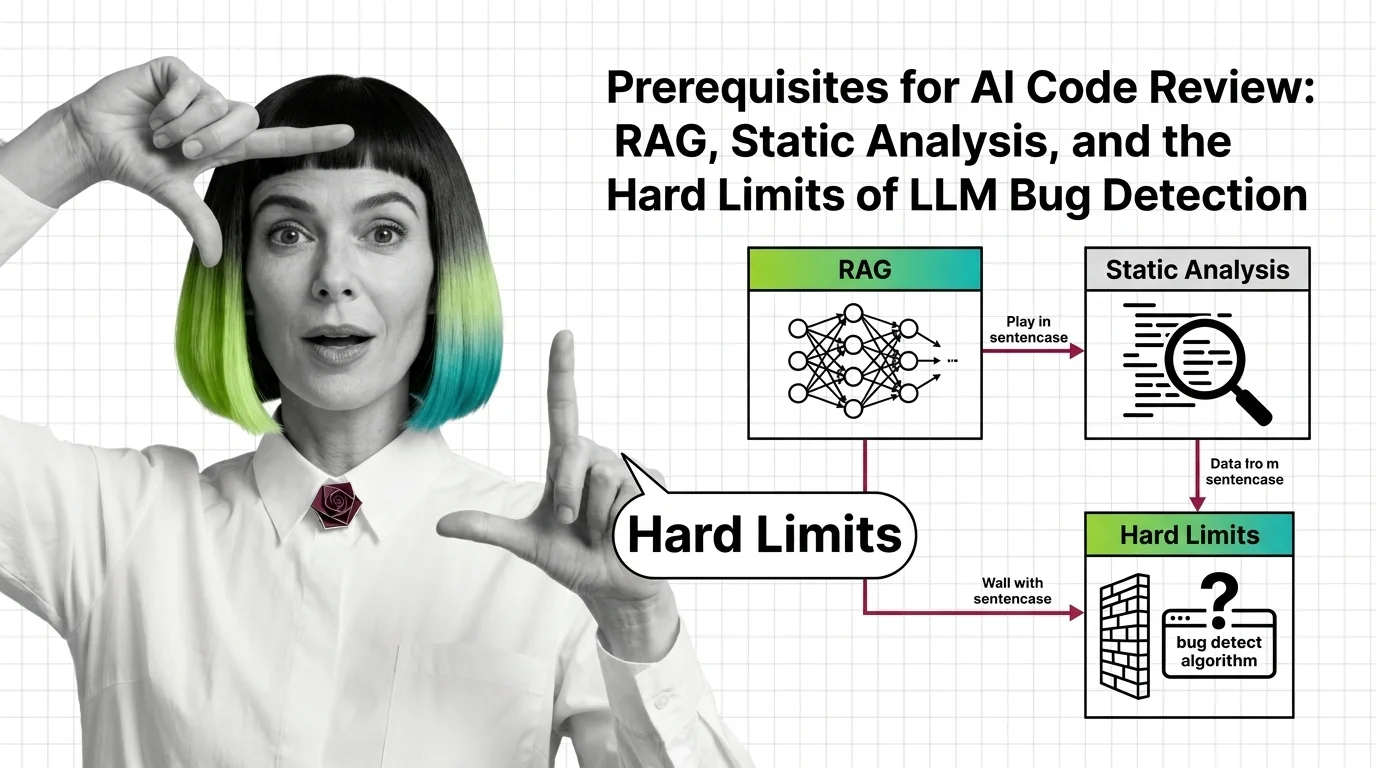
AI code review combines retrieval-augmented context, static analysis, and LLM triage. Without grounding, models hallucinate one in five package names.
Wiring an AI reviewer into your repo is mostly configuration, not magic, but the defaults rarely match how your team actually works. These guides walk through realistic integration with mainstream PR review bots on GitHub.
Tools & techniques
An AI coding assistant is an untrusted contributor at colleague speed. Route its output through the same review, CI, and merge gates you already trust.
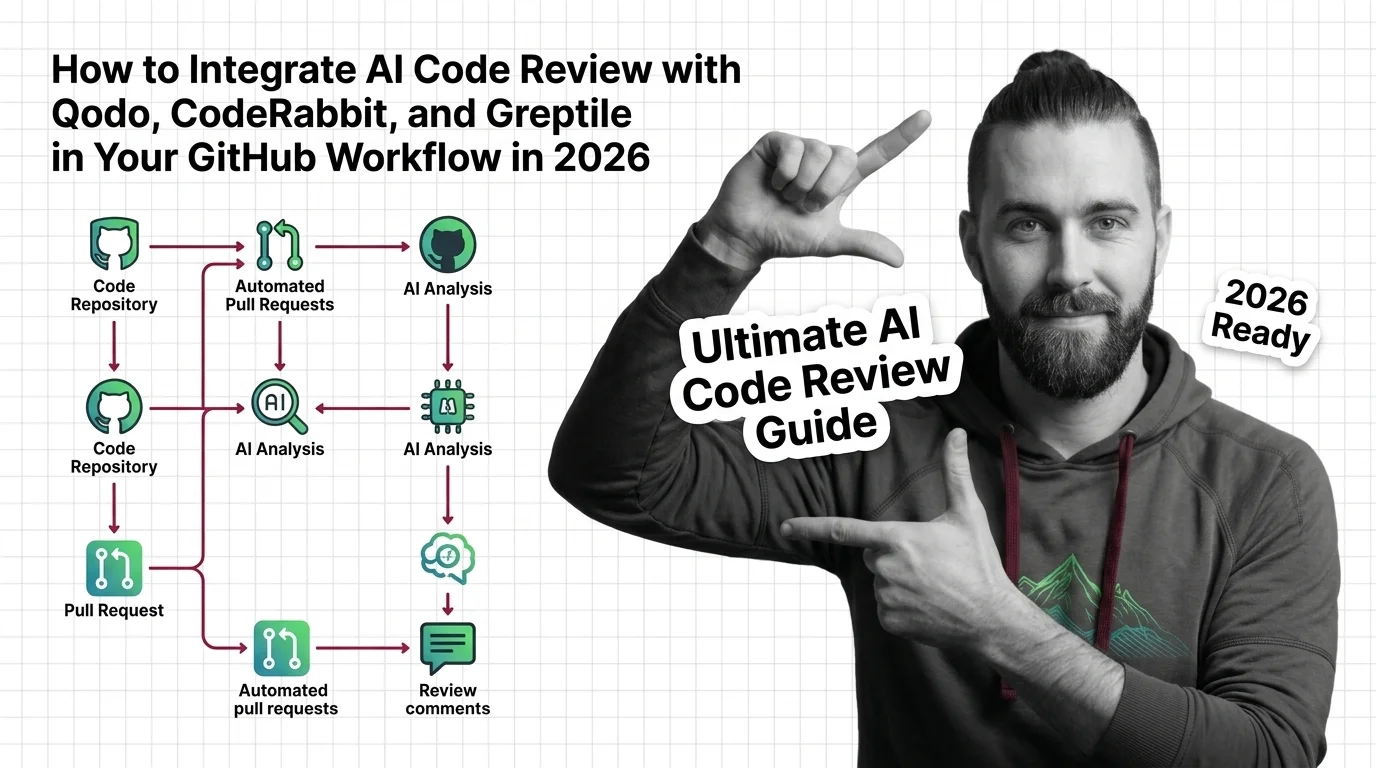
Integrate AI code review into GitHub with Qodo, CodeRabbit, or Greptile. Spec the review surface, pin the config, and validate bot PR calls before rollout.
The PR review bot market is moving fast, with new benchmarks and players reshuffling the leaderboard every few months. Following these shifts helps you pick tools that will still be credible by your next renewal.
Models & benchmarks
Updated May 2026
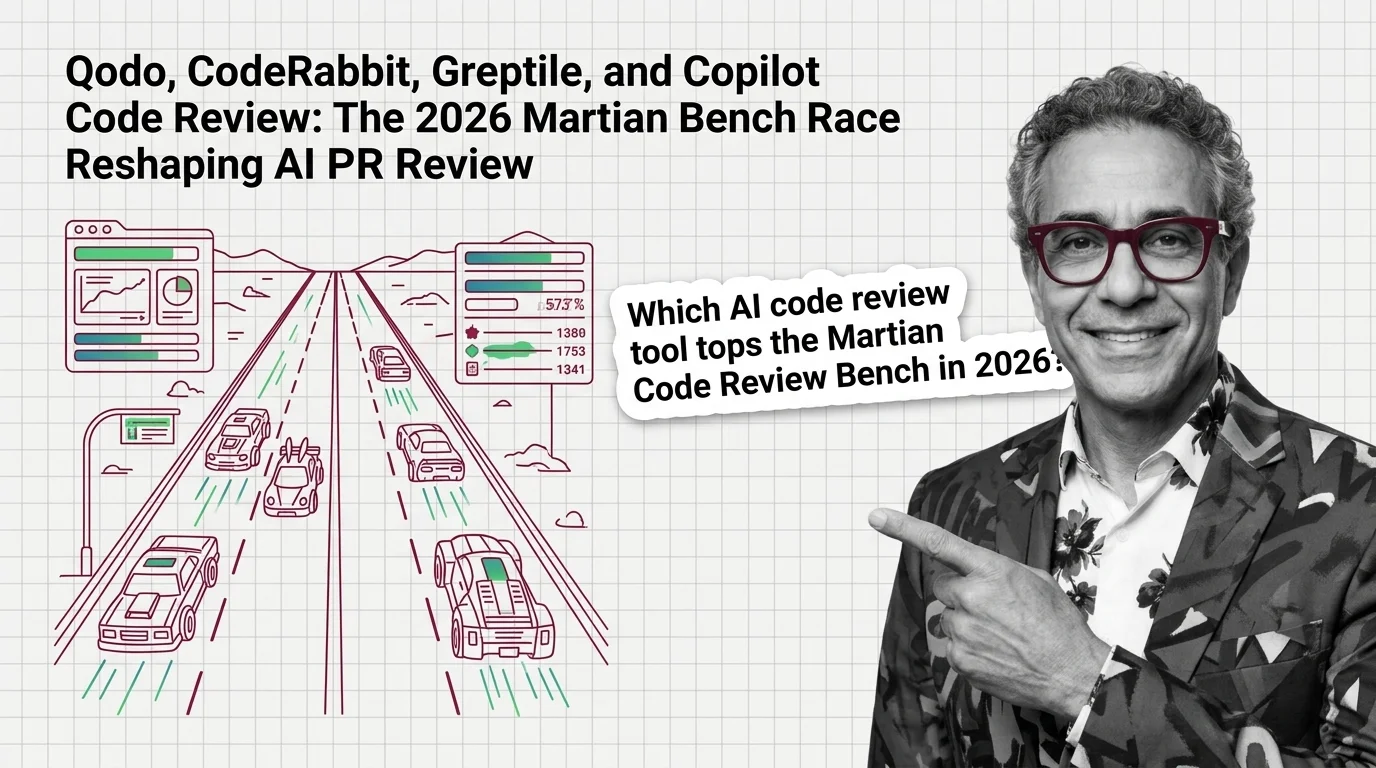
Martian's Code Review Bench collapsed AI PR review marketing into F1 scores against ~300K real pull requests. Qodo's $70M Series B confirmed the shift.
Letting a bot approve pull requests changes who is accountable when bugs ship, and quietly reshapes how junior developers learn. Read these pieces before you treat AI review as a substitute for human judgment.
Risks & metrics
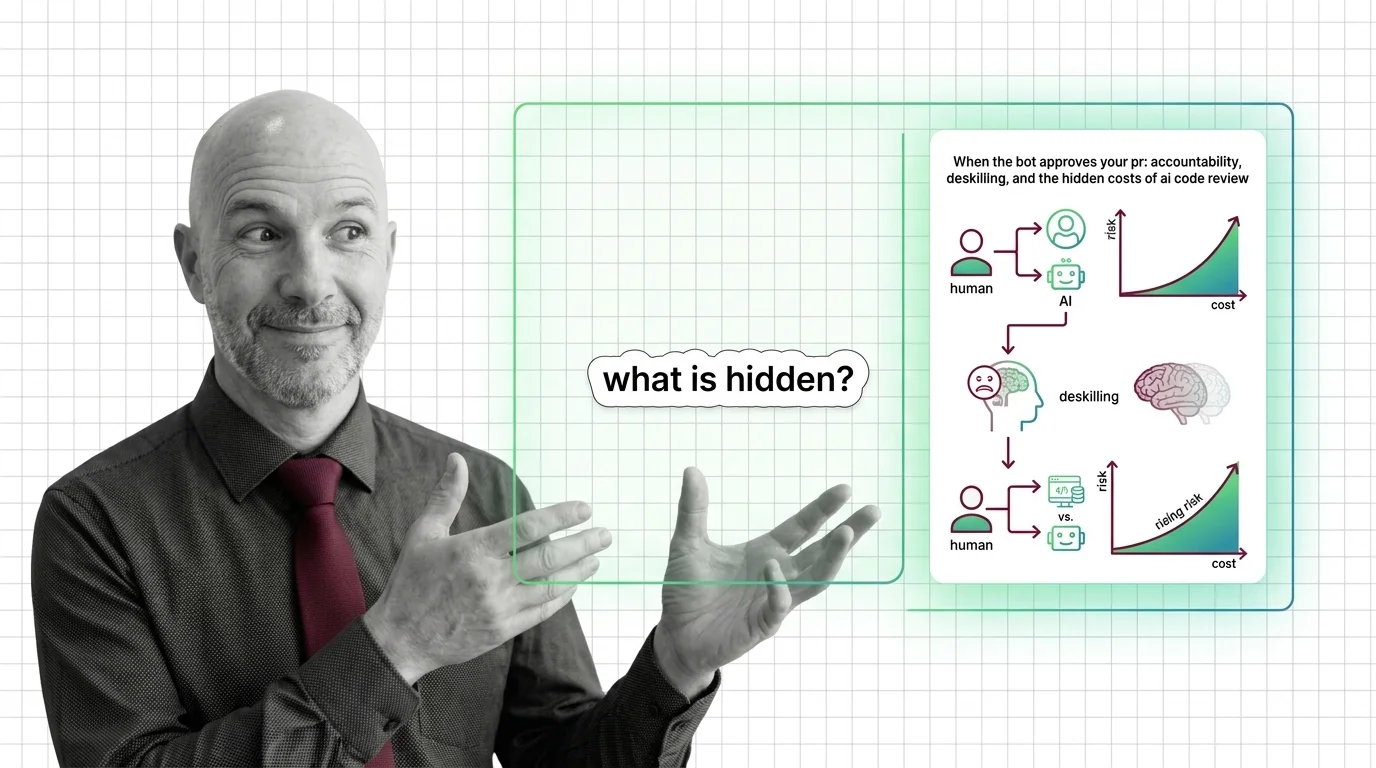
AI code review tools miss SQL injection, XSS, and insecure deserialization defects. Accountability for the merged code remains an unresolved question.