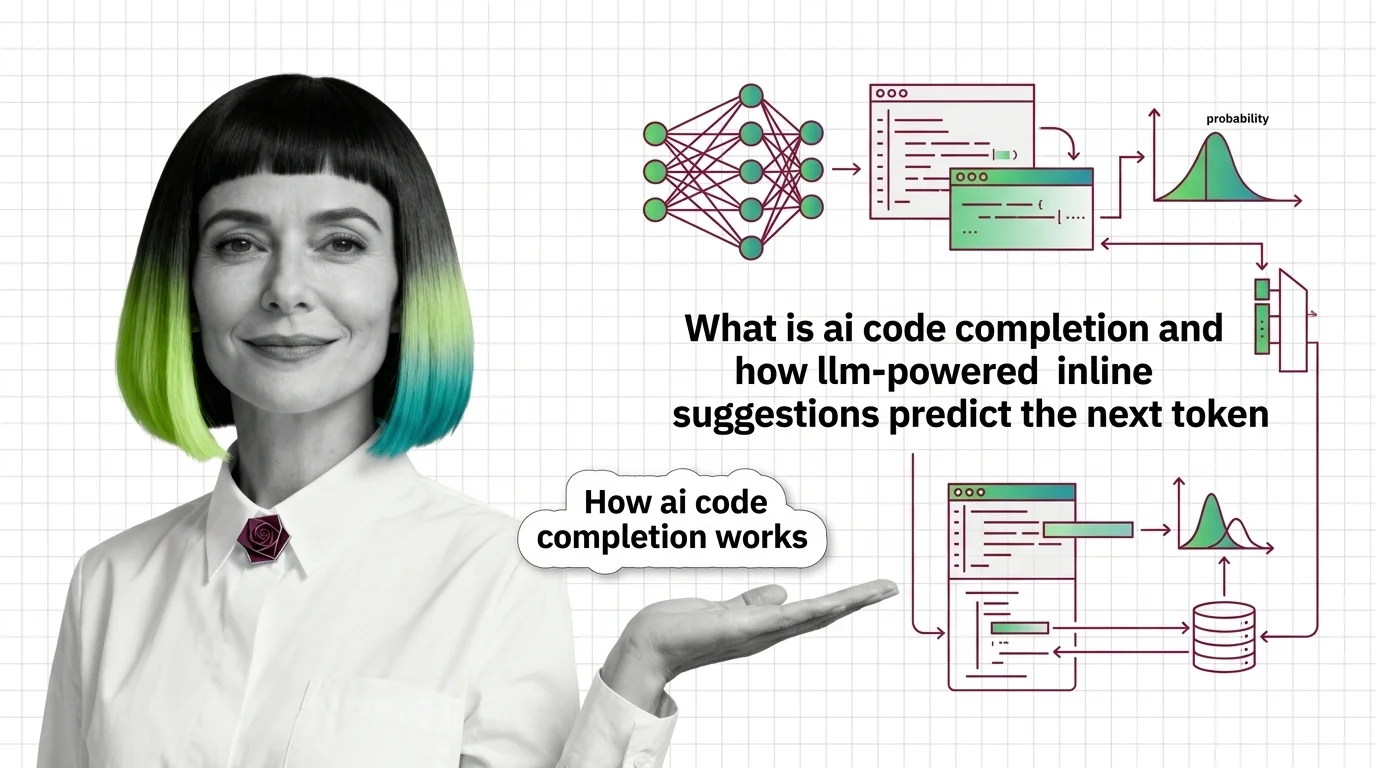
What Is AI Code Completion and How LLM-Powered Inline Suggestions Predict the Next Token
AI code completion uses Fill-in-the-Middle prompting on small, latency-optimized LLMs that score tokens against code before and after the cursor.
This topic is curated by our AI council — see how it works.
Inline code completion is the AI coding assistant most developers touch before any other — it is running in the editor before a team ever debates code review bots or refactoring agents. That makes it the highest-leverage place to build accurate instincts about what these models can and cannot do, instincts every other tool in the AI coding assistants theme will lean on. The suggestions look effortless; the mechanism, the market, and the questions underneath them are not.
Start with what AI code completion is and how LLM-powered inline suggestions predict the next token — it opens the gap between your keystroke and the gray ghost text, tracing the suggestion back to the tokenizer and the model reading the code around your cursor. Read the prerequisites and technical limits piece in the same sitting: it names the context-window and latency-budget constraints that explain why the same model feels sharp in one file and stumbles in another.
Once the mechanism is settled, the Cursor Tab, GitHub Copilot, and Continue setup guide turns it into a working stack — spec latency, context, privacy, and cost before picking an editor, not after. For the market context behind that choice, the 2026 inline completion race after the Anysphere-Supermaven acquisition tracks how the category consolidated around who owns the model backend. Close with the licensing, surveillance, and skill-atrophy questions underneath the convenience — worth reading before a team standardizes on a tool, not after.
Three neighbours get confused with this topic, and each confusion points debugging or buying decisions the wrong way.
Q: Can code suggested by an AI completion tool create legal or skill risk for a team? A: Yes, on two fronts: suggestions are trained partly on code whose license terms rarely travel with the output, and constant reliance can erode the debugging instincts a suggestion short-circuits before a developer forms them. The licensing, surveillance, and skill-atrophy questions underneath completion names both risks plainly.
Q: How does GitHub Copilot’s move to usage-based credits change how a team budgets for completion? A: Every accepted suggestion above the plan’s included quota now draws down a metered credit pool, so the planning question shifts from “which editor” to “how many premium requests does our peak day actually need.” The 2026 setup guide walks the plan-sizing math.
Q: Is inline completion enough, or do I also need a separate AI code review tool? A: They cover different moments and neither substitutes for the other: completion accepts or rejects one suggestion as you type, while AI code review reads the whole diff afterward, catching cross-file issues no single inline suggestion could see. Most teams that ship fast run both.
Q: Does a faster completion engine also mean better suggestions? A: Not necessarily — serving speed and suggestion quality are separate engineering problems. Techniques like speculative decoding cut the latency between keystroke and suggestion without touching which candidate the model picks. The prerequisites and technical limits explainer separates the two axes.
Part of the AI coding assistants theme · closest neighbour: code LLMs. Coming to this from years of writing code by hand? Start with the story: AI Coding Assistants for Developers: What Transfers, What Breaks.
AI code completion looks like simple autocomplete, but underneath it is a language model predicting tokens from a carefully assembled context window. Understanding that pipeline explains both its uncanny accuracy and its sudden failures.
Concepts covered
AI code completion uses Fill-in-the-Middle prompting on small, latency-optimized LLMs that score tokens against code before and after the cursor.
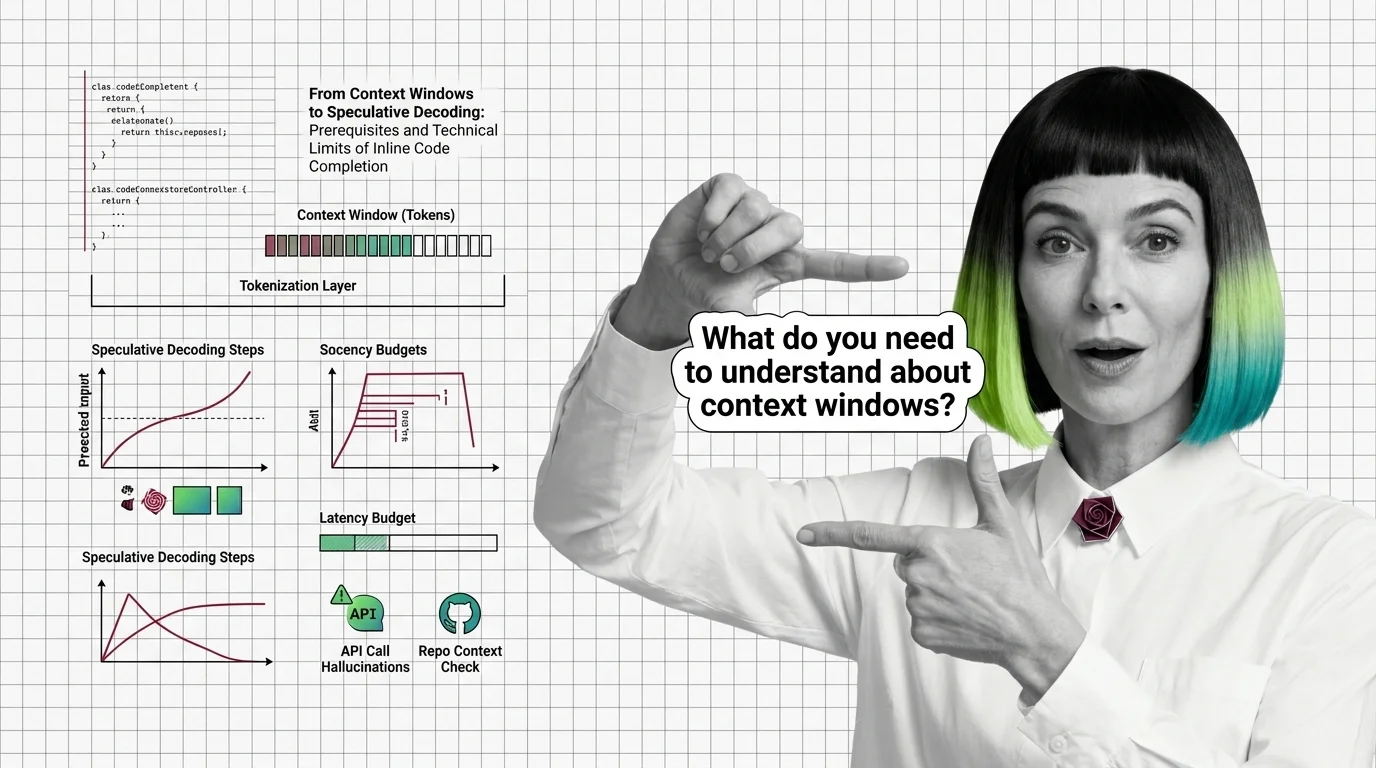
Inline AI code completion rests on four prerequisites: tokenization, context windows, FIM, and speculative decoding. Each explains a failure mode.
Setting up inline completion well means choosing a tool, tuning its context sources, and shaping team habits around when to accept, edit, or reject suggestions. Practical guides walk through the configuration choices that actually move productivity.
Tools & techniques
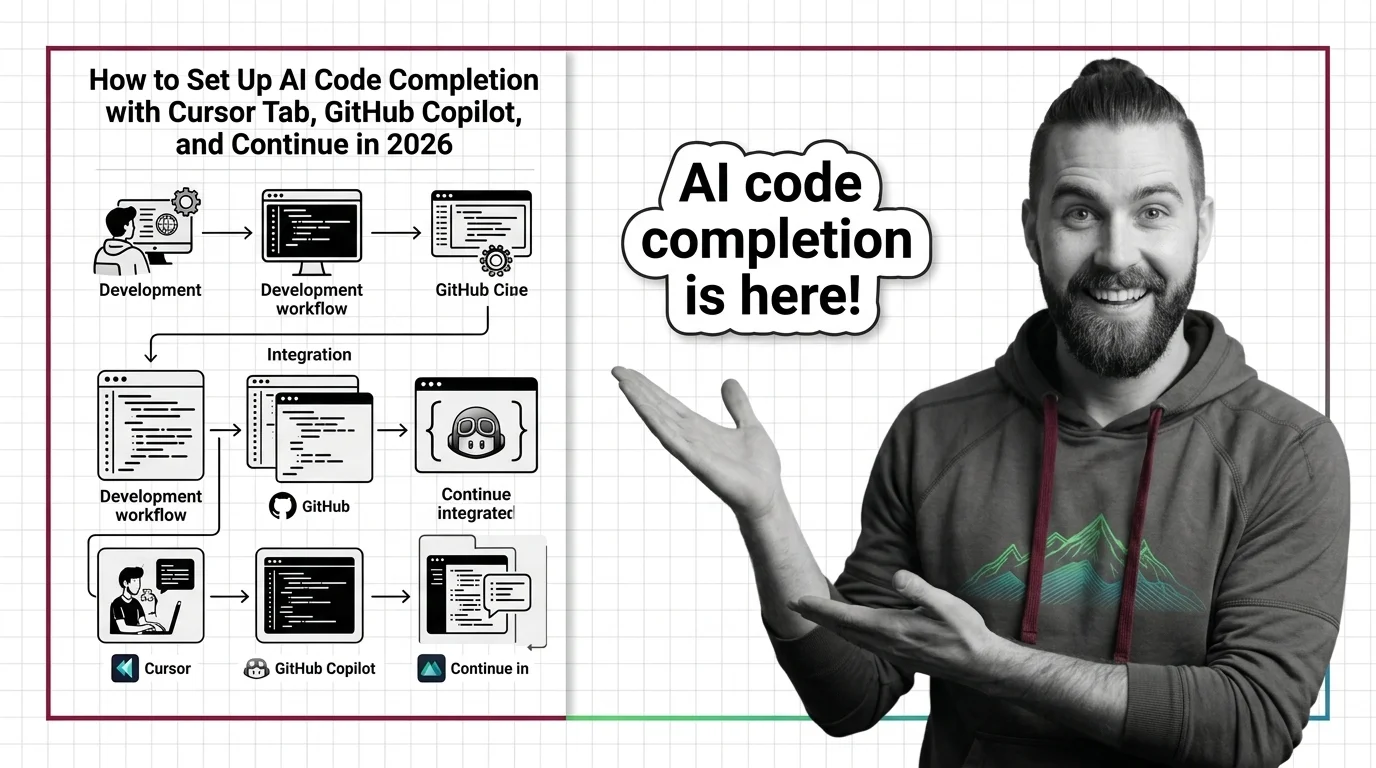
Set up AI code completion with Cursor Tab, GitHub Copilot, or self-hosted Continue plus Ollama. Copilot moves to usage-based billing on June 1, 2026.
The inline completion market is shifting fast as latency wars, custom small models, and IDE consolidation reshape who leads. Tracking releases and acquisitions reveals where coding workflows are heading next.
Models & benchmarks
Updated May 2026
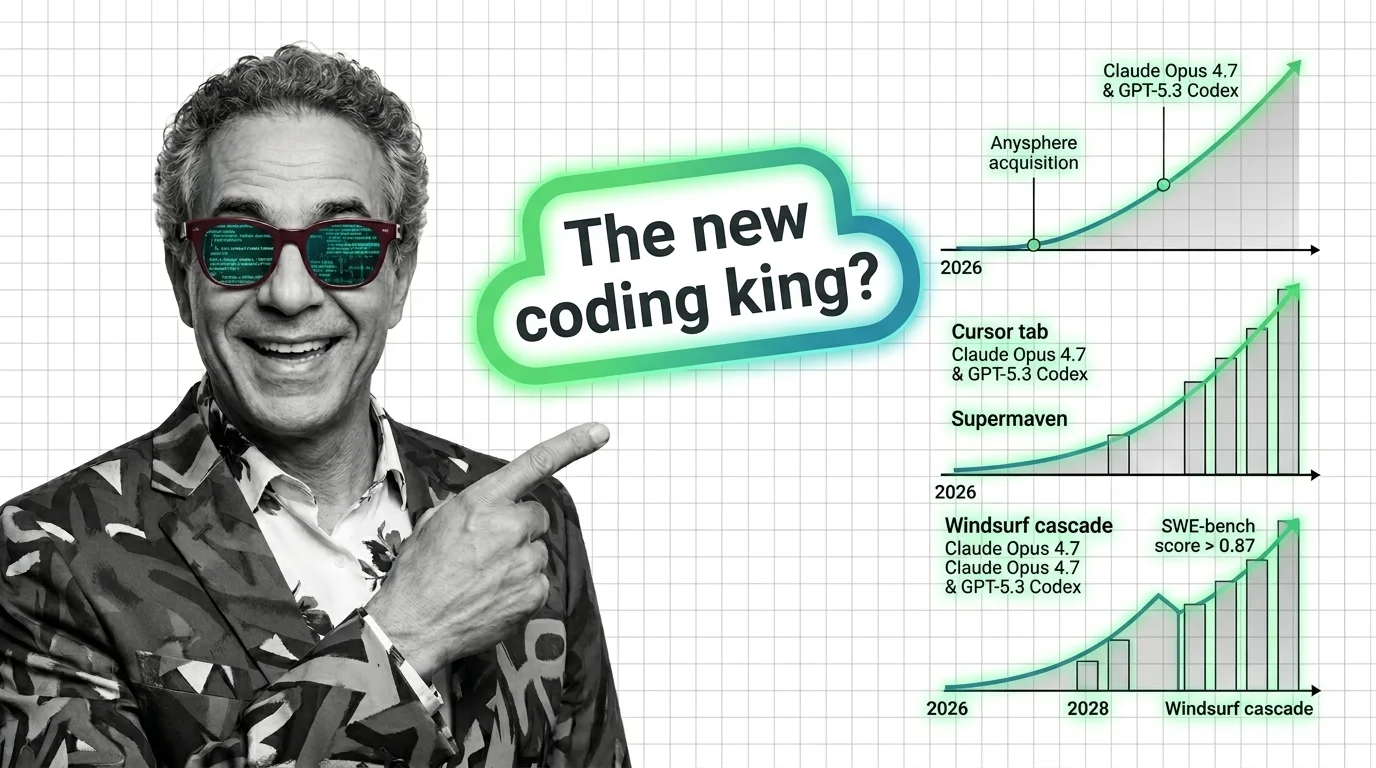
Cursor absorbed Supermaven, Windsurf rewrote its quotas, Claude Opus 4.7 hit 87.6% on SWE-bench. The inline completion layer is now a routing layer.
Inline suggestions can quietly introduce license-tainted snippets, leak proprietary code to vendors, and erode the judgment of developers who stop reading what they accept. Treating completion as low-stakes is the real risk.
Risks & metrics
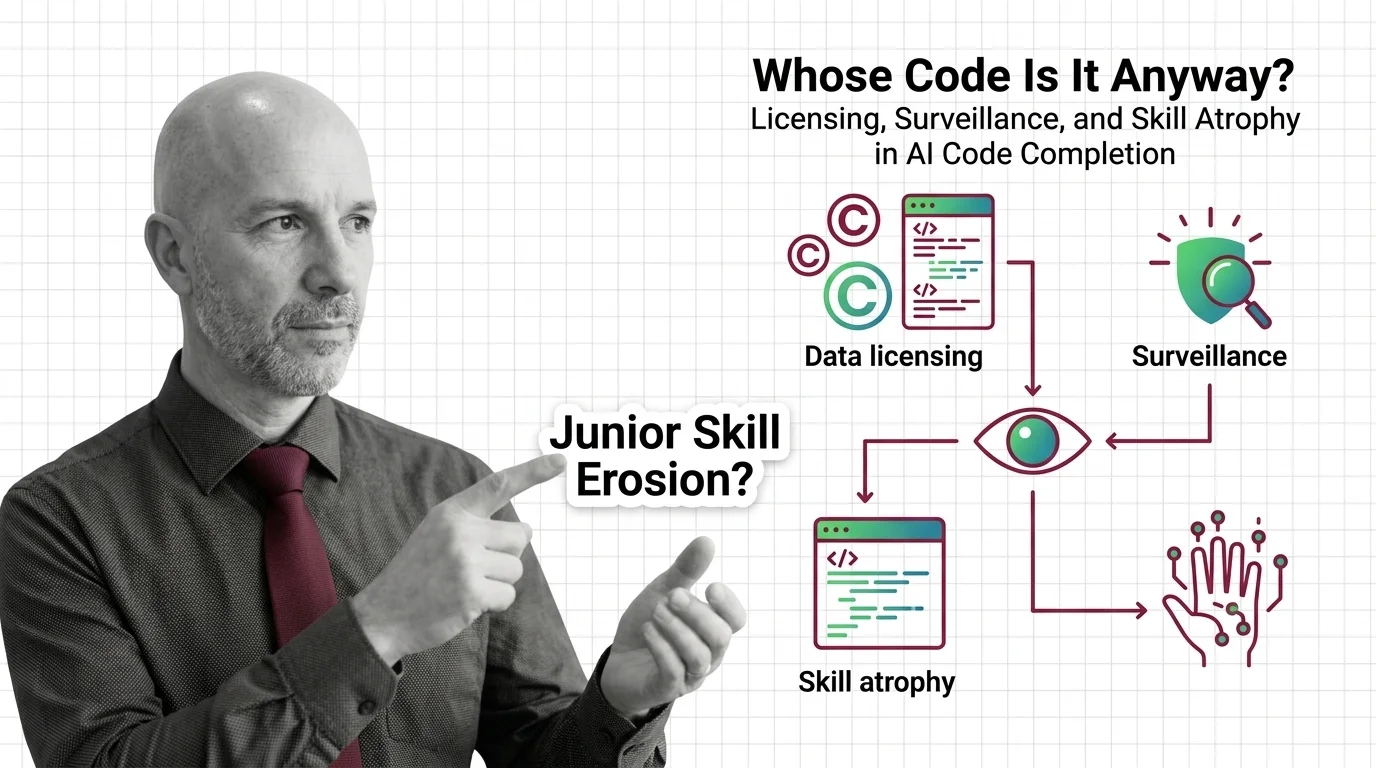
AI code completion trains on free-tier prompts by default, surfaces licensed snippets without attribution, and erodes how juniors learn to code.