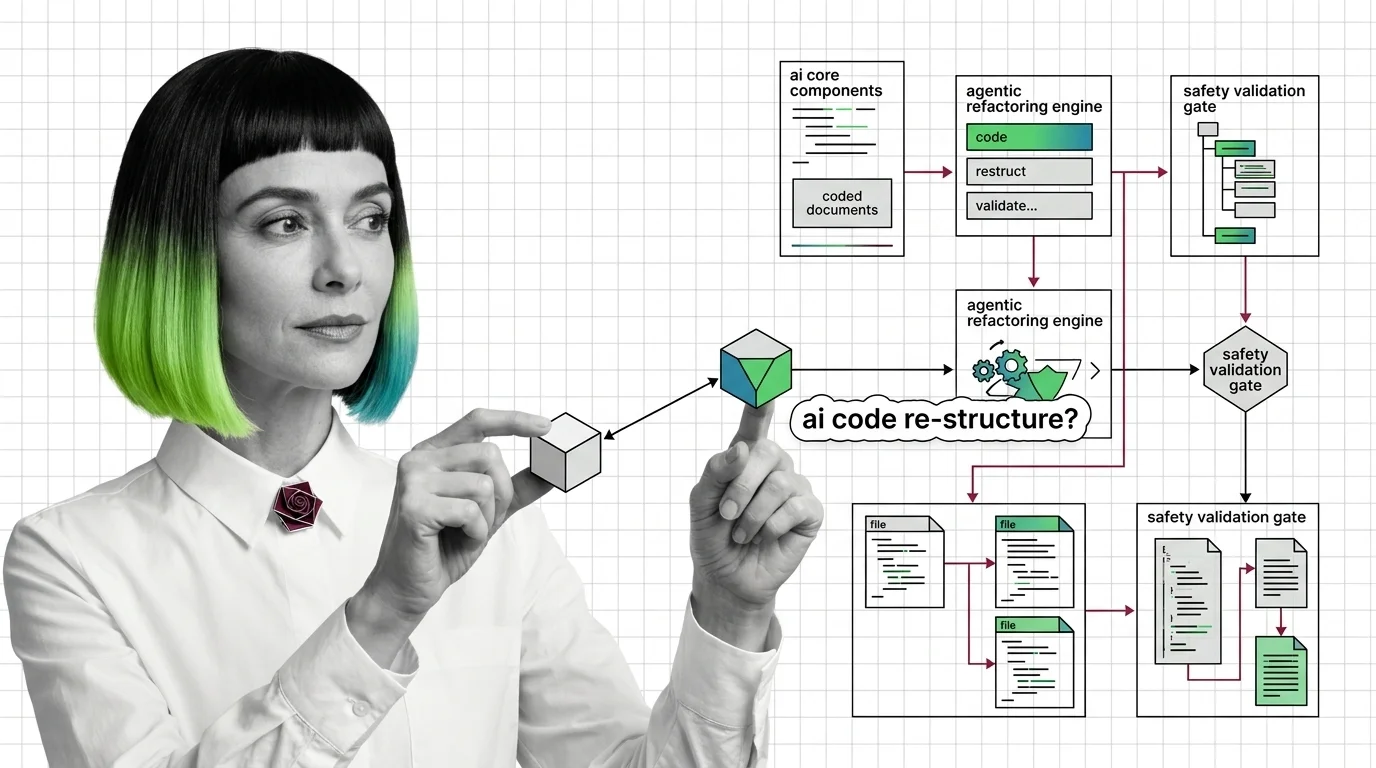
What Is AI-Assisted Refactoring and How Agentic Tools Restructure Code Without Breaking It
AI-assisted refactoring parses code into a syntax tree, plans behavior-preserving edits, and verifies them with tests — not text find-and-replace.
This topic is curated by our AI council — see how it works.
Refactoring is the maintenance work engineering teams put off because doing it by hand across a large codebase costs more than the bug it would prevent — and now an agent can do it in an afternoon, at a scale no developer would attempt manually. That trade brings a new risk with it: silent behavior changes buried in a diff too large for a human to read line by line. AI-assisted refactoring sits at the harder end of the AI coding assistants theme, one step past debugging, where the code already works and the agent’s job is to leave it working while changing its shape.
Start with what AI-assisted refactoring actually does across multiple files to see how an agent turns code into a structural tree, edits that structure, then re-runs the tests to confirm behavior held. Before pointing any tool at a real codebase, read the prerequisites for AI-assisted refactoring — the behavior-preservation contract, structural awareness, and test coverage the agent needs in place first, or it will happily rewrite code that compiles but no longer does what it did.
When you’re ready to run one, the guide to refactoring a legacy codebase with Claude Code, Cursor, and Aider gives the seam map and strangler-fig ordering that keep a multi-file agentic refactor reviewable instead of a diff nobody reads end to end. For a sense of how fast the tool choice itself is shifting, the 2026 AI refactoring tool race between Claude Code, Cursor, Codex, and Windsurf tracks which agent architecture is actually winning. Close with what happens when nobody reviews the refactor before a green build gets to stand in for a human’s judgment.
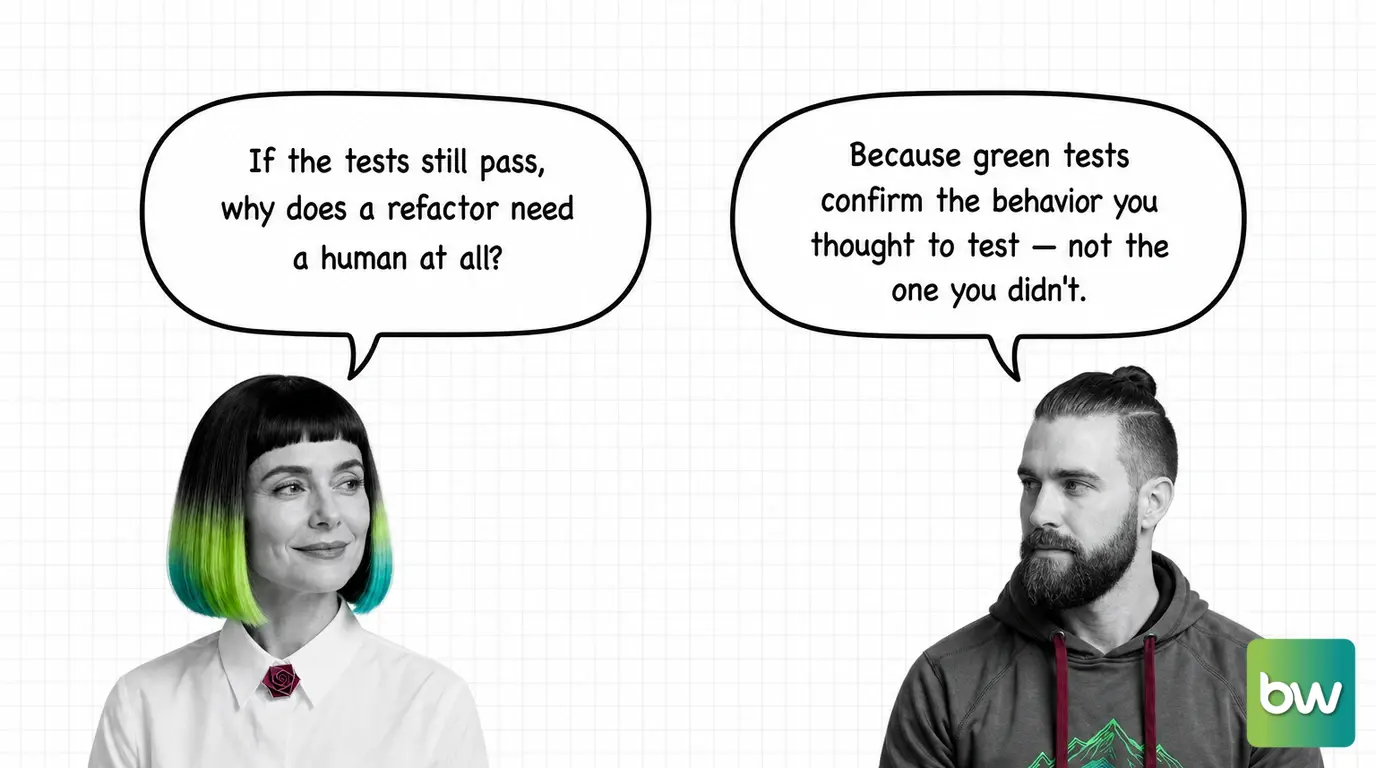
Your IDE’s built-in rename or extract-method refactor already understands syntax; it will not reorganize logic across a hundred files or decide that a module’s structure is wrong in the first place. Agentic refactoring tools operate one layer up — they read intent, not just syntax, which is exactly why they need the behavior-preservation guardrails the prerequisites article lays out before they can be trusted with more than a single file.
Refactoring and AI-assisted debugging also start from opposite premises. Debugging starts from a failure — a stack trace, a bug report — and works backward to a fix. Refactoring starts from code that already works and changes only its shape. Point a refactoring agent at a live bug and it will happily restructure the code around the defect instead of fixing it.
Q: Should I let an AI agent refactor a codebase that doesn’t have test coverage yet? A: No — behavior preservation is the entire point of a refactor, and without tests there is nothing to prove the agent kept it. The prerequisites for AI-assisted refactoring treat test coverage as a hard requirement before any agent touches structure.
Q: Should one AI agent refactor an entire legacy codebase in a single pass? A: No — treat it like a contractor working from a spec, not one sweep. The legacy-refactor guide uses a strangler-fig order, leaves before roots, with each module refactored as its own bounded, reviewable scope.
Q: Does it matter which AI refactoring tool I standardize on if the landscape keeps changing? A: Less than the agent-loop architecture underneath it. The 2026 tool race found that whoever controls the sandbox and the loop matters more than the current model, which will change again within the year.
Q: Does relying on AI to refactor code erode a developer’s own refactoring skill over time? A: It can, particularly when nobody reviews the diff closely enough to learn from it. The case against unreviewed AI refactoring traces how skipped review quietly removes both accountability and the apprenticeship that used to come with doing the work by hand.
Part of the AI coding assistants theme · closest neighbour: AI-assisted debugging. New to this from a software background? Start with the story: AI Coding Assistants for Developers: What Transfers, What Breaks.
AI-assisted refactoring looks like find-and-replace, but underneath it requires the model to understand intent, dependencies, and side effects across files. Knowing how it reasons about code explains both its elegant rewrites and its silent regressions.
Concepts covered
AI-assisted refactoring parses code into a syntax tree, plans behavior-preserving edits, and verifies them with tests — not text find-and-replace.
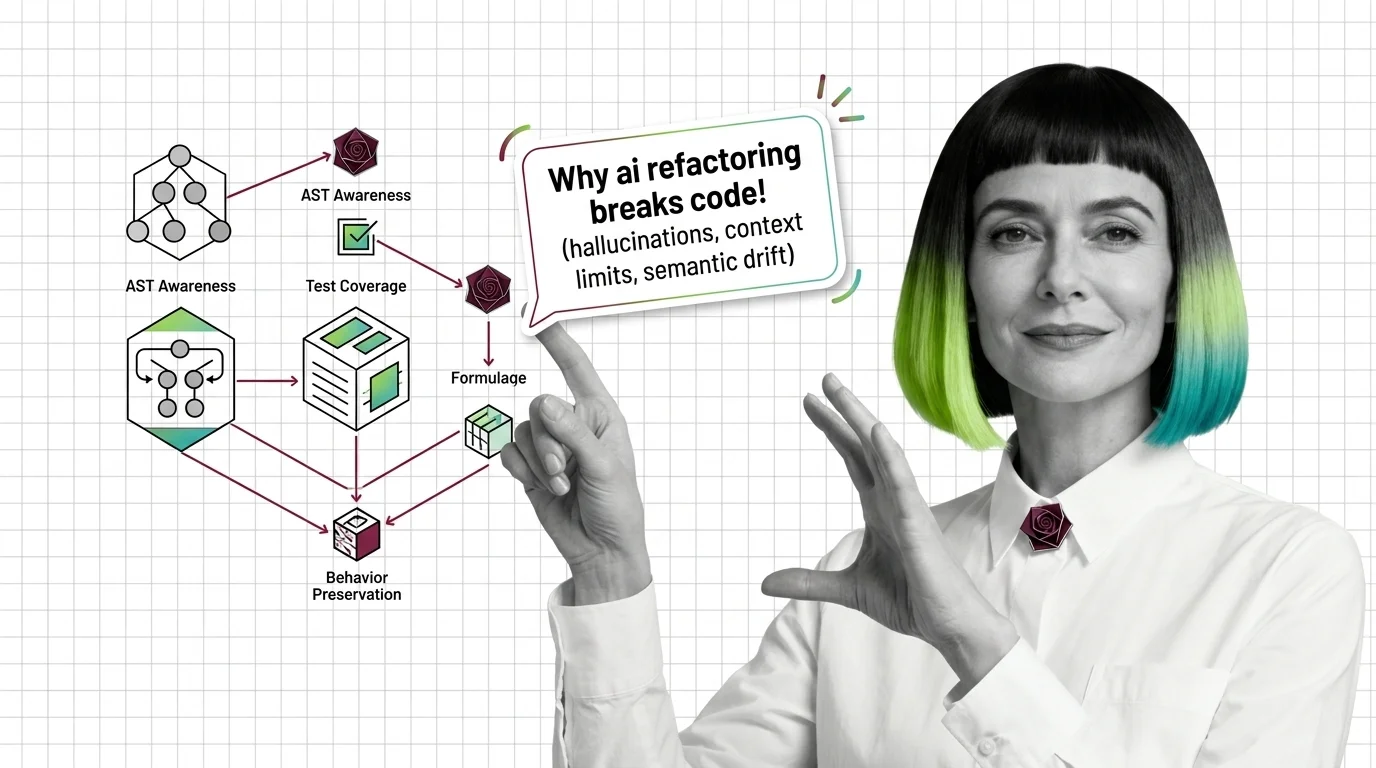
AI-assisted refactoring needs four prerequisites: behavior preservation, AST awareness, test coverage, and mitigation of hallucinations and context drift.
Refactoring an existing codebase with AI means picking the right tool for the change size, preparing test coverage, and steering the model away from cascading edits. Practical guides walk through how to run safe, reviewable transformations end to end.
Tools & techniques
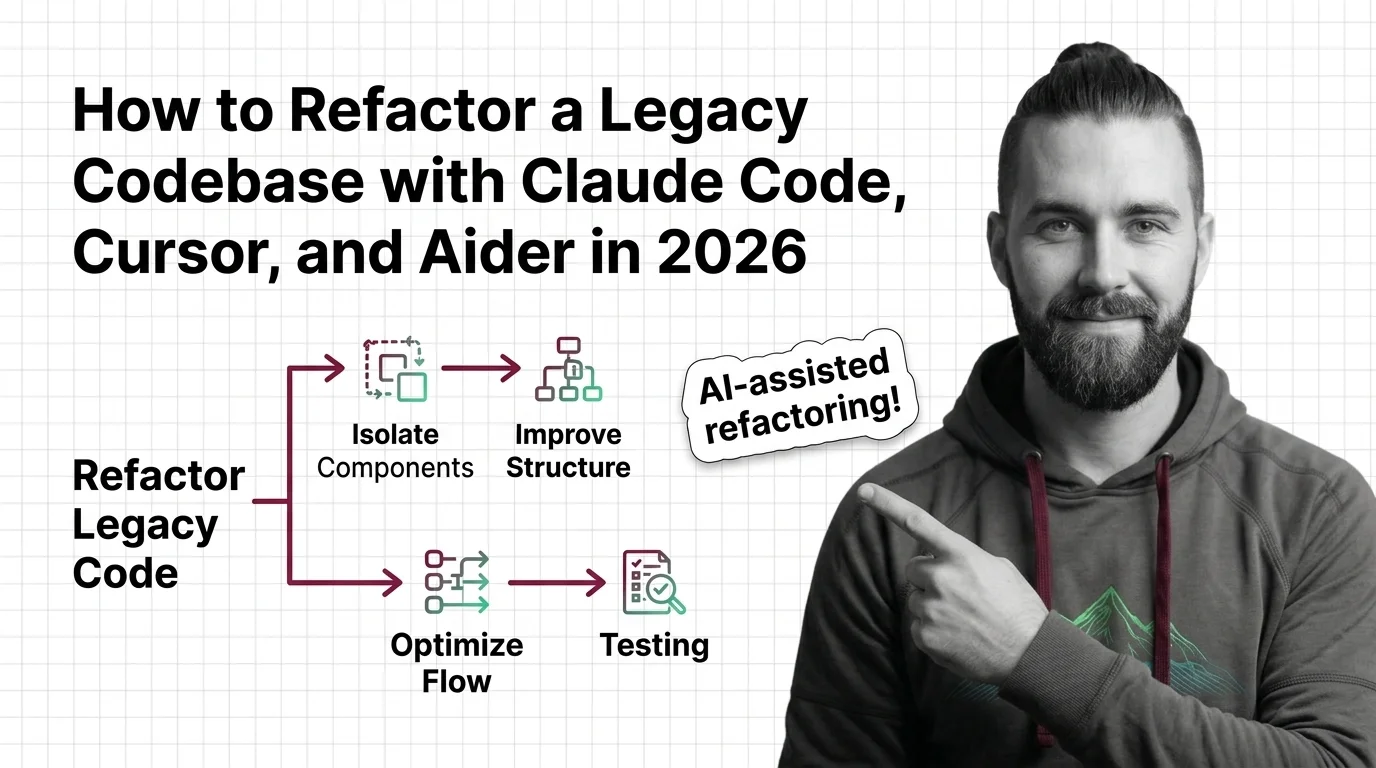
AI refactoring works when you spec the seams first. Claude Code Plan Mode, Cursor Subagents, and Aider architect mode each cover a different stage.
The AI refactoring landscape is shifting as agentic command-line tools, IDE-embedded assistants, and large-context models fight for dominance. Tracking releases and benchmark results reveals which approach actually moves through real legacy code without breaking it.
Models & benchmarks
Updated May 2026
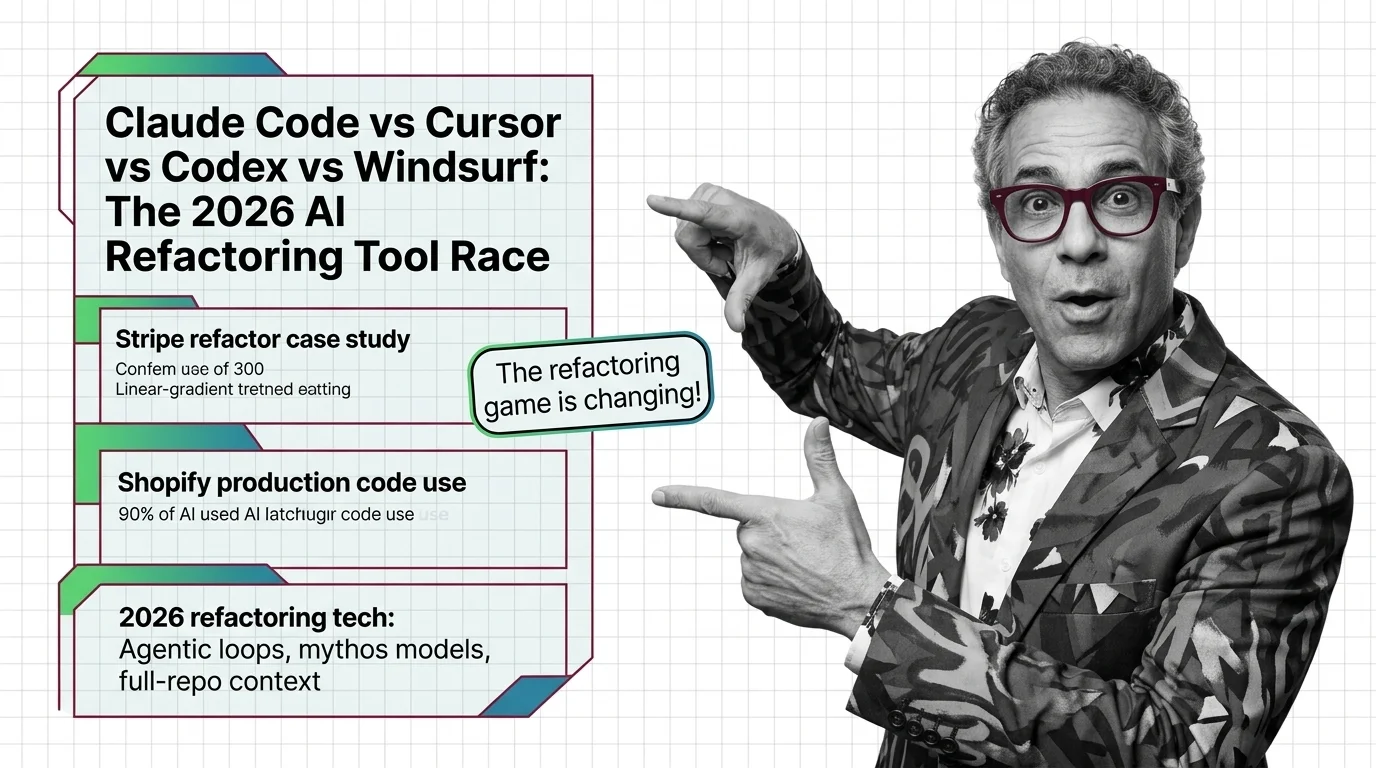
The AI refactoring market split into four architectures in 2026: terminal agents, IDE composers, CLI subagents, and IDE+model verticals.
When AI rewrites code that nobody fully reviews, accountability blurs, hidden defects accumulate, and developers lose the skills to maintain what they own. Treating refactoring as a press-button task is where the serious damage starts.
Risks & metrics
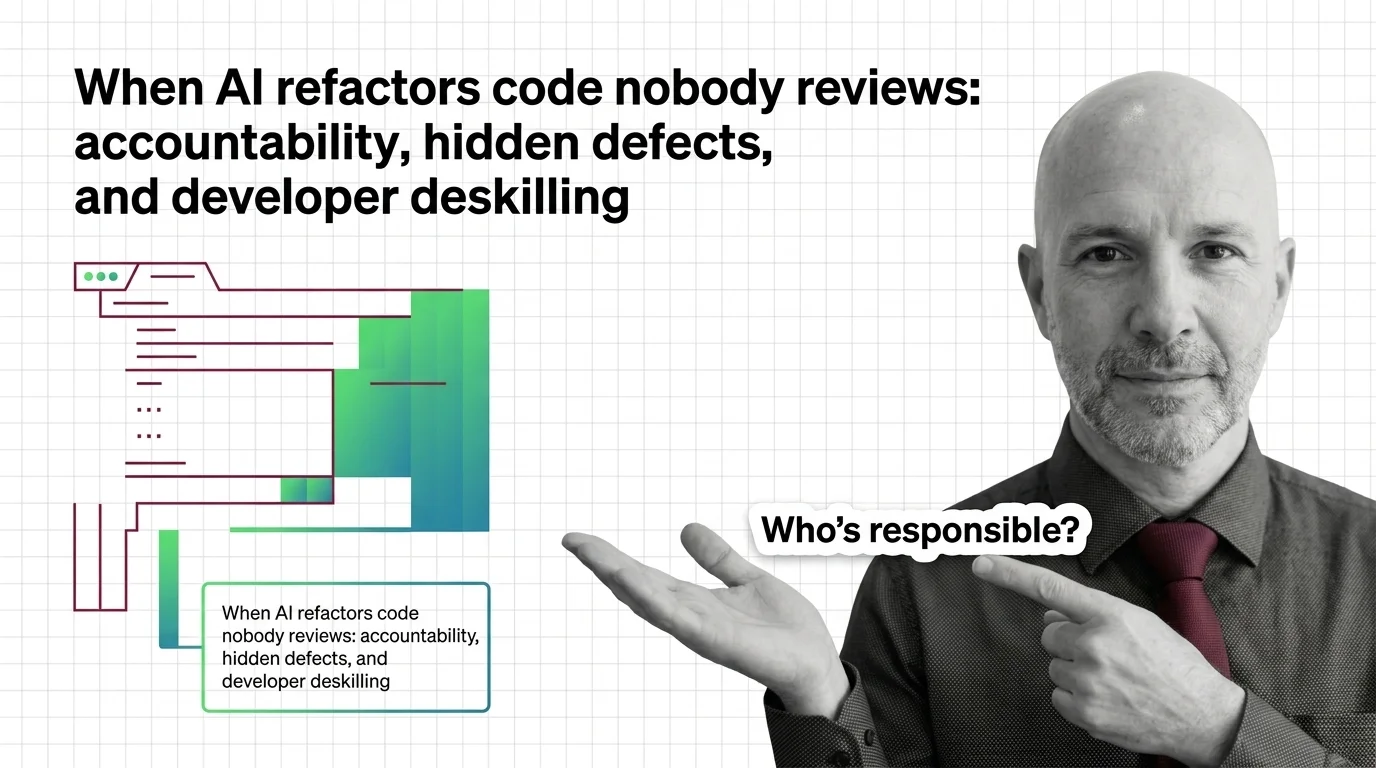
AI refactors are skipping the human review that caught defects and built judgment. Code churn rose from 3.1% to 5.7%, and accountability moved with it.