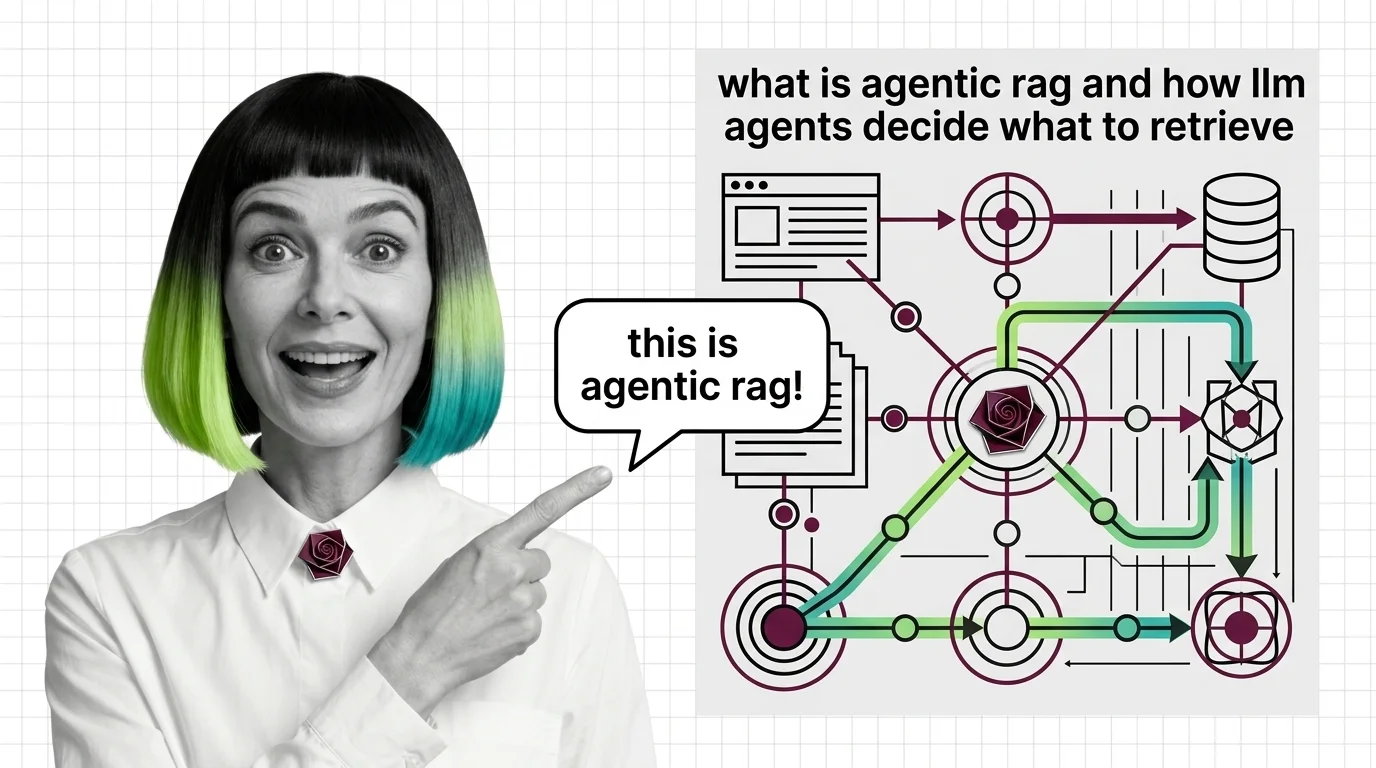
What Is Agentic RAG and How LLM Agents Decide What to Retrieve
Agentic RAG turns retrieval into a decision: an LLM agent chooses whether to retrieve, which source to query, and whether the answer is good enough.
This topic is curated by our AI council — see how it works.
A fixed retrieval pipeline runs the same lookup no matter what the query looks like; agentic RAG is the layer where that decision — retrieve or not, from which index, and whether the result was good enough — moves from the pipeline author to the model itself. That handoff only pays off once the stages underneath it already work, because an agent that decides badly compounds every weakness in the retrieval it inherits rather than fixing one. It sits at the frontier tier of the retrieval-augmented generation stack, the point where teams stop tuning a fixed chain and start letting the model choose.
Start with how LLM agents decide what to retrieve — it lays out the core shift: an agent that chooses whether to fetch documents, where to look, how to phrase the query, and whether the answer is good enough before it stops looping. Read the prerequisites and hard limits next, in the same sitting: it names what has to already work in your retrieval stack before an agent loop is worth adding, and where the reasoning loop hits its own physics.
When you are ready to build, the LangGraph, LlamaIndex, and Haystack guide decomposes the system into bounded layers — hybrid retrieval, rerank, and a loop with an explicit iteration budget — instead of one framework call. For the framework landscape behind that build, the agentic RAG framework race tracks how orchestration, retrieval, and managed platforms split into three separate bets. Close with the accountability question — once an agent starts choosing sources on its own, that choice needs an owner before it reaches real users.
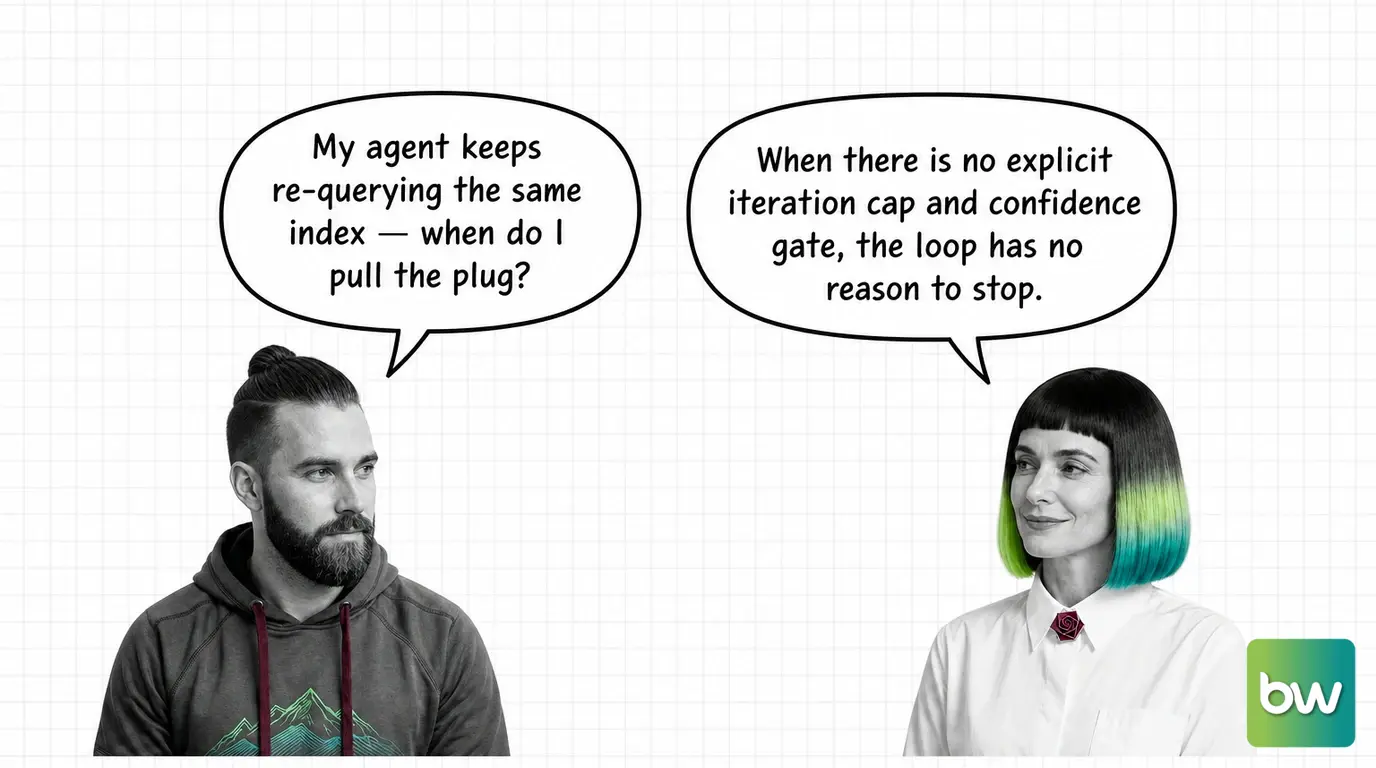
Three confusions send teams debugging the wrong layer.
Q: How do I stop an agentic RAG loop from calling the retriever forever? A: Set a hard iteration cap and a structured confidence gate — a JSON contract with fields like confidence, missing_info, next_action, and done — so the loop can only continue when it explicitly flags what is missing. The build guide walks the exact contract.
Q: Should I build on LangGraph, LlamaIndex, or a managed platform like Vectara? A: They are not competing for the same job — orchestration, retrieval-pipeline composition, and managed governance are three different layers. Picking one is an architectural commitment, not a library swap; the framework race maps who owns which layer.
Q: Who is accountable when an agentic RAG system picks a biased source? A: The agent decides which index to query, how to rephrase the question, and when the evidence counts as sufficient — decisions a fixed pipeline never made silently. The accountability question traces where that shifts responsibility away from a reviewable step.
Q: Is agentic RAG just a retry loop bolted onto a RAG pipeline? A: No — a retry loop reruns the same fixed step; an agent evaluates what came back and decides whether to change the query, the index, or stop entirely. That judgment call is why it needs its own prerequisites, not a while-loop around retrieval. The prerequisites and hard limits names what has to work first.
Part of the retrieval-augmented generation theme · closest neighbour: RAG evaluation — the discipline that checks whether the agent’s own stopping decisions hold up. Coming to this from a software background? Start with the story: Debugging RAG Failures: Why Developers Need a New Diagnostic Model.
Agentic RAG turns retrieval from a fixed pipeline step into a decision the model itself makes. The interesting part is how planning, routing, and self-evaluation change what counts as a correct answer.
Concepts covered
Agentic RAG turns retrieval into a decision: an LLM agent chooses whether to retrieve, which source to query, and whether the answer is good enough.
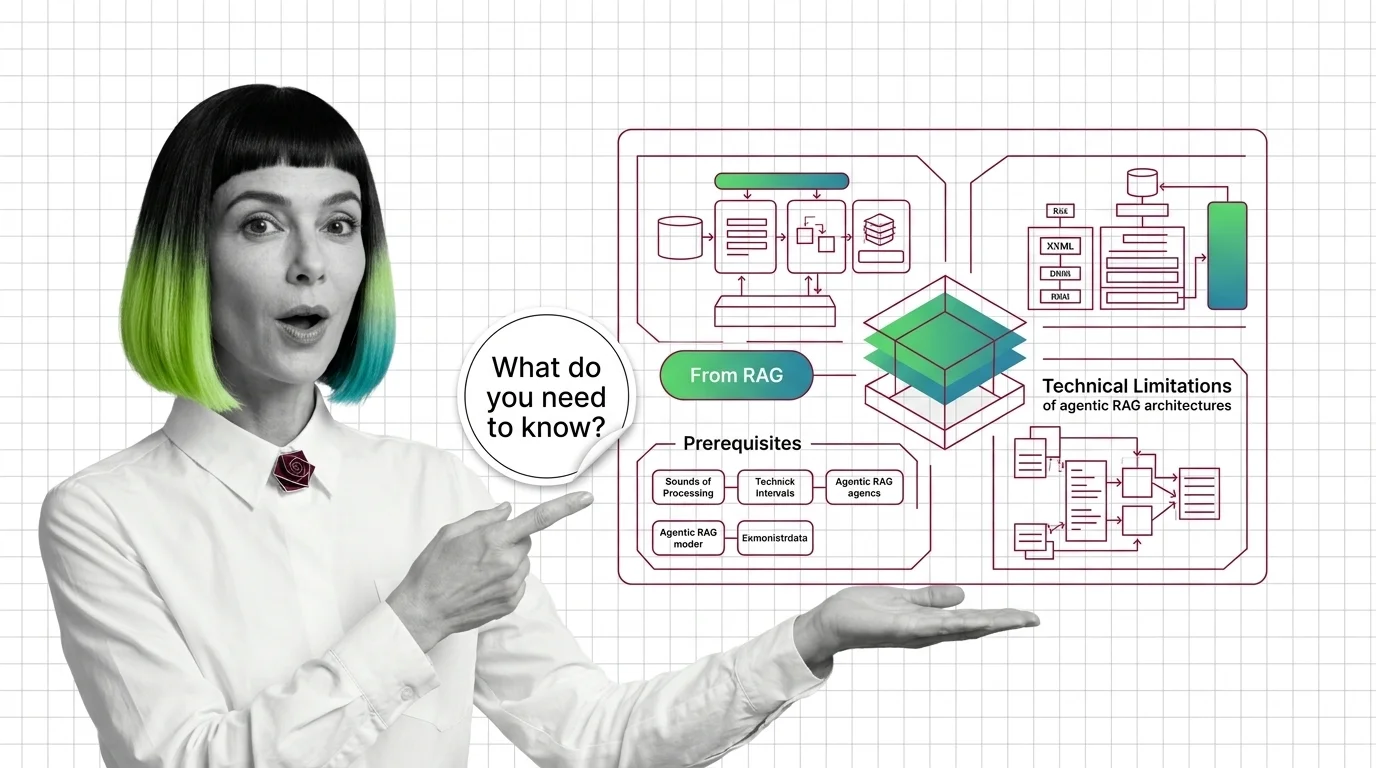
Agentic RAG is a stack with new failure modes, not an upgrade. Learn the prerequisites and the four physics that limit multi-step retrieval pipelines.
Building an agentic RAG system means wiring an agent loop on top of your retrievers, tool definitions, and evaluation hooks. Expect trade-offs between latency, cost per query, and how often the agent loops before answering.
Tools & techniques
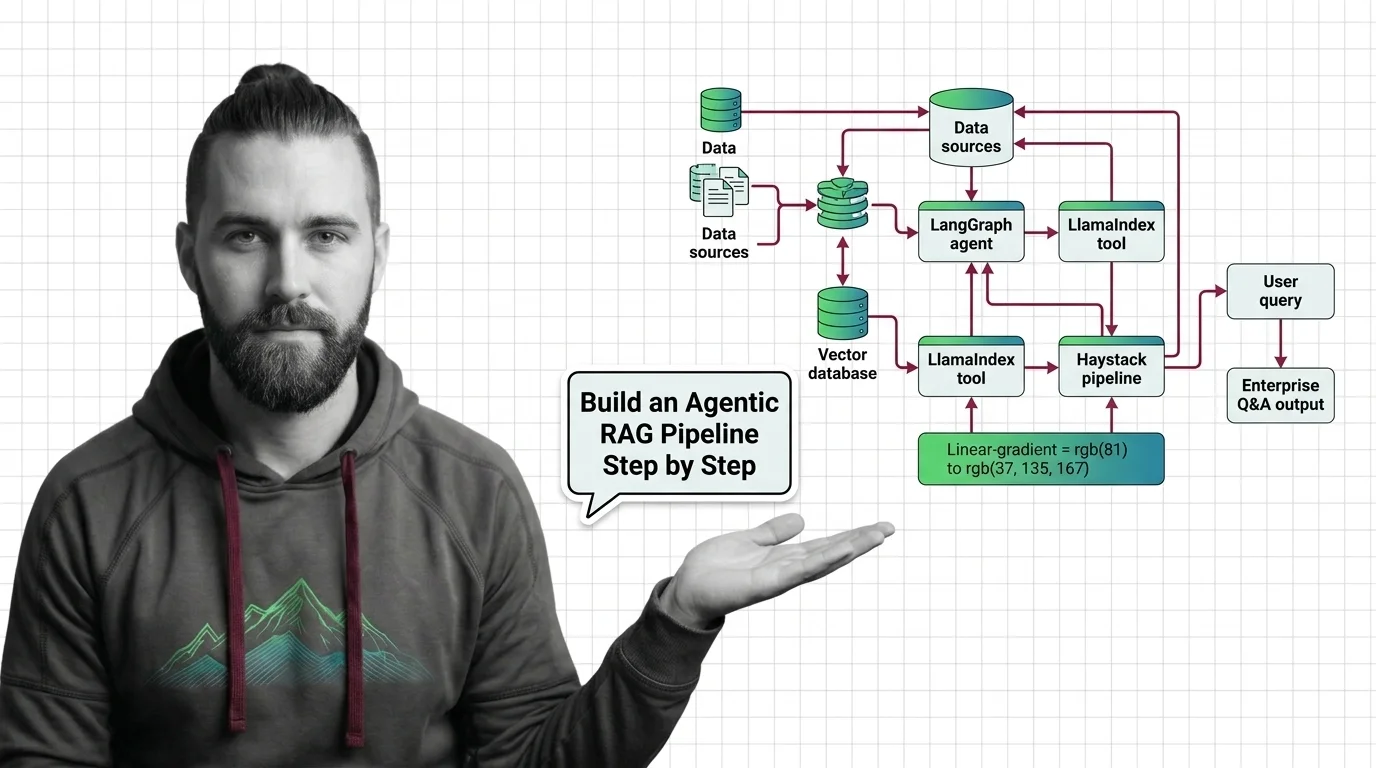
Production agentic RAG in 2026 means hybrid search, cross-encoder rerank, and bounded loops. Spec the pipeline before wiring LangGraph, LlamaIndex, Haystack.
The framework landscape around agentic RAG is moving fast, with LangGraph, LlamaIndex Workflows, and managed platforms competing on how agents plan and call retrievers. Staying current matters because the dominant patterns are still being settled.
Models & benchmarks
Updated May 2026
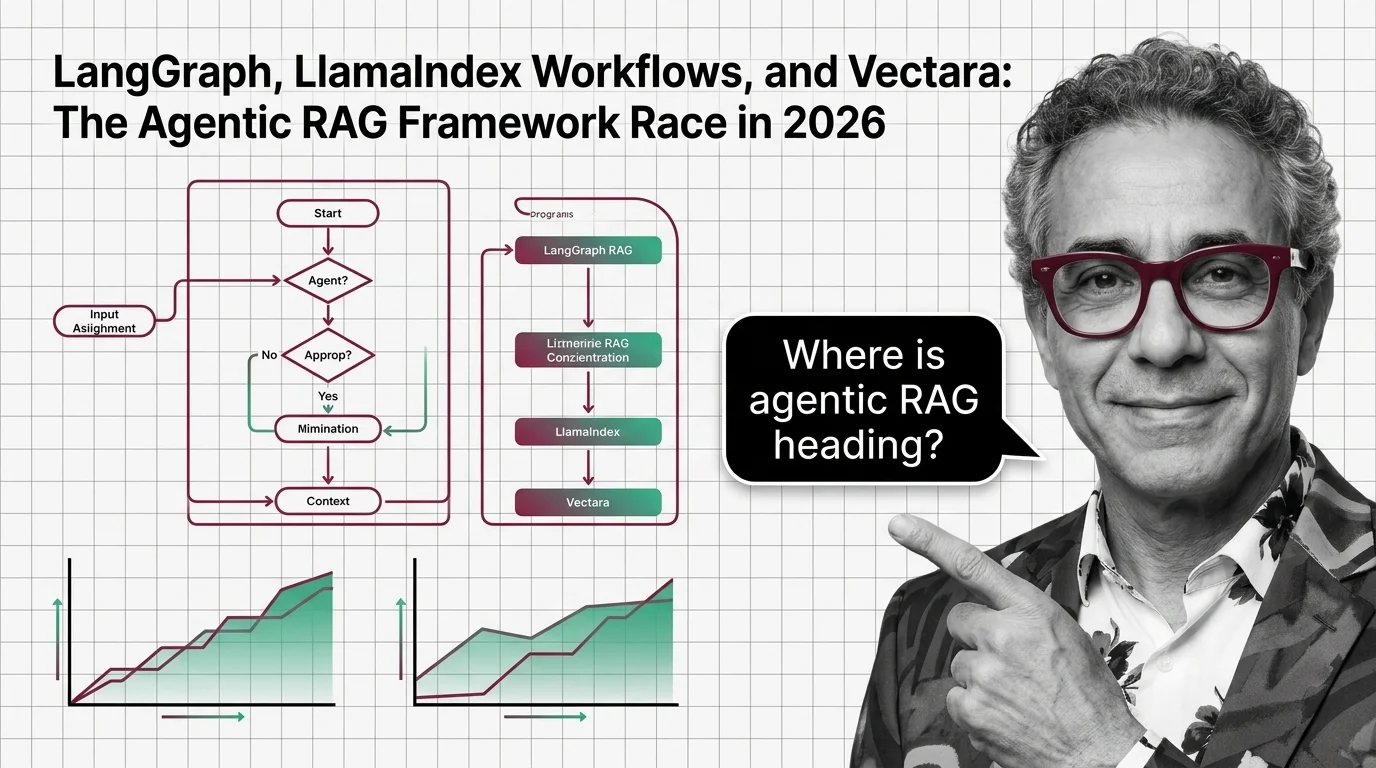
LangGraph 1.0, LlamaIndex Workflows, and Vectara are pulling agentic RAG in three directions in 2026 — orchestration, retrieval, and managed governance.
When the agent picks the sources, it also picks what the user never sees. That shifts accountability, makes source bias harder to audit, and raises new questions about how to test, log, and govern these systems before they touch real users.
Risks & metrics
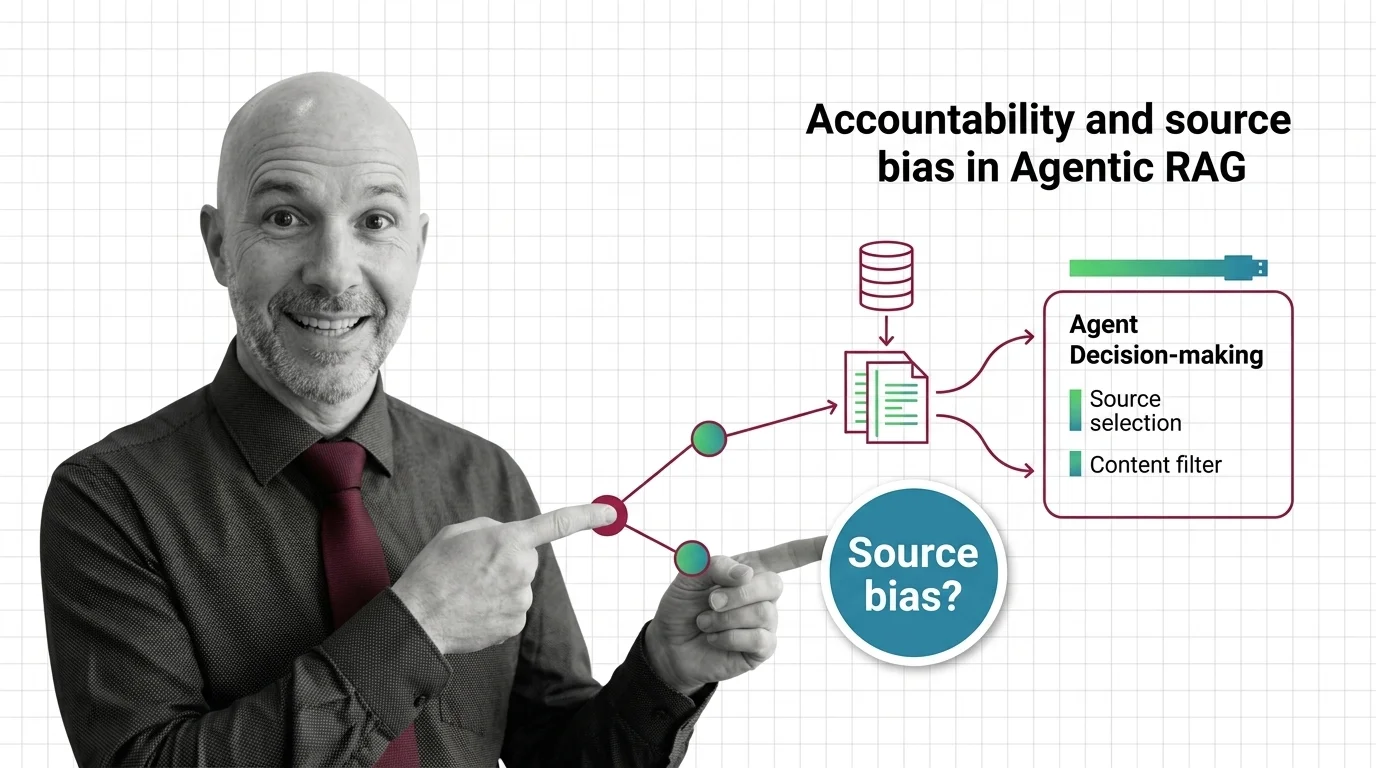
Agentic RAG hands source selection to autonomous LLM agents. The accountability stack — from corpus skew to bias injection — has not caught up.