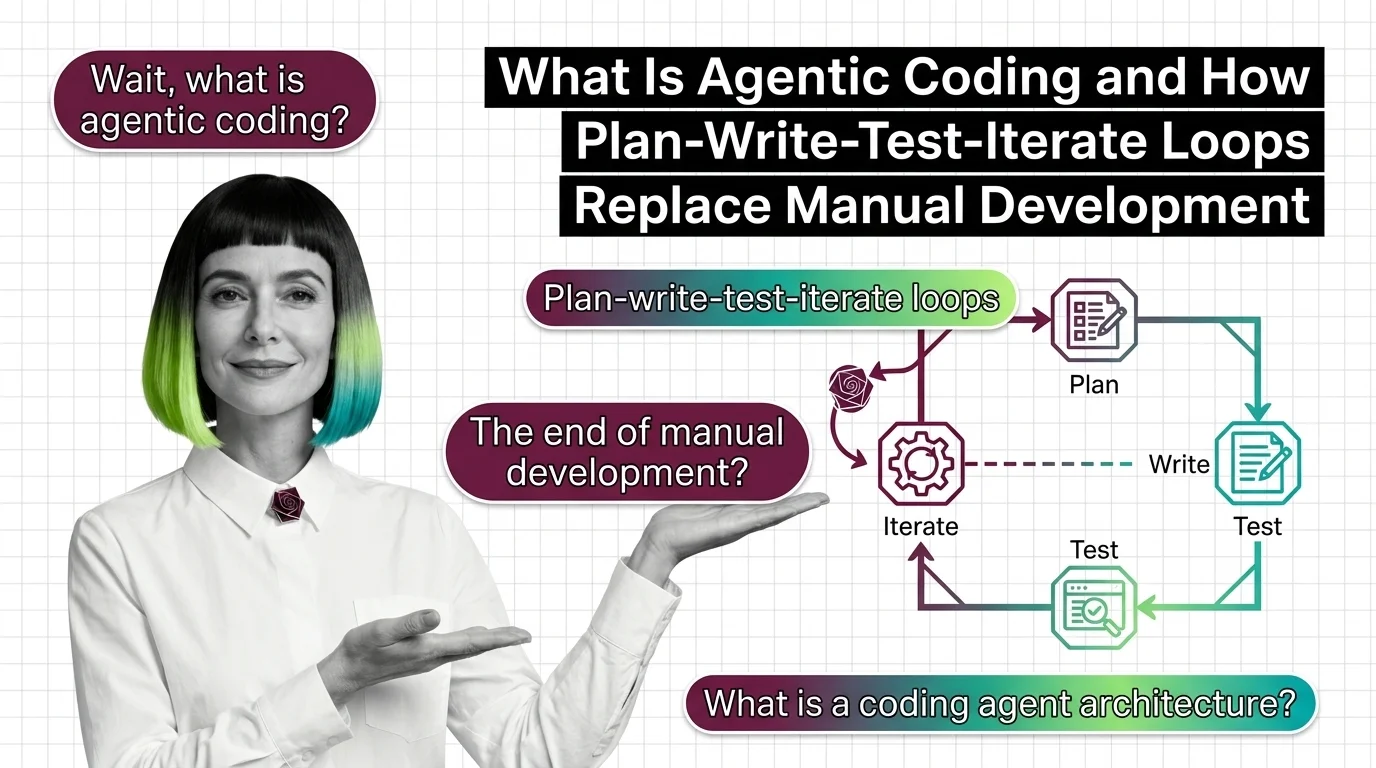
What Is Agentic Coding and How Plan-Write-Test-Iterate Loops Replace Manual Development
Agentic coding is a loop where an LLM plans, writes, tests, and revises code using real dev tools. Claude Code hits 87.6% on SWE-bench Verified.
This topic is curated by our AI council — see how it works.
An agent that merges its own pull request at 3 a.m. is not a hypothetical anymore — it is Tuesday for teams running Claude Code or Devin against a real backlog. That shift is what makes agentic coding the frontier tier of the agentic and autonomous coding theme: everything upstream — the protocol connecting tools, the vibe-coding habit of describing rather than typing — collapses into one question here, how much of the loop you can actually hand over without losing the thread. Reading this topic in order matters more than skimming, because the failure modes compound: a scaffolding gap becomes a stalled task, and a stalled task becomes a debugging session nobody budgeted for.
Start with what agentic coding is and how plan-write-test-iterate loops replace manual development — it draws the line between an agent and autocomplete in a wrapper, the distinction every later article assumes you already hold. Read the prerequisites: tool use, scaffolding, and the plan-execute-verify loop next; it names the harness that actually closes the loop, the piece a demo video never shows you. Before you trust an agent on a real repository, context window collapse, tool-call loops, and the hard technical limits of coding agents lays out exactly where that harness runs out of road.
Once the mechanism and its limits are settled, the guide to choosing and using Claude Code, Codex, Cursor, and Devin for real engineering work turns theory into a tool decision — autonomy band first, benchmark score second. For the market context behind that decision, Claude Opus 4.7’s 87.6% SWE-bench score and the coding agent race it reshaped tracks who is actually winning and why the score alone doesn’t say. Close with who owns the code an agent writes — if an agent will ever merge to production without you reading the diff first, read this before it happens, not after.
Three neighbours get folded into this topic, and each mix-up sends the fix in the wrong direction.
Q: How do I decide which autonomy level is right before I hand a task to a coding agent? A: Match the band to the task, not the leaderboard: interactive pair-coding for anything you want to review line by line, semi-autonomous for scoped tasks with a clear stopping point, fully unattended only when a hard verification gate exists. The tool-choice guide walks the decision by autonomy band first, model score second.
Q: Does a higher SWE-bench score mean an agent is safer to run without review? A: Not directly — Claude Opus 4.7’s climb to 87.6% on SWE-bench reflects a consolidated market of infrastructure, funding, and enterprise contracts as much as raw capability. Treat the score as a leaderboard signal, not a verification substitute — that still comes from your own test coverage and review gate.
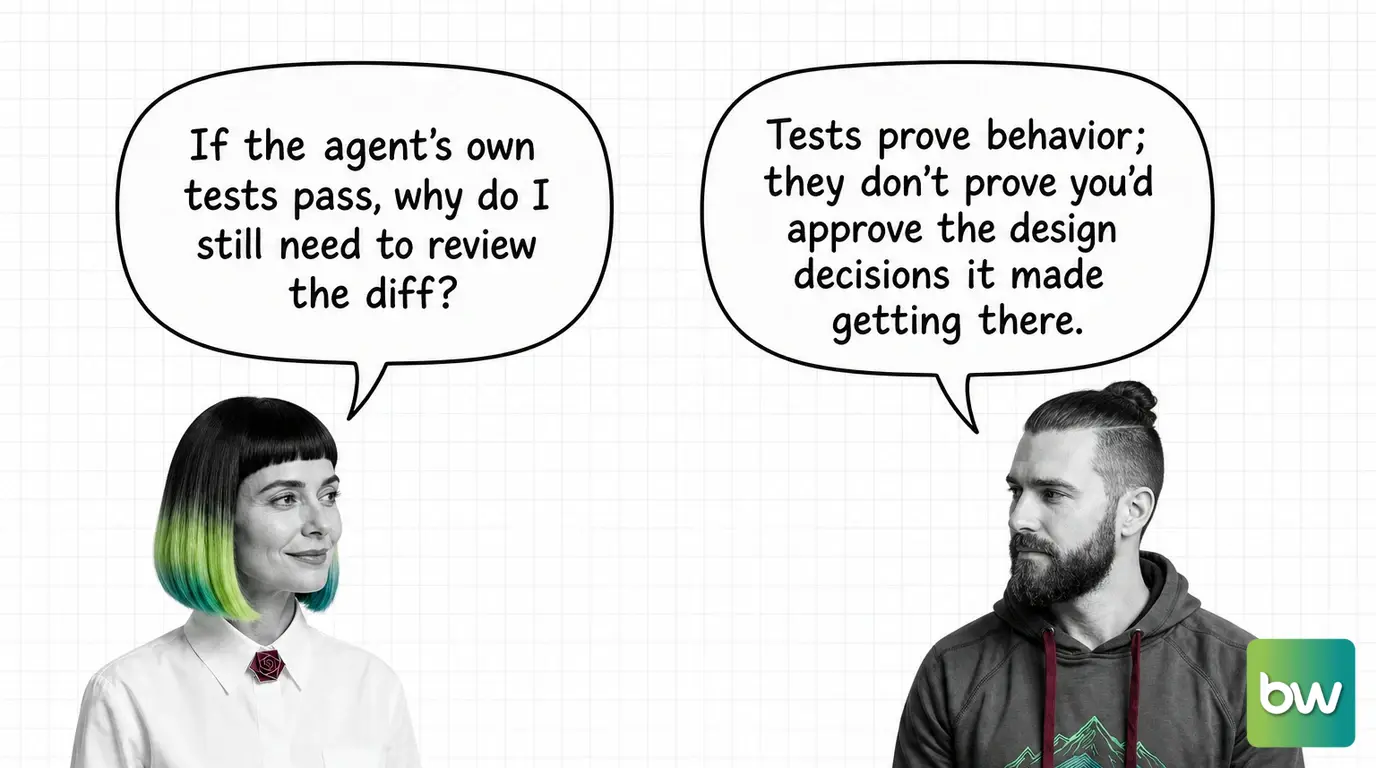
Q: If a coding agent’s own tests all pass, am I still on the hook for what it merges? A: Yes. The accountability question agentic coding forces doesn’t move just because the agent ran its own checks — passing tests confirms behavior, not that a human approved the decisions behind it, and approval is where responsibility still sits.
Q: Do I need experience with vibe coding before I try agentic coding tools? A: No — they’re different delegation contracts, not different skill tiers. Vibe coding teaches you to trust natural-language output on sight; agentic coding asks you to trust a verification loop instead, arguably the easier habit to build first if you’re coming straight from writing code by hand.
Part of the agentic and autonomous coding theme · closest neighbour: vibe coding. New to this from a software background? Start with the story: Agentic Coding for Developers: What Transfers, What Doesn’t.
Coding agents are not chat-with-autocomplete — they run a plan-execute-verify loop with tools. Start here to grasp what makes an agent autonomous and where the loop breaks.
Concepts covered
Agentic coding is a loop where an LLM plans, writes, tests, and revises code using real dev tools. Claude Code hits 87.6% on SWE-bench Verified.
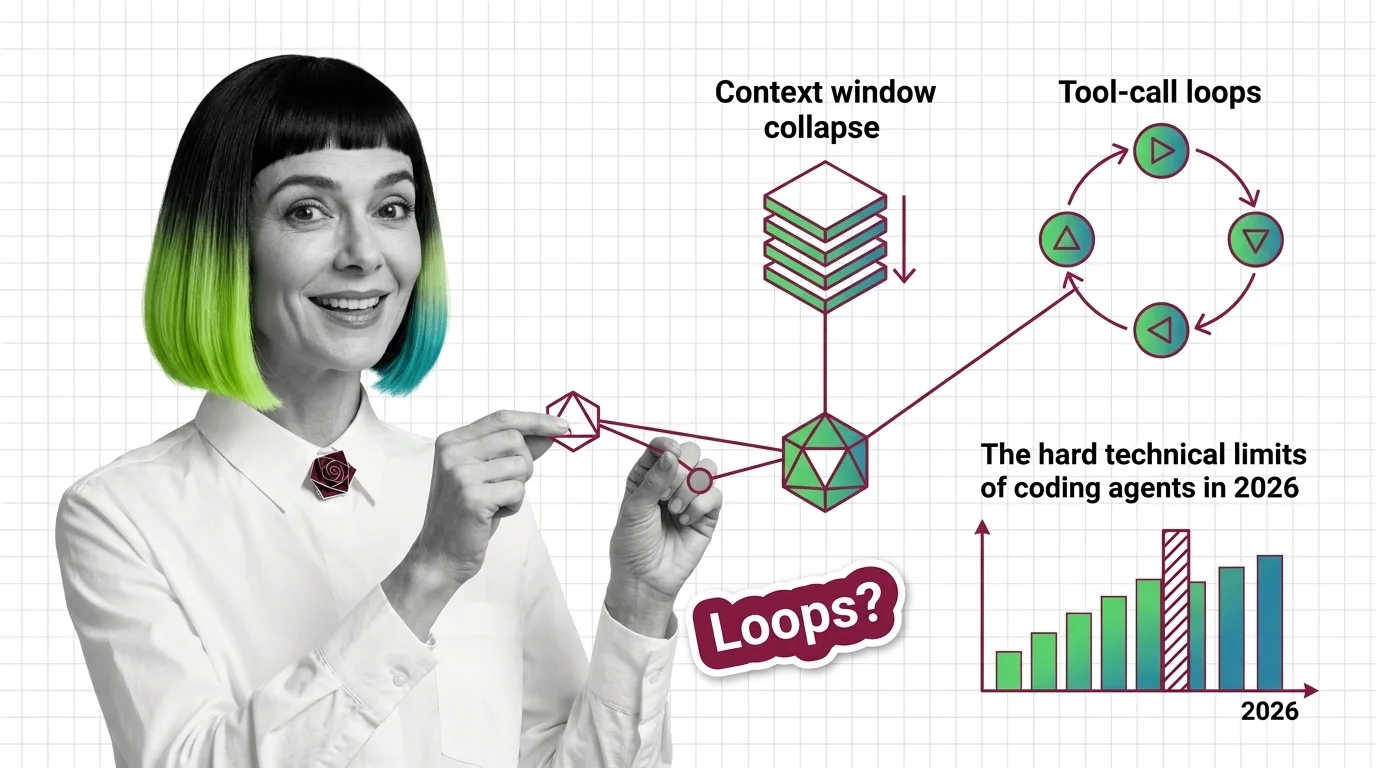
Coding agents in 2026 stall on long contexts and tool-call loops. Even top SWE-bench scorers fail one in five tasks despite 1M-token windows.
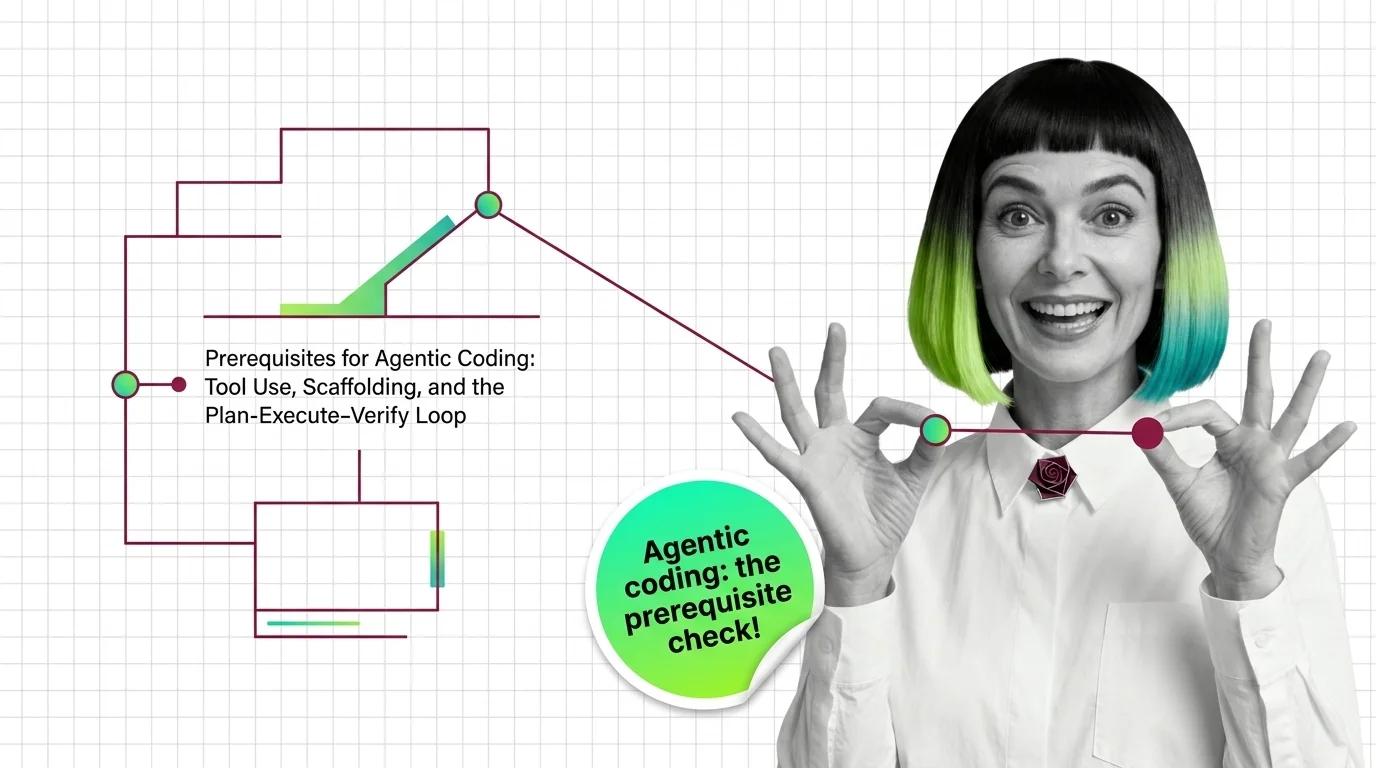
Agentic coding needs three layers: tool calls, scaffolding, and a plan-execute-verify loop. Scaffolding shifts SWE-bench more than the underlying model.
Picking the right coding agent and wiring it into your workflow decides whether you ship faster or babysit a confused tool. These guides walk through real engineering setups, model choices, and tradeoffs.
Tools & techniques
When an autonomous coding agent writes the diff, a developer's job shifts from authoring code to specifying and bounding it — and reviewing what it ships.
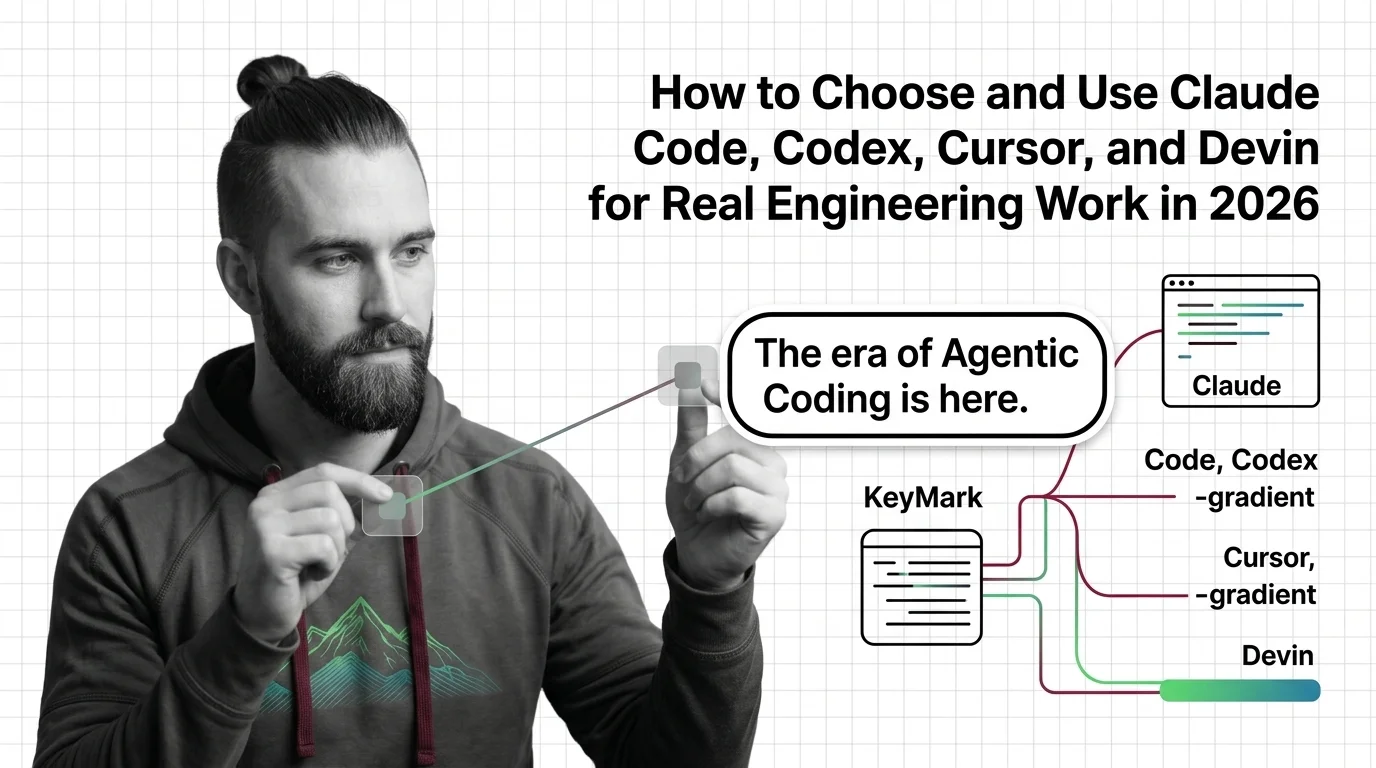
Claude Code, Codex CLI, Cursor, and Devin run agentic coding differently. Match each tool's autonomy model and context window to your spec, not its marketing.
Coding agents are the fastest-moving category in AI right now — benchmark scores, valuations, and tool capabilities shift monthly. Track what actually changed and why it matters for your stack.
Models & benchmarks
Updated May 2026
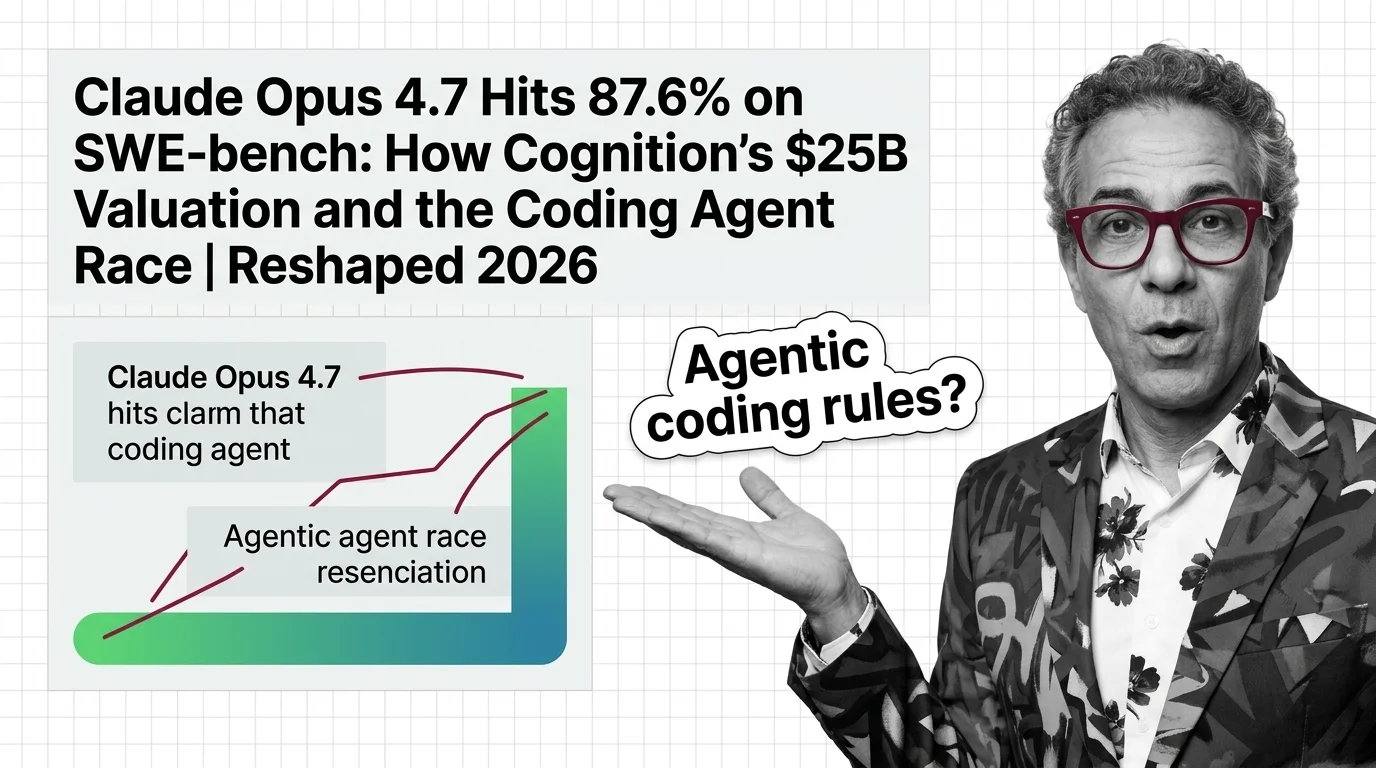
Claude Opus 4.7 hit 87.6% on SWE-bench Verified in April 2026; Cognition raised $1B at a $25B valuation. The coding agent market just consolidated.
When an agent writes code that ships, accountability, IP ownership, and job displacement stop being abstract. These pieces look at what teams and individuals should weigh before going fully autonomous.
Risks & metrics
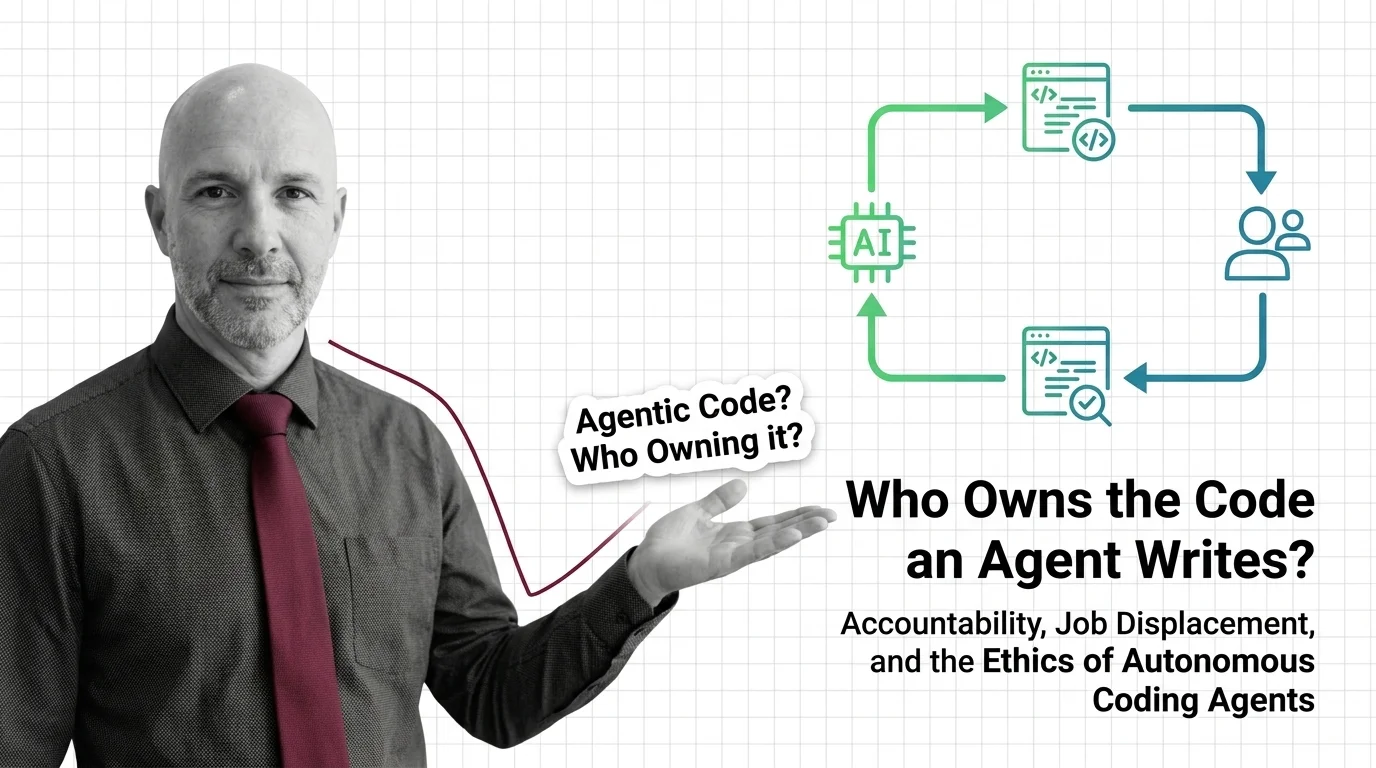
Autonomous coding agents already write, merge, and deploy software — but copyright law denies them authorship and liability rules have not caught up to agency.