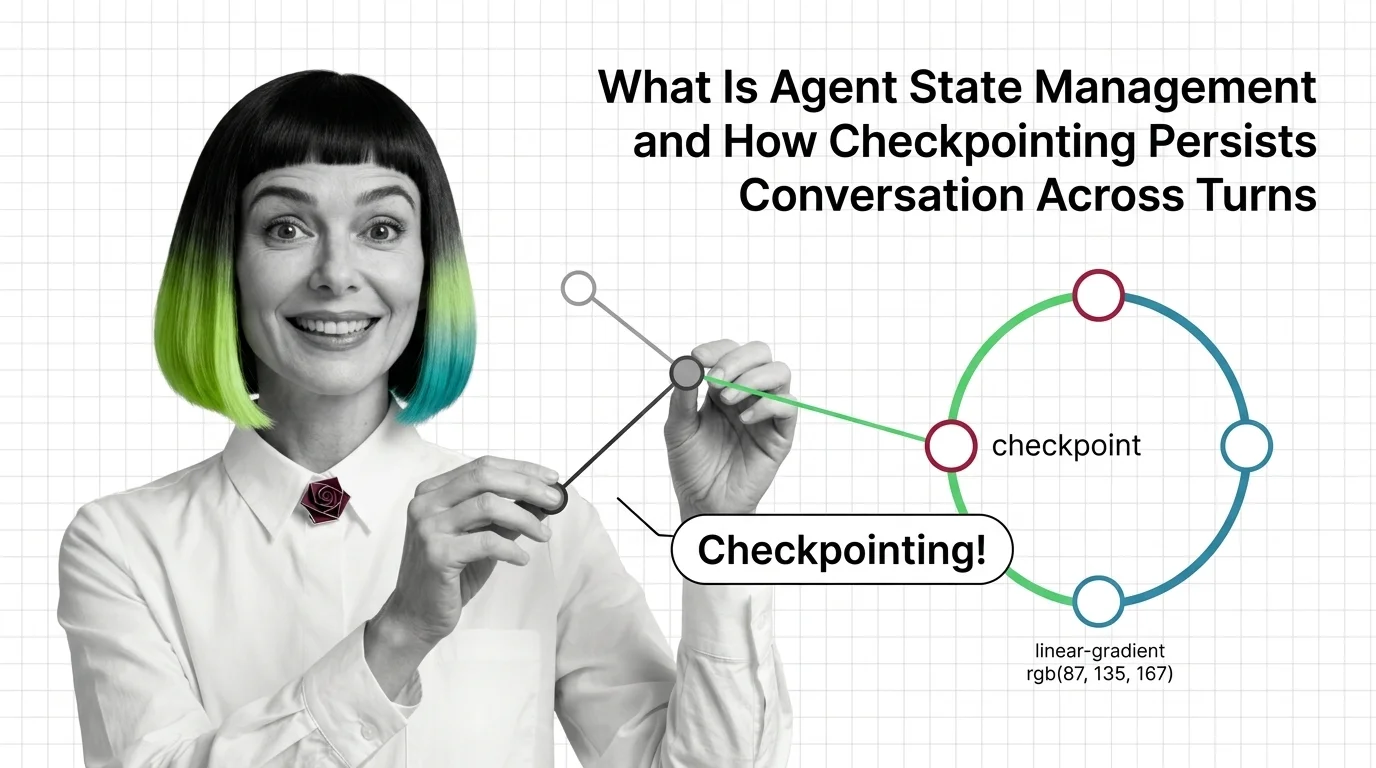
Agent State Management: How Checkpointing Persists Memory Across Turns
Agent state management decides whether your agent remembers. See how LangGraph checkpointers, threads, and reducers persist conversation across turns.
This topic is curated by our AI council — see how it works.
An agent that restarts from zero after a crash is not stateful — it is stateless with extra steps. Agent state management is the layer that lets a multi-turn, multi-tool loop survive a restart, a deploy, or a human handoff without losing its place, which is why production teams build it as its own infrastructure inside AI agent architecture rather than bolting it onto whichever framework they picked first. Get the checkpoint contract wrong here and every pattern built on top of it inherits the failure.
Start with how checkpointing persists conversation across turns — it establishes the core mechanism, snapshot-write-reload, that every later pattern assumes. Read threads, checkpointers, and the hard limits of stateful agents next: it names what has to already be true before a checkpointer works, and where the pattern breaks at scale.
Once the mechanism is settled, the LangGraph PostgresSaver, Mem0, and Zep build guide turns it into a working stack — three storage layers, one schema each, built in a specific order. For where that stack is heading, how the agent state management stack took shape in 2026 tracks checkpointing and memory splitting into separate markets. Close with the privacy and accountability risks of state that never gets deleted — if your state store outlives the conversation that created it, read this before it accumulates data you never planned to keep.
Three neighbours get folded into this topic, and each folding hides a separate decision.
The framework is not the state backend. Agent frameworks comparison decides how agents are defined and composed — graph, conversation, or crew. Picking LangGraph answers none of that; the checkpointer (Postgres, Redis, a custom store) is a second, independent decision plugged into whichever framework you chose.
Orchestration decides what runs; state decides what’s remembered. Workflow orchestration for AI is the control-flow layer — which step runs next, what retries on failure. State management persists where a specific thread already got to, so it can resume there after a crash or restart. A durable workflow can still lose its place if nothing snapshots the agent’s position inside it.
One thread’s checkpoint is not a swarm’s shared state. Multi-agent systems coordinate several agents’ state at once — whose turn it is, what they share, what conflicts. A single stateful agent only has to answer “where was I,” a smaller and better-understood problem than “where are we, together.”
Q: Do I need a dedicated state store if my agent already uses a memory library like Mem0? A: Yes — they solve different jobs. A checkpointer persists a thread’s execution position (messages, tool results, plans mid-run); a memory library persists facts that outlive the thread. The build guide treats them as three separate schemas for a reason: collapsing them into one table is the most common build mistake.
Q: Does a durable workflow orchestrator remove the need for a checkpointer? A: No. An orchestrator keeps a pipeline alive across failures, but the agent loop inside one step still needs its own snapshot of messages and tool results to resume correctly. Threads, checkpointers, and the hard limits of stateful agents covers what has to already be in place before either layer works.
Q: Why does a resumed agent sometimes come back with corrupted context after a crash? A: Usually a serialization problem, not a data-loss one — non-JSON objects stored in checkpoint metadata, or memory and state sharing one schema so a partial write leaves both inconsistent. How checkpointing persists conversation across turns explains the snapshot-and-reload contract that breaks when metadata isn’t kept clean.
Q: Who is responsible for personal data that accumulates inside an agent’s state store? A: Nobody, by default — that is the problem. A store built to survive restarts also survives the conversation that created it, quietly retaining messages and decisions with no owner assigned. The accountability risks of state stores that never forget makes the case for treating retention as a design decision, not an afterthought.
Part of AI agent architecture · closest neighbour: agent memory systems. Coming to agent state from a classical software background? Start with the story: AI Agent Architecture for Developers: What Transfers, What Breaks.
Stateful agents look magical until you see the plumbing. This step explains what agent state actually contains, why threads and checkpointers exist, and where the boundaries between memory and state really sit.
Concepts covered
Agent state management decides whether your agent remembers. See how LangGraph checkpointers, threads, and reducers persist conversation across turns.

Agent state is not memory — it is plumbing that replays snapshots between steps. Mona explains threads, checkpointers, and where stateful agents break.
Picking a checkpointer and wiring it into your agent loop is the difference between a demo and a system that survives a restart. These guides walk through the production stack and the trade-offs nobody warns you about.
Tools & techniques
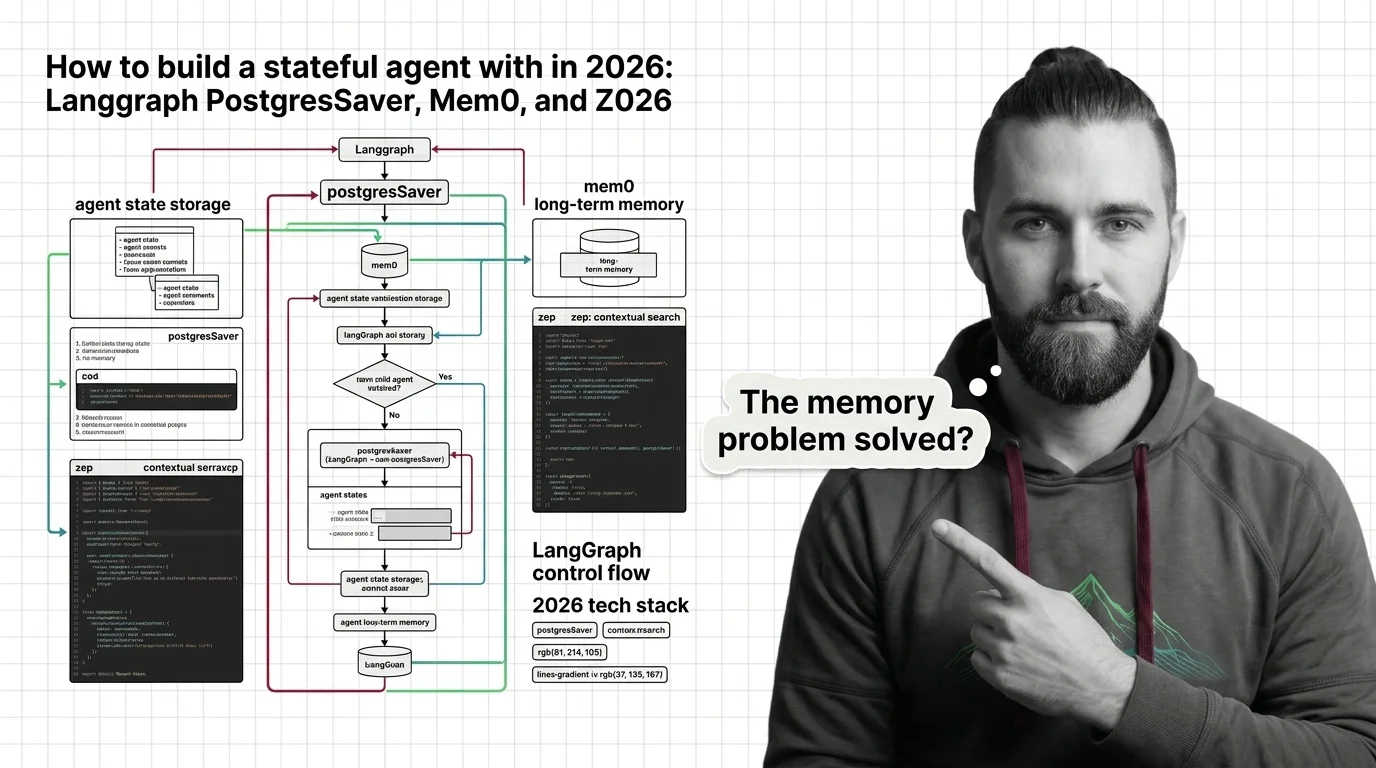
Stateful agents need three storage layers, not one. Wire LangGraph, Mem0, and Zep into an agent that survives restarts and remembers users.
The state management layer is consolidating fast as frameworks compete on persistence, replay, and observability. Following the shifts here tells you where production agent infrastructure is headed next.
Models & benchmarks
Updated May 2026
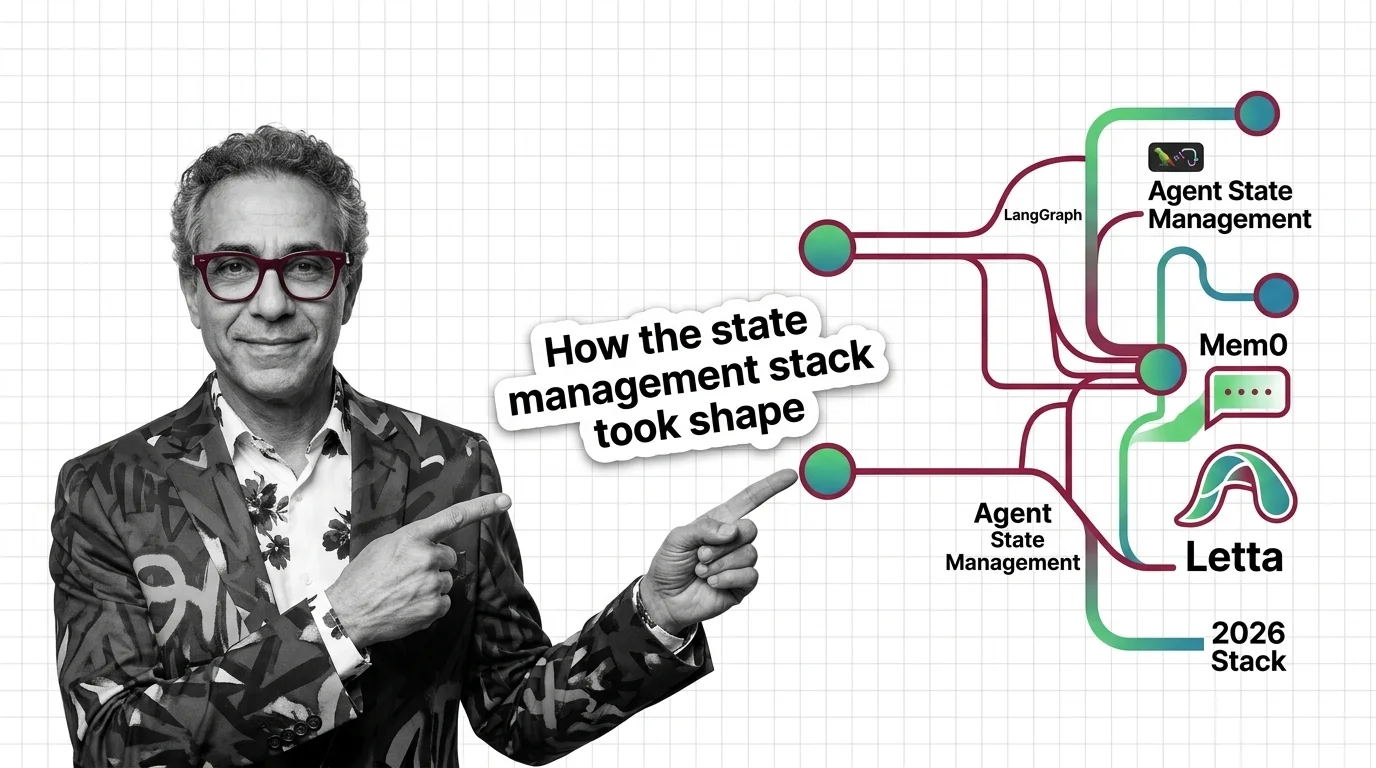
Agent state management split in 2026 into two layers — LangGraph checkpointing for thread state, Mem0 or Letta for cross-session memory. Here's the new stack.
Persisted agent state quietly accumulates personal data, decisions, and reasoning traces that outlive the conversation. Understanding the privacy, accountability, and retention questions matters before any of this reaches real users.
Risks & metrics
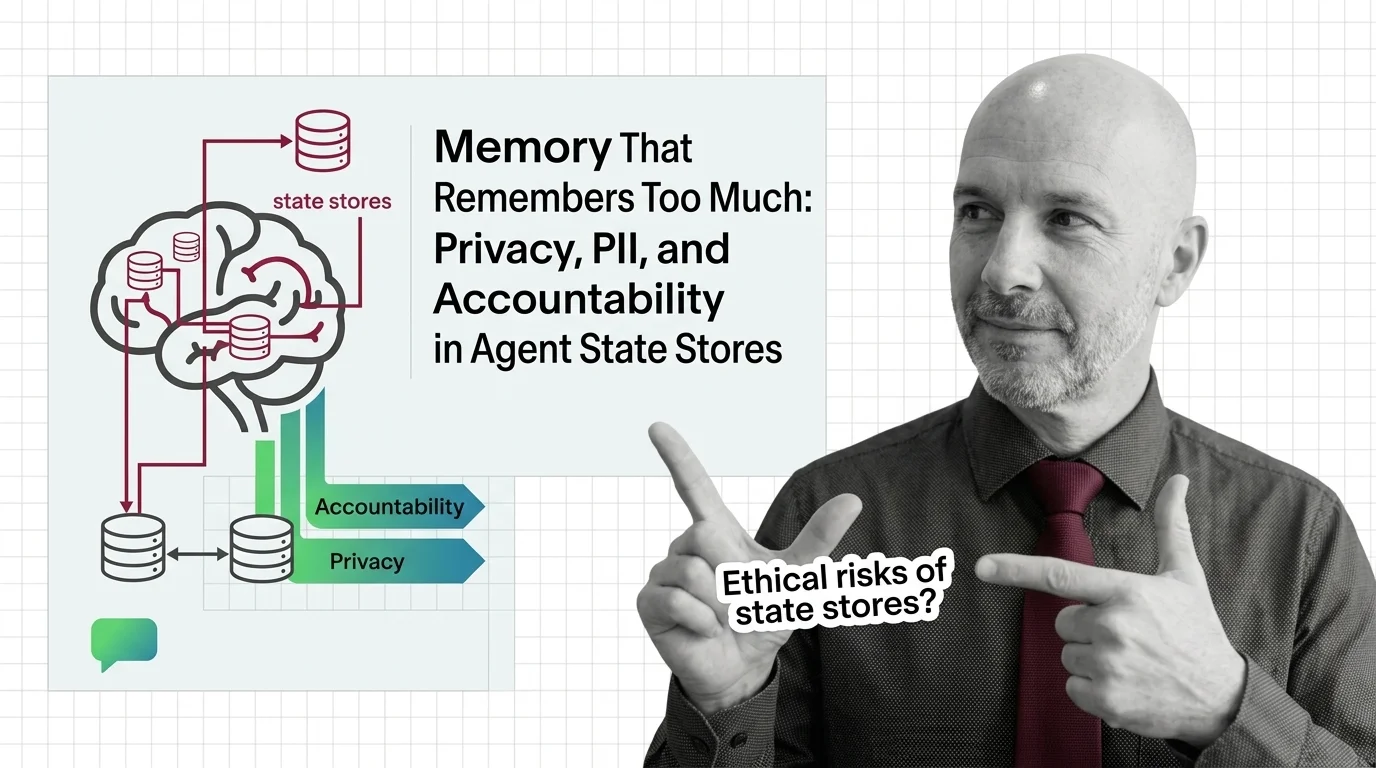
Persistent agent memory turns interactions into records. As courts, regulators, and red teams collide, accountability becomes the question we keep avoiding.