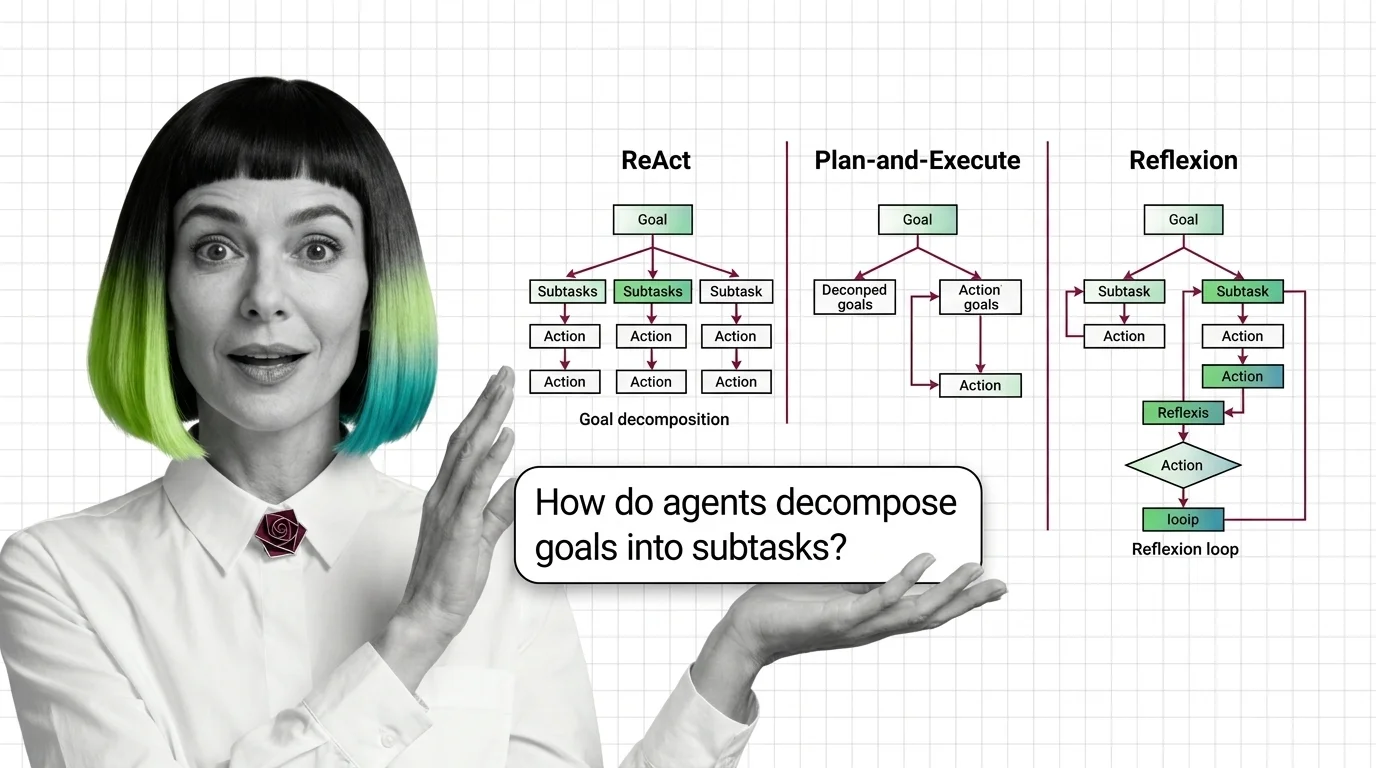
Agent Planning and Reasoning: ReAct, Plan-and-Execute, Reflexion
Agent planning is not human cognition — it is token generation conditioned on observations. How ReAct, Plan-and-Execute, and Reflexion actually work.
This topic is curated by our AI council — see how it works.
An agent’s reliability starts with what happens inside its decision loop, long before any memory store or orchestration layer gets involved: decompose the goal, pick an action, observe the result, decide again. That loop is the hinge of the wider agent architecture stack — every capability layered on top, from code execution to multi-agent coordination, is only as good as the planning pattern deciding when to use it. Get the pattern wrong and a frontier model still burns tokens in a loop that never converges.
Start with how ReAct, plan-and-execute, and Reflexion power autonomous agents — it lays out the decompose-act-observe-revise loop that every pattern below is a variation on. Read the prerequisites and technical limits of agent planning in the same sitting: it is where chain-of-thought and tool use stop being enough on their own, and where the math that breaks naive agents past five sequential steps shows up.
When you’re ready to build, the LangGraph, CrewAI, and AutoGen guide turns the pattern choice into a working loop — decide ReAct, Plan-and-Execute, or Reflexion by task shape, then pick the framework. For where the frontier is moving, the 2026 GAIA and SWE-bench reasoning race tracks how much of “reasoning quality” is actually the scaffold, not the model underneath it. Close with the accountability question autonomous planning raises before you let a planning loop touch production actions no human reviews first.
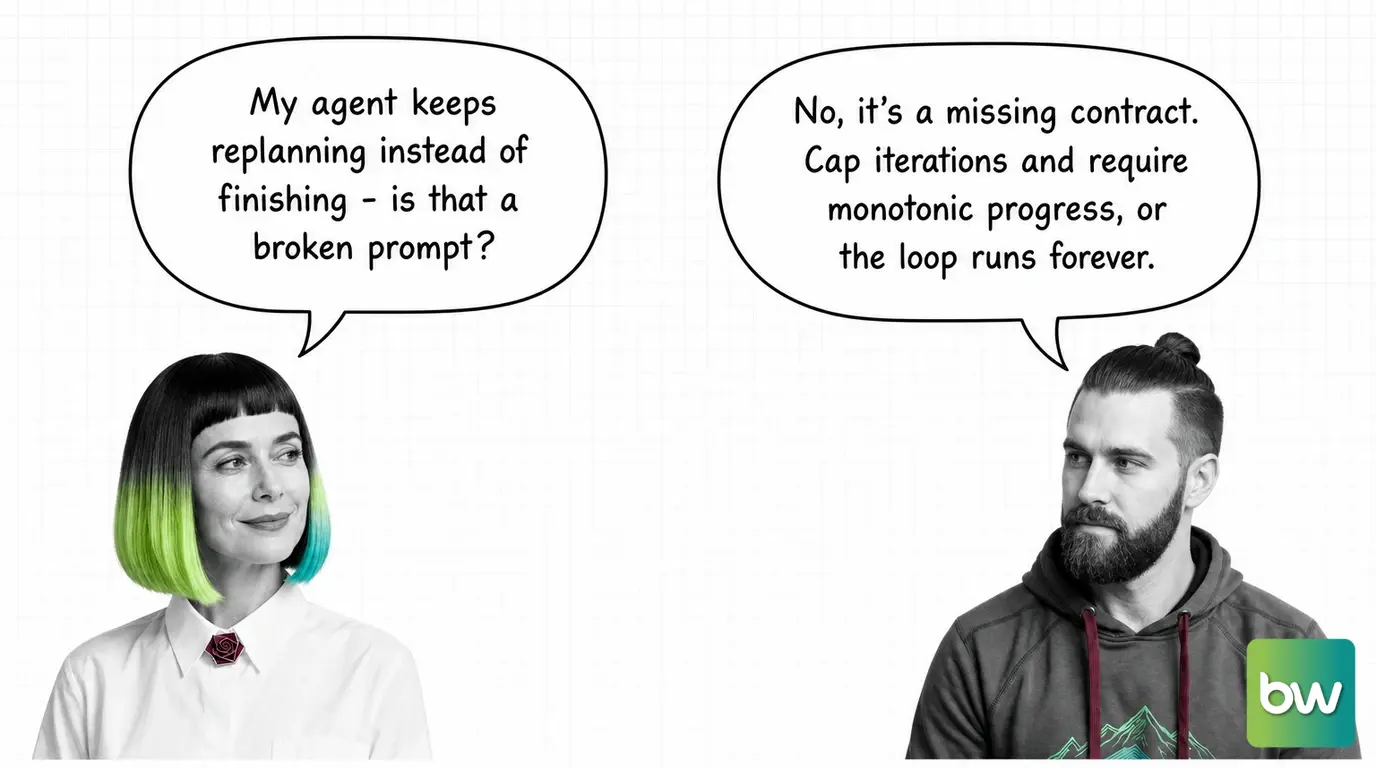
Two mix-ups cost teams the most debugging time.
Planning is not the same as adding more agents. Multi-agent systems coordinate several independent loops; agent planning and reasoning is what happens inside a single one of those loops before a second agent ever enters the picture. Reaching for a supervisor pattern to fix a planning failure usually multiplies a broken loop instead of fixing it.
A stronger reasoning model is not a substitute for an explicit pattern. The 2026 leaderboard race shows the same base model swinging tens of points depending on the scaffold wrapped around it — ReAct, Plan-and-Execute, and Reflexion are that scaffold, and skipping it to lean on raw model reasoning leaves the iteration cap, tool contract, and stop condition undefined.
ReAct, Plan-and-Execute, and Reflexion are not interchangeable defaults. ReAct interleaves one reasoning step with one action and observes before deciding again; Plan-and-Execute commits to a full plan upfront and executes it in batches; Reflexion adds a self-critique pass after a failed attempt. Which one fits depends on how much the task can be known in advance — not on which pattern is newest.
Q: Why does my ReAct agent keep looping instead of finishing the task? A: Usually a missing stop condition, not a bad prompt — nothing caps the iteration count or requires the plan to make monotonic progress, so the loop keeps re-observing and re-deciding. The framework build guide treats an explicit iteration cap as part of the loop contract, not an afterthought.
Q: Can a stronger reasoning model replace an explicit planning pattern? A: No — the same base model can swing tens of leaderboard points depending on the ReAct, Plan-and-Execute, or Reflexion scaffold wrapped around it. The 2026 agent reasoning race shows buyers starting to ask which scaffold before which model.
Q: When does a task need a multi-agent system instead of a single planning loop? A: Only once a single well-built loop is genuinely exhausted — multi-agent systems coordinate several planning loops through a supervisor or debate pattern, and multiplying a broken single loop just multiplies the failure.
Q: Who is accountable when an autonomous agent’s plan causes harm? A: Current tooling rarely answers this before deployment — an agent can plan and execute several actions in seconds with no human reviewing the chain. The accountability question argues audit trails and checkpoints belong in the design, not a postmortem fix.
Part of the AI agent architecture theme · closest neighbour: multi-agent systems. New to this from a software background? Start with the story: AI Agent Architecture for Developers: What Transfers, What Breaks.
Planning and reasoning are what separate a real agent from a glorified prompt loop. Understand how decomposition, tool choice, and self-reflection actually work under the hood before you trust an agent with anything important.
Concepts covered
Agent planning is not human cognition — it is token generation conditioned on observations. How ReAct, Plan-and-Execute, and Reflexion actually work.
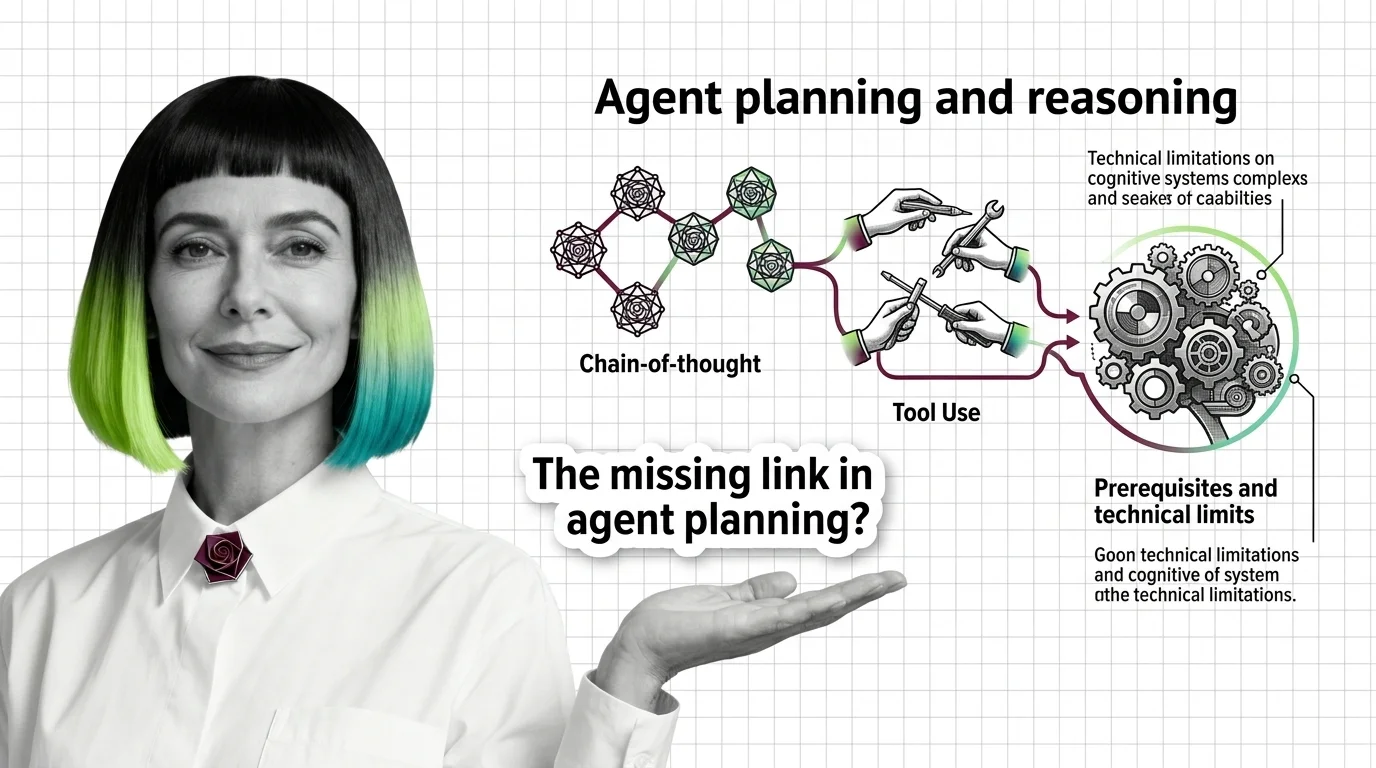
Agent planning rests on three primitives — chain-of-thought, tool use, and the ReAct loop. Learn the prerequisites and where each named pattern's ceiling lives.
Picking a planning pattern is a trade-off between speed, cost, and reliability. These guides walk through wiring ReAct loops, plan-and-execute graphs, and reflexion cycles in the leading frameworks so you can ship something that survives production.
Tools & techniques
An agent returns the wrong answer and every step logged success. Why an agent run debugs like a distributed trace, not a stack trace — and where your on-call instincts stop predicting.
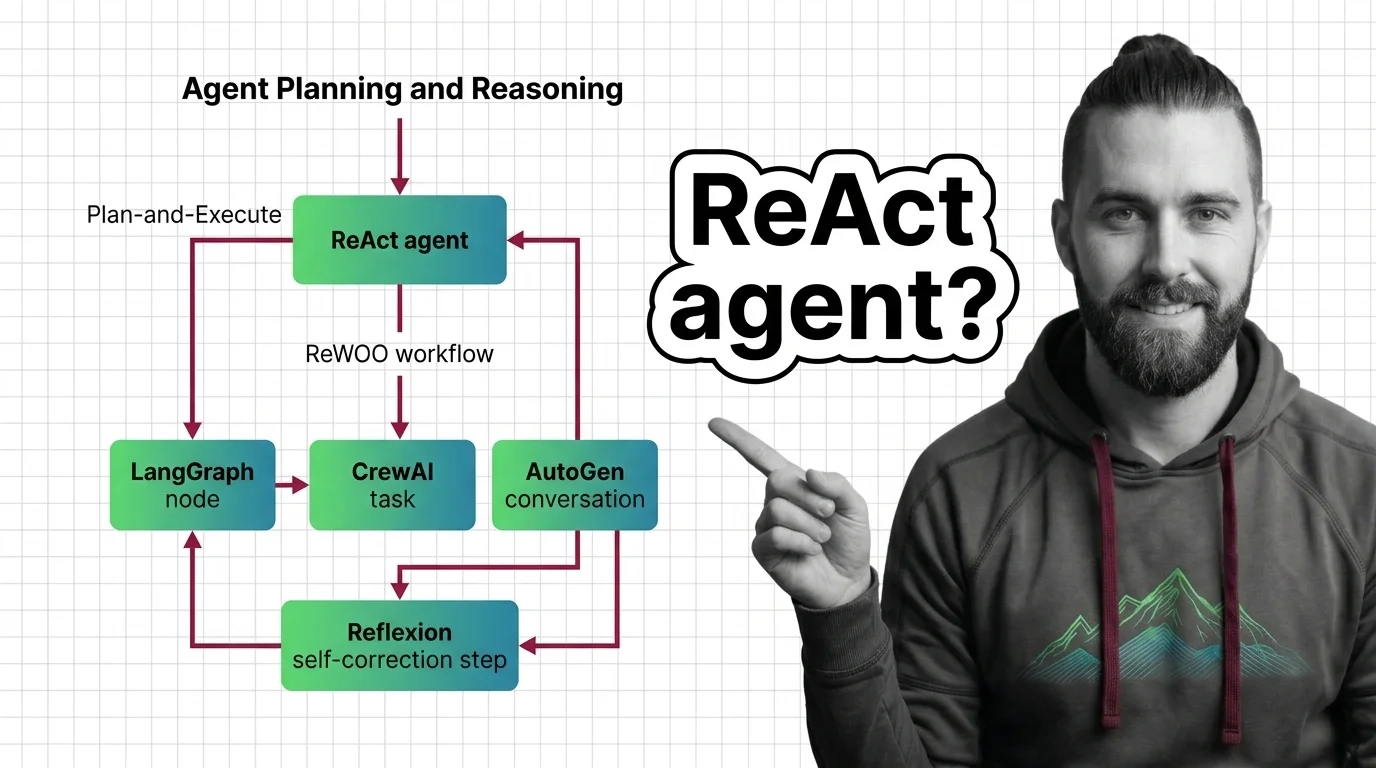
Planning agents fail when frameworks come before patterns. Match ReAct, Plan-and-Execute, Reflexion, or ReWOO to your task, then build on LangGraph or CrewAI.
Reasoning quality is where the frontier labs are now competing hardest, and benchmarks shift every few months. Following how top models rank on agentic tasks tells you which planning patterns are about to become viable and which are quietly being abandoned.
Models & benchmarks
Updated May 2026
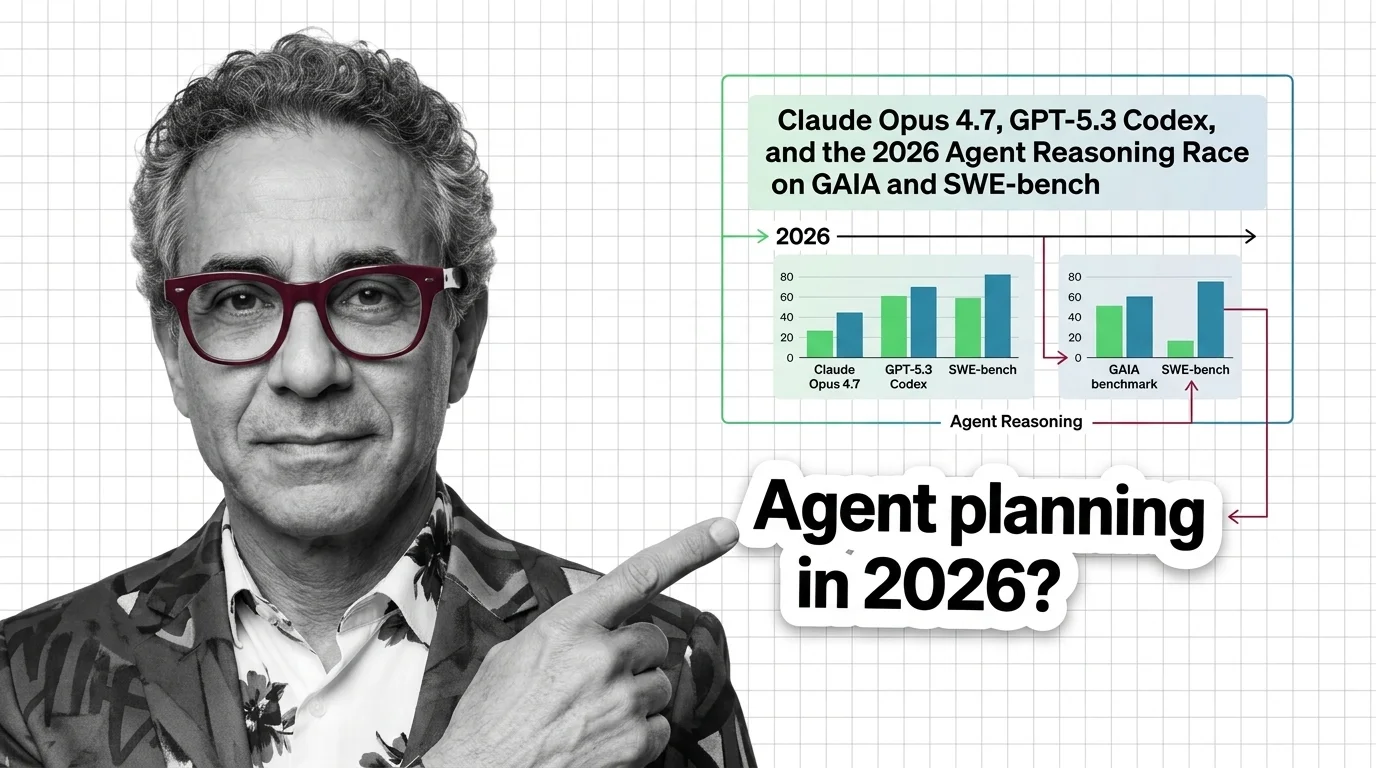
Opus 4.7, GPT-5.3 Codex, and Sonnet 4.5 are trading agent benchmark crowns on GAIA and SWE-bench. The pattern reveals where to bet your stack in 2026.
An agent that plans its own actions is an agent that can plan the wrong actions. Think carefully about audit trails, human checkpoints, and failure modes before letting a reasoning loop touch real systems or real users.
Risks & metrics
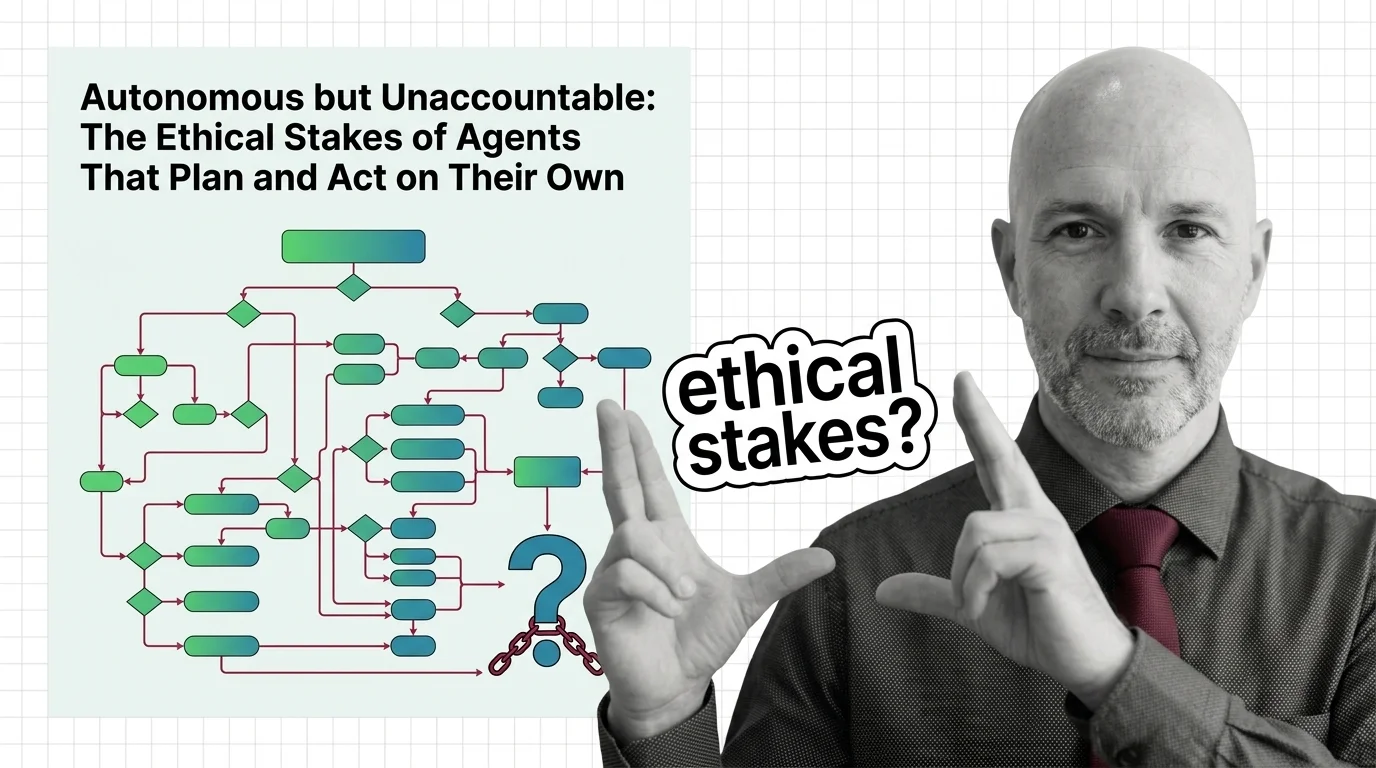
Autonomous AI agents plan, call tools, and act before humans can review the result. The accountability chain stays thin. The ethical stakes only grow.