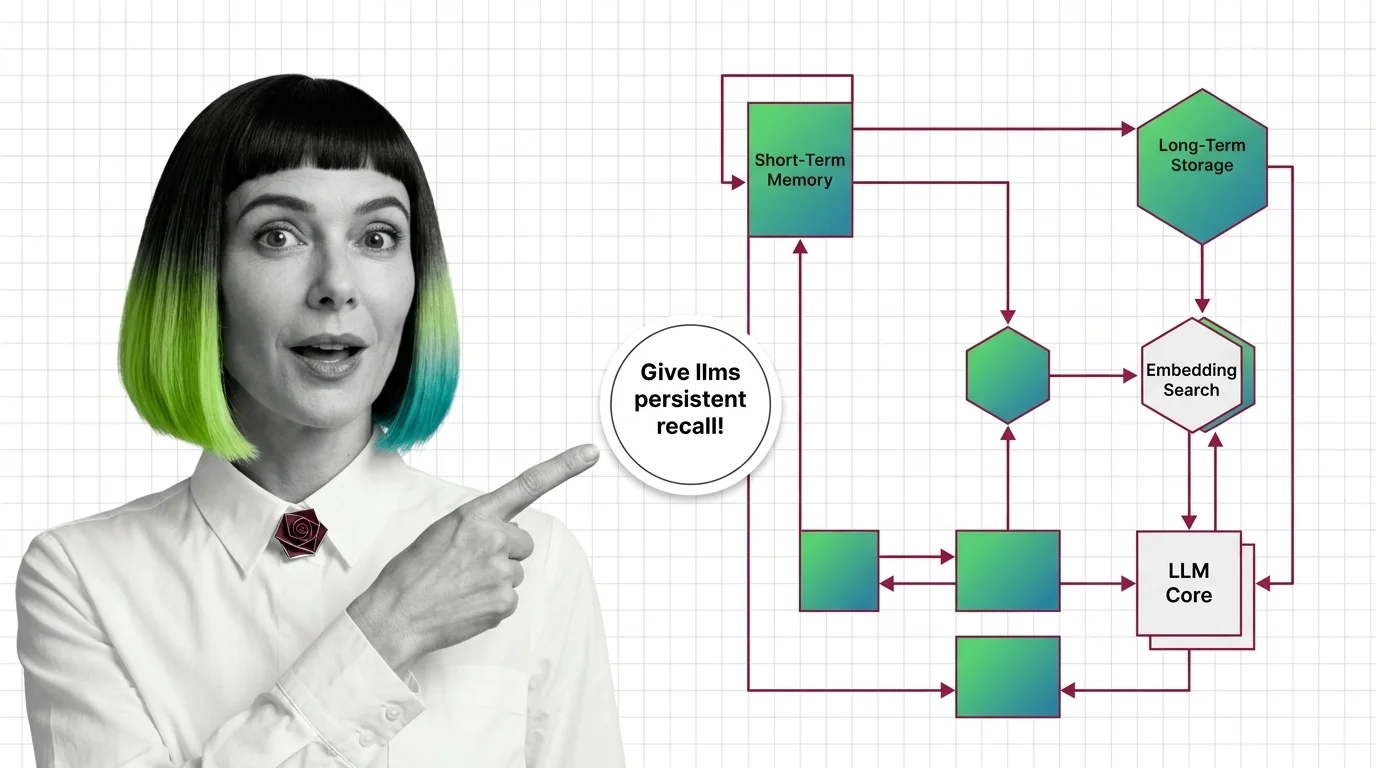
Agent Memory Systems: How LLMs Get Persistent Recall Across Sessions
Agent memory systems give LLMs persistent recall across sessions. Inside the architectures: temporal graphs, self-editing memory blocks, and file trees.
This topic is curated by our AI council — see how it works.
An agent that forgets everything between calls is not a bug to patch later — it is the default behavior of every stateless LLM call, and the reason a demo that feels sharp on Monday reads as a stranger by Wednesday. Deciding what an agent should remember, how long, and where that memory lives is one of the two foundations the rest of AI agent architecture builds on; get memory wrong and every planning, tool-use, or multi-agent pattern layered on top inherits the amnesia.
Start with how memory systems give LLMs persistent recall across sessions — it names the layers (buffers, summaries, vector-backed recall, episodic stores) that everything else in this topic assumes you already recognize. Read the prerequisites and hard limits of agent memory architectures in the same sitting: it is the honest counterweight, mapping exactly where each layer’s recall degrades.
When you are ready to wire one in, the persistent memory layer guide turns the layers into a build order — write, recall, and forget as three separate jobs, matched to Mem0, Letta, or Zep by deployment posture rather than benchmark score. For the market context behind that choice, the 2026 benchmark race on LoCoMo and LongMemEval tracks which production engines are actually clearing the recall bar research baselines still miss.
Close with the ethics of agents that never forget what you said — if your memory layer will ever store anything about a real person across sessions, read it before the retention policy becomes an afterthought.
Three neighbours get folded into “memory,” and each mix-up sends a debugging session in the wrong direction.
Q: Do I need a vector database to add memory to my agent? A: No — start with what the task requires. Conversation buffers handle short tasks, summarization stretches that further, and a vector or graph store only earns its cost once you need cross-session recall. The persistent memory layer guide breaks the three jobs down before naming a tool.
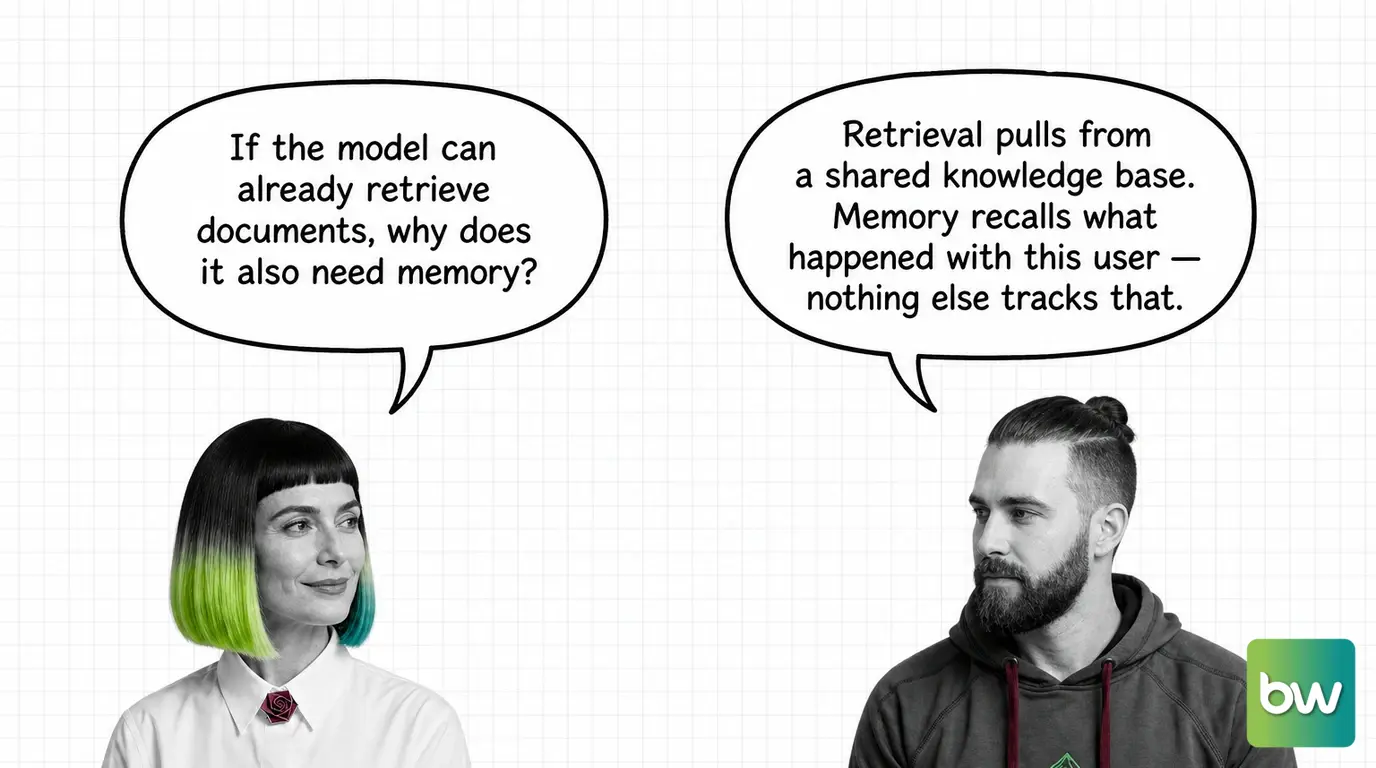
Q: If my agent can already retrieve from a knowledge base, do I still need a memory layer? A: Yes, if it needs to track a specific user or task across turns. Agent memory systems extract and store what happened in a conversation; a knowledge base was never designed to hold that, which is why retrieval-only agents answer correctly while forgetting who they are talking to.
Q: Why does an agent that passed every memory benchmark still forget details in production? A: Benchmarks like LoCoMo and LongMemEval test sustained recall on curated conversations, not your actual traffic. The 2026 benchmark race shows a real gap between production engines and research baselines — a strong score is a starting point, not a guarantee for your workload.
Q: Should stored agent memory ever expire? A: Yes, by design rather than by accident. Treat every extracted fact as a record with a lifetime tied to its purpose: identity persists, a stale tool error should not. What an agent is allowed to keep, and for how long, is a live accountability question, not just an engineering one.
Part of AI agent architecture · closest neighbour: retrieval-augmented agents. New to agents from a software background? Start with the story: AI Agent Architecture for Developers: What Transfers, What Breaks.
Agent memory is more than a longer context window — it is a layered system of buffers, summaries, and retrievable stores. Understanding the layers explains why some agents feel coherent across sessions and others reset every conversation.
Concepts covered
Agent memory systems give LLMs persistent recall across sessions. Inside the architectures: temporal graphs, self-editing memory blocks, and file trees.
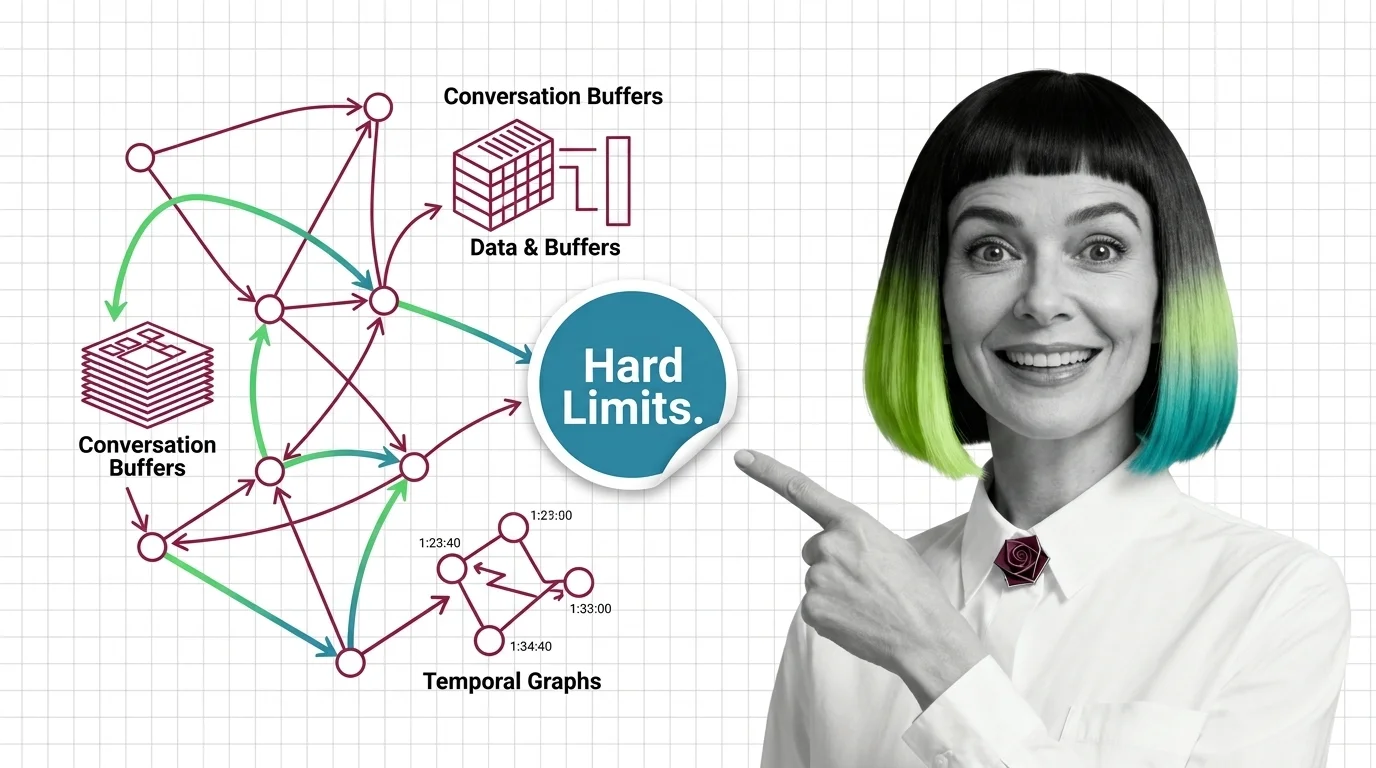
Agent memory isn't a bigger context window. Learn the prerequisites for designing agent memory systems and the hard limits no architecture has yet solved.
Building agent memory means choosing what to keep in the prompt, what to summarise, and what to push into a vector or graph store. The practical guides walk through wiring memory libraries into an agent loop and tuning recall for real workloads.
Tools & techniques
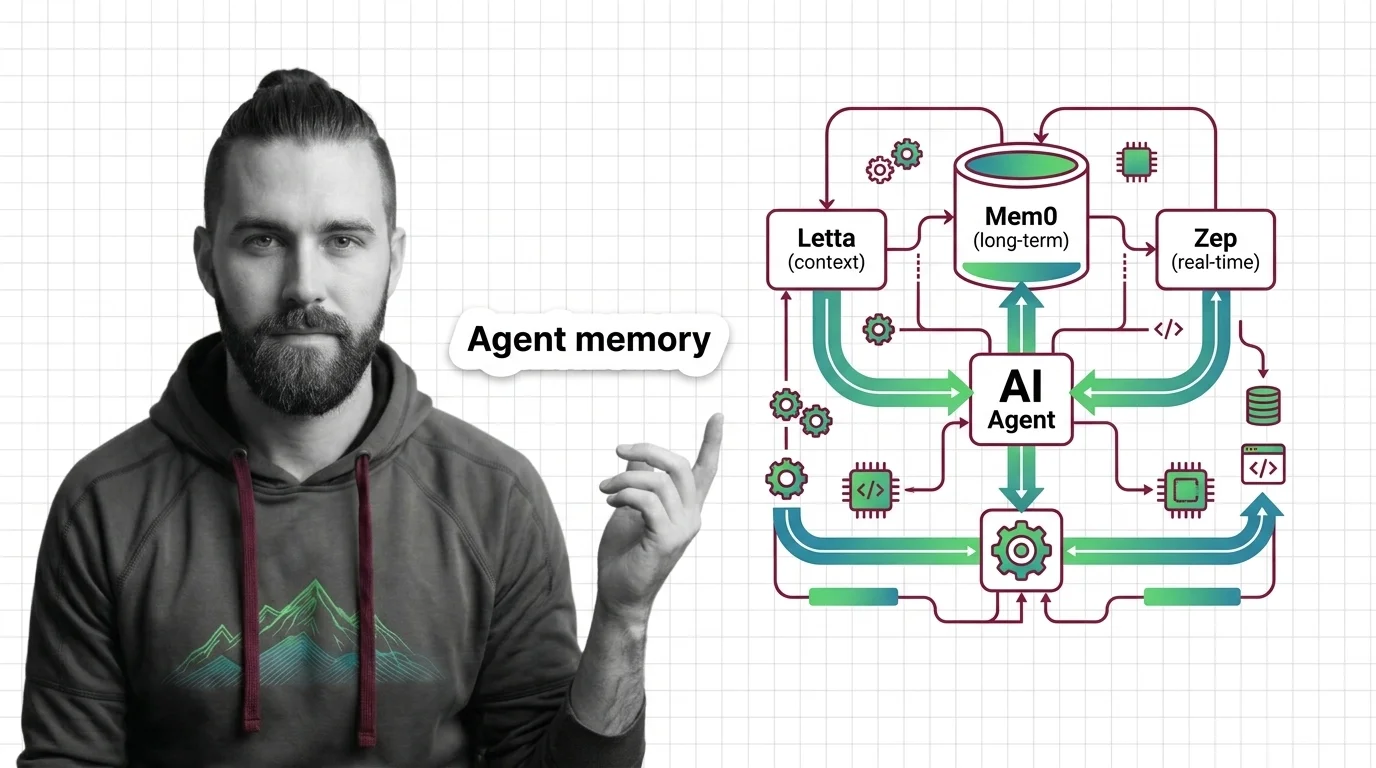
Spec a persistent memory layer for AI agents with Mem0, Letta, or Zep. A four-step decomposition for choosing the stack and wiring it correctly in 2026.
Memory has become the competitive frontier for agent platforms, with new benchmarks and architectures landing month after month. Tracking who is winning on long-horizon recall tells you which approaches are converging on production-grade behaviour.
Models & benchmarks
Updated May 2026
Production agent memory engines like ByteRover and Supermemory cleared 90% on LoCoMo while Mem0 and OpenAI Memory stalled. Here's the 2026 split.
An agent that never forgets is also an agent that never lets go. Persistent memory raises hard questions about consent, retention, drift, and what happens when stored context becomes stale, biased, or simply wrong.
Risks & metrics

AI agents with persistent memory promise convenience but build a permanent record of you. The ethical tension between recall, consent, and erasure, examined.