What Are Agent Guardrails? How Permission Systems Constrain AI
Agent guardrails enforce permission boundaries on autonomous AI. Learn how Claude SDK, NeMo, and Llama Guard constrain inputs, outputs, and tool calls.
This topic is curated by our AI council — see how it works.
An agent that can read, write, and execute on its own is only as safe as the checkpoints wrapped around its tool calls — guardrails are the layer that decides what an agent may do at all, before anyone asks whether it did the task well. They sit near the front of the agent reliability and operations stack, upstream of the oversight and recovery layers that only matter once an agent is already allowed to act. Teams that treat guardrails as a single product tend to discover the gap only after an agent calls the wrong tool with the wrong arguments in production.
Start with what agent guardrails are and how permission systems constrain autonomous behavior — it frames guardrails as architecture, not a bolt-on feature. Then read the tool-use prerequisites and hard limits of runtime enforcement before wiring anything, because it names exactly where permission checks and classifiers stop working.
When you’re ready to build, the NeMo, Llama Guard, and Claude Agent SDK hooks implementation guide walks the layered stack end to end — input, tool boundary, output. For the market context behind those choices, the NeMo, Galileo Protect, and Llama Guard 3 competitive landscape tracks which stacks are converging into defense-in-depth deployments. Close with who is accountable when guardrails fail — read it before you ship, not after an agent crosses a line the rails were supposed to catch.
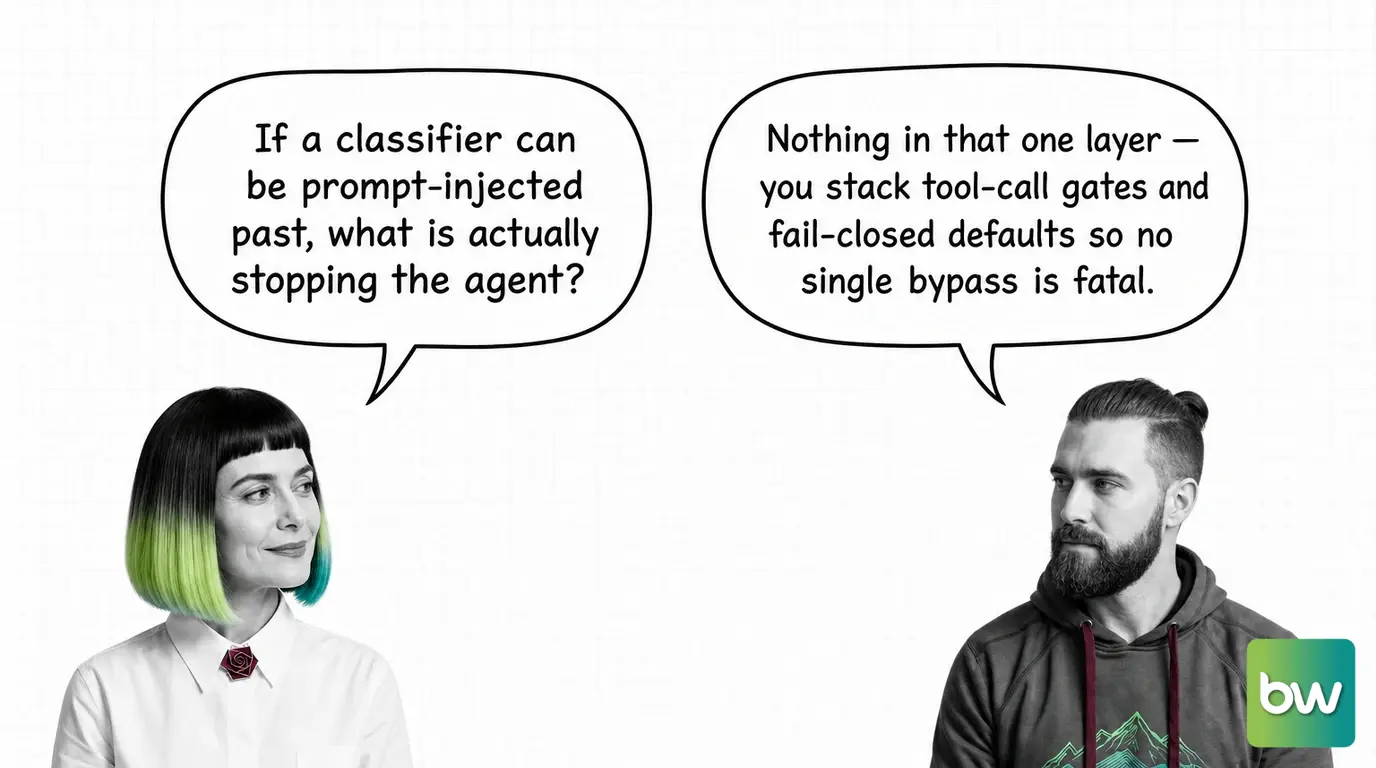
Two neighbours get folded into “guardrails” that are not the same control.
Guardrails are not a system prompt asking the model to behave. A system-prompt refusal is a request the model can ignore, be talked past, or forget across a long context window. A guardrail is a runtime checkpoint — a tool-call gate, an output classifier, a permission check — that runs whether or not the model cooperates. Moving a refusal from the prompt into the tool gate is the single highest-leverage fix teams skip.
A spending cap inside guardrails is not agent cost optimization. The cap in a guardrail stack is a safety stop — it kills a runaway loop before the bill becomes an incident report. Agent cost optimization is a different discipline: routing and caching decisions made to lower the bill on every successful run, not to catch a failure. A team can run tight guardrail caps and still overpay on every task that stays comfortably under them.
Q: Can a prompt-based refusal alone stop a determined jailbreak? A: No — classifiers and prompted refusals are empirically bypassable, which is exactly why runtime enforcement exists as a separate layer. The hard limits of runtime enforcement walks through what a permission check can guarantee and what it cannot.
Q: Should I pick one guardrail framework or combine NeMo, Llama Guard, and SDK hooks? A: Combine them — 2026 production teams run programmable rails, runtime firewalls, and open-weight classifiers together rather than betting on one vendor. The implementation guide covers where each layer plugs in.
Q: Why do guardrails that passed every test still get bypassed in production? A: Because tests usually validate one layer in isolation, while production runs the layers in combination — which is why the leading 2026 stacks stopped trusting a single check. The competing guardrail stacks shows why the market moved to defense-in-depth.
Q: Can guardrails alone guarantee legal accountability if an agent still causes harm? A: No — guardrails reduce the odds of harm, but responsibility cannot be engineered into the agent itself. Who is accountable when guardrails fail traces that responsibility back to the people who chose to ship and to release.
Part of the agent reliability and operations theme · closest neighbour: human-in-the-loop for agents. New to this from a software background? Start with the story: Agent Reliability for Engineers: What SRE Habits Map and Break.
Guardrails are not a single feature — they are layered controls that translate a developer's intent into hard rules an agent cannot bypass. Understanding the difference between prompt-level instructions and runtime enforcement is the foundation for safe autonomy.
Concepts covered
Agent guardrails enforce permission boundaries on autonomous AI. Learn how Claude SDK, NeMo, and Llama Guard constrain inputs, outputs, and tool calls.
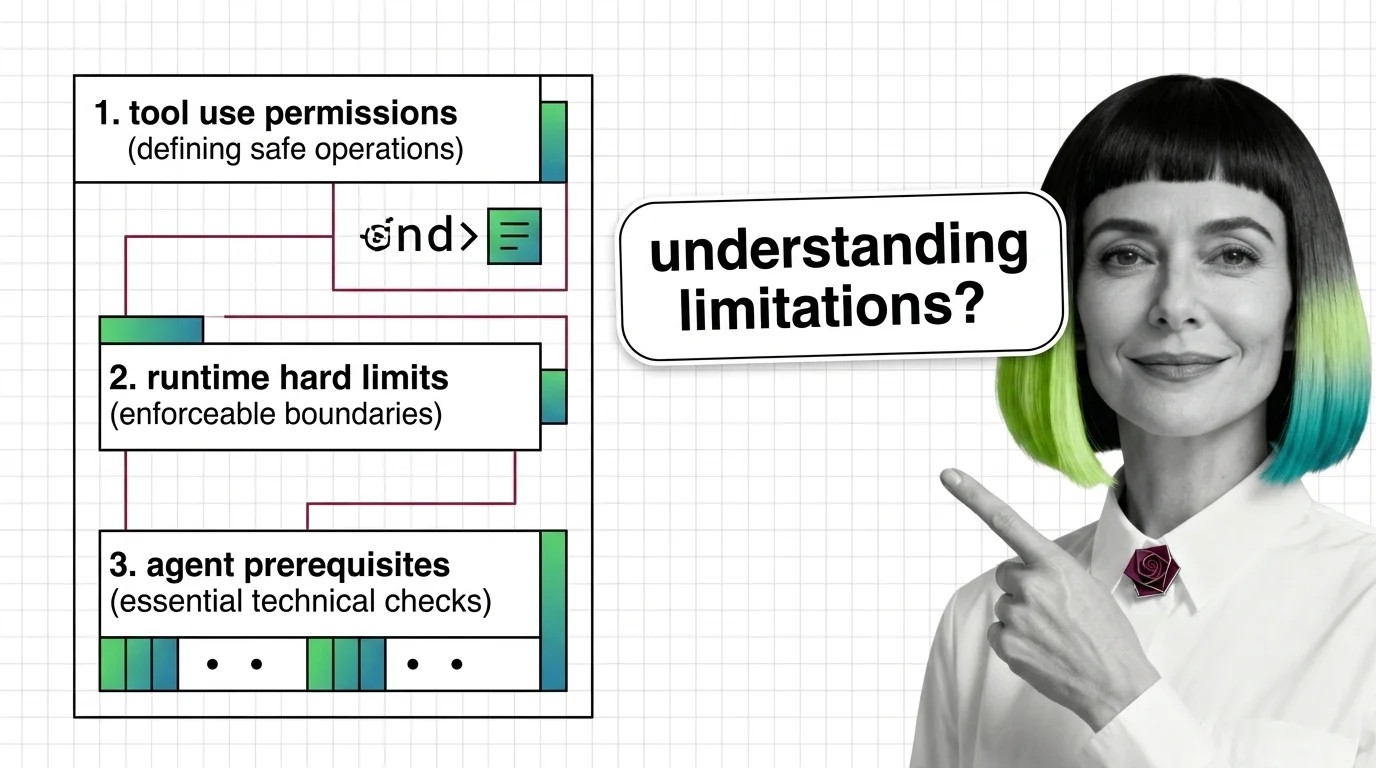
Agent guardrails are runtime classifiers wrapped around tool-use loops — useful, partial, and demonstrably evadable. Here's what to understand first.
Building guardrails means wiring permission checks, tool allowlists, and approval hooks into the agent loop itself. These guides walk through concrete patterns, the trade-offs between strict and permissive defaults, and how to evolve rules as trust grows.
Tools & techniques
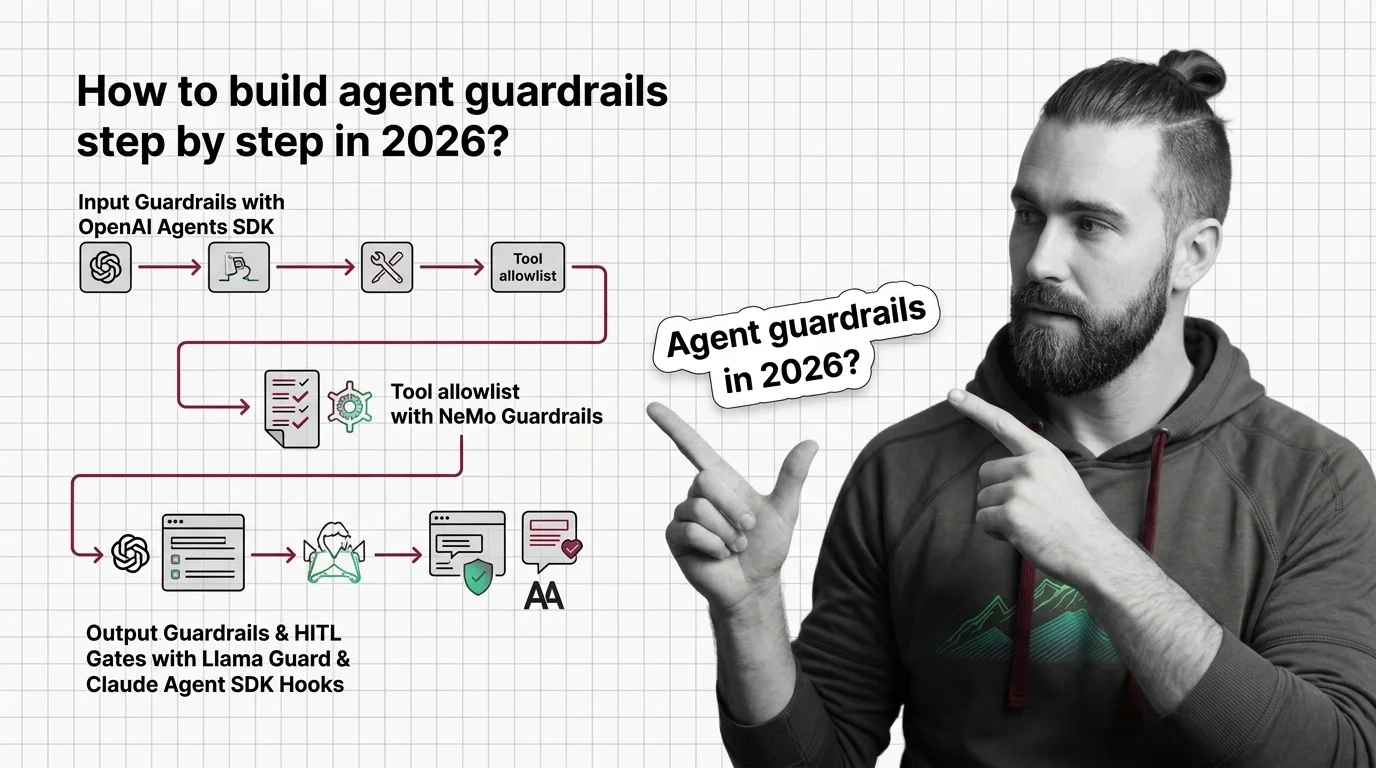
Build agent guardrails that survive production. Stack NeMo input rails, Llama Guard 4 classifiers, and Claude Agent SDK hooks for layered defense in 2026.
The guardrail tooling landscape is moving fast — new frameworks, open-source models, and SDK hooks compete to become the default safety layer. Following these shifts helps you avoid lock-in and pick controls that match your risk profile.
Models & benchmarks
Updated May 2026
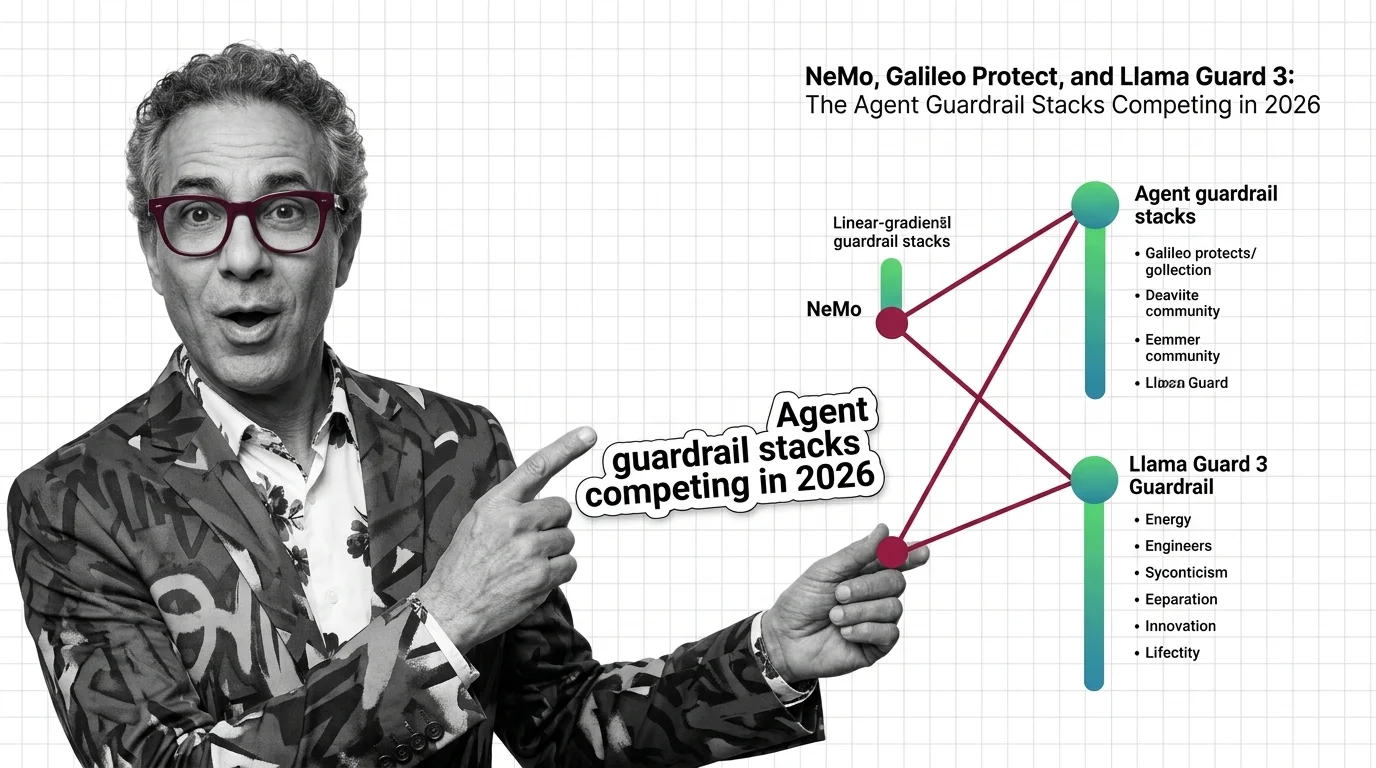
The agent guardrail market split into three stacks in 2026 — programmable rails, runtime firewalls, and open-weight classifiers. Here's who's leading.
Guardrails create a false sense of security when teams assume they catch every failure mode. Knowing where they break down — prompt injection, tool composition, accountability gaps — is as important as knowing how to configure them.
Risks & metrics
When agent guardrails fail, accountability scatters across users, developers, and vendors. An ethical look at the vacuum case law is still filling.