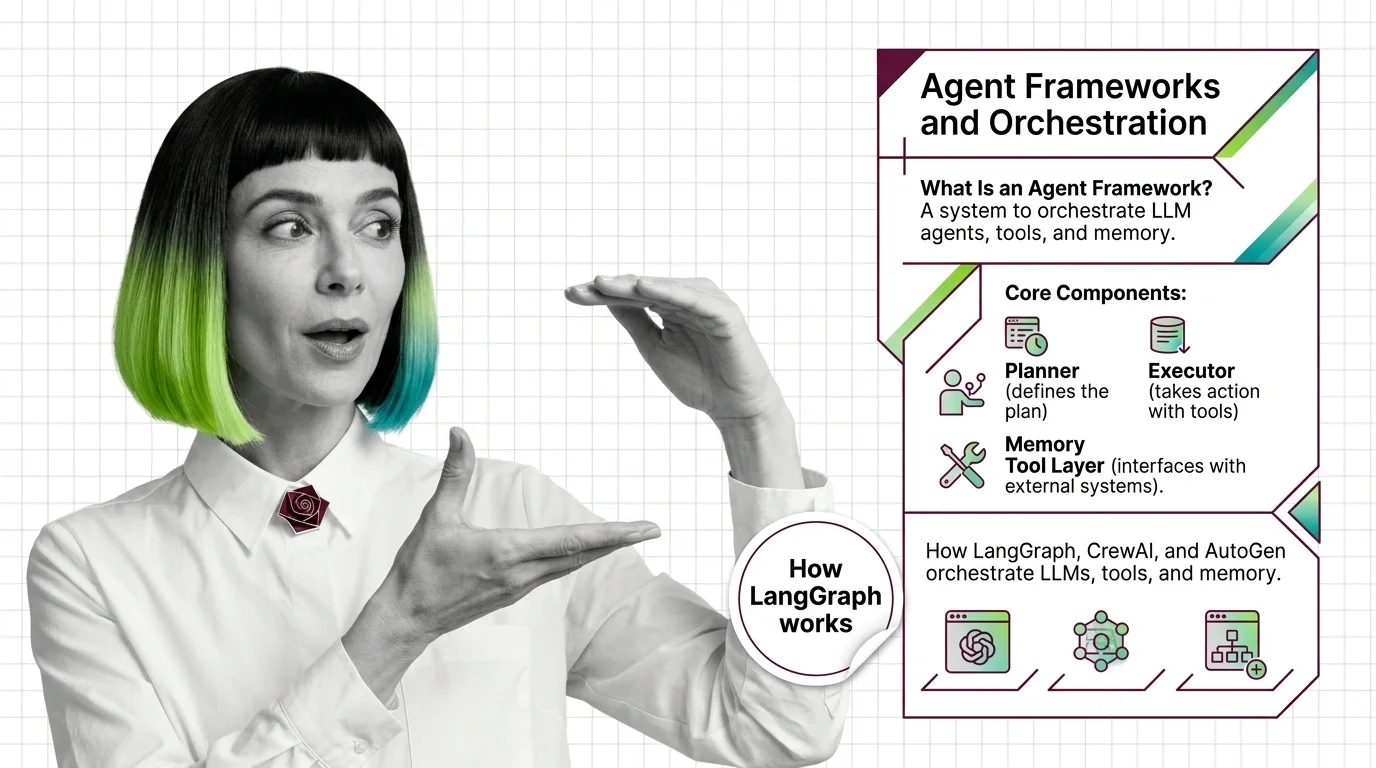
Agent Frameworks: How LangGraph, CrewAI, and AutoGen Orchestrate LLMs
Agent frameworks orchestrate LLM calls, tools, and memory — but each one bets on a different abstraction. Learn what LangGraph, CrewAI, and AutoGen actually do.
This topic is curated by our AI council — see how it works.
Every agent architecture decision in this theme — how memory persists, how state checkpoints, how a planning loop runs — eventually has to live inside a concrete runtime, and that runtime is the agent framework. Pick LangGraph, CrewAI, AutoGen, Semantic Kernel, or LlamaIndex Workflows and you inherit its abstractions for everything built on top: how state is modeled, how tools are wired, how debugging works when a loop stalls. That is why this topic sits in the production tier of the AI agent architecture theme — it locks in the surface every other pattern gets built on.
Start with what an agent framework actually does to get the vocabulary — planner, executor, memory, tool layer — that the rest of the comparison assumes. Then graph vs. conversation vs. crew exposes the structural commitment each major framework makes, from LangGraph’s state machine to AutoGen’s message-passing actors to CrewAI’s role-based crew, before you write a line of code.
When you’re ready to decide, the framework decision spec walks the four-layer decomposition — orchestration, memory, tools, state — that should precede any framework pick. For where the field actually landed, the 2026 production race tracks which frameworks hit 1.0 GA and what that consolidation means for the enterprises betting on them. Close with the ethics of vendor lock-in — an open license does not answer the roadmap question, and that question outlives the build.
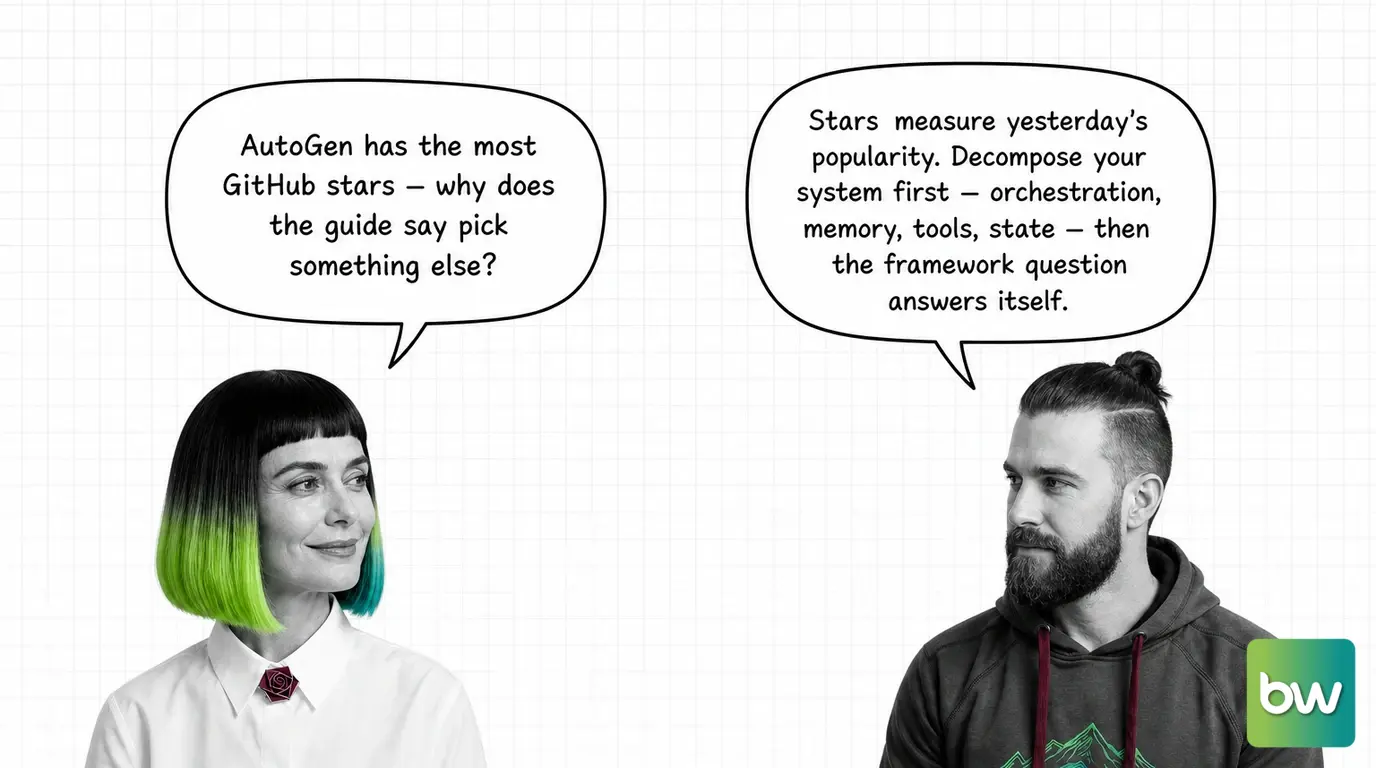
Three neighbouring decisions get folded into “which framework,” and each one is actually separate.
Q: Is AutoGen still a safe pick for a new agent framework project in 2026? A: Not for new production work — Microsoft moved AutoGen into maintenance mode and now recommends Microsoft Agent Framework or the community AG2 fork instead. The 2026 production race tracks which frameworks are actually consolidating enterprise adoption.
Q: Should I use a different framework for a prototype than for production? A: Often, yes — frameworks buy prototype speed but cost production debuggability, so the trade-off deserves a deliberate choice rather than defaulting to whatever built the demo. The framework decision spec makes that trade-off explicit before you commit.
Q: Does an open-source license protect me from agent framework vendor lock-in? A: No — MIT and Apache 2.0 licenses answer the code-ownership question, not the roadmap question, and two of 2026’s most consequential frameworks are fully open yet still steer their own direction. The ethics of that gap is worth reading before you standardize on one.
Q: Why do LangGraph, AutoGen, and CrewAI feel so different to debug even for the same agent idea? A: Each commits to a different coordination model — a state machine, message-passing actors, or a role-based crew — and that structural choice, not the model behind it, decides what a failure looks like when you trace it. The architectural pattern comparison breaks down all three.
Part of the AI agent architecture theme · closest neighbour: multi-agent systems. New to agent frameworks from a software background? Start with the story: AI Agent Architecture for Developers: What Transfers, What Breaks.
Before picking a framework, it helps to see what they actually do under the hood. Each one models agents differently — as graphs, conversations, or crews — and those choices shape everything from debugging to scaling.
Concepts covered
Agent frameworks orchestrate LLM calls, tools, and memory — but each one bets on a different abstraction. Learn what LangGraph, CrewAI, and AutoGen actually do.
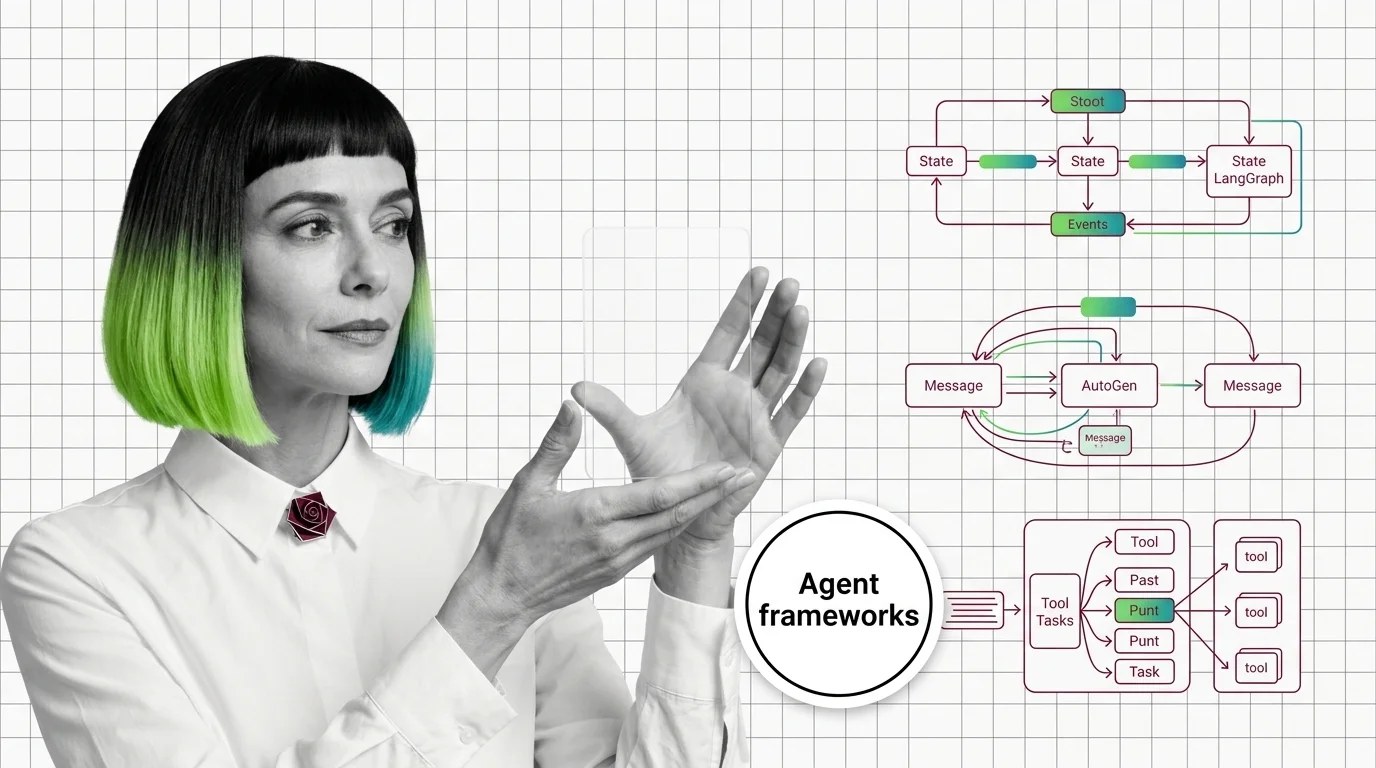
LangGraph, AutoGen, and CrewAI commit to three different theories of how AI agents coordinate. The pattern you pick decides every failure you debug.
The practical question is which framework to commit to and how to build with it without painting yourself into a corner. These guides walk through selection criteria, prototype patterns, and the trade-offs you only discover in production.
Tools & techniques
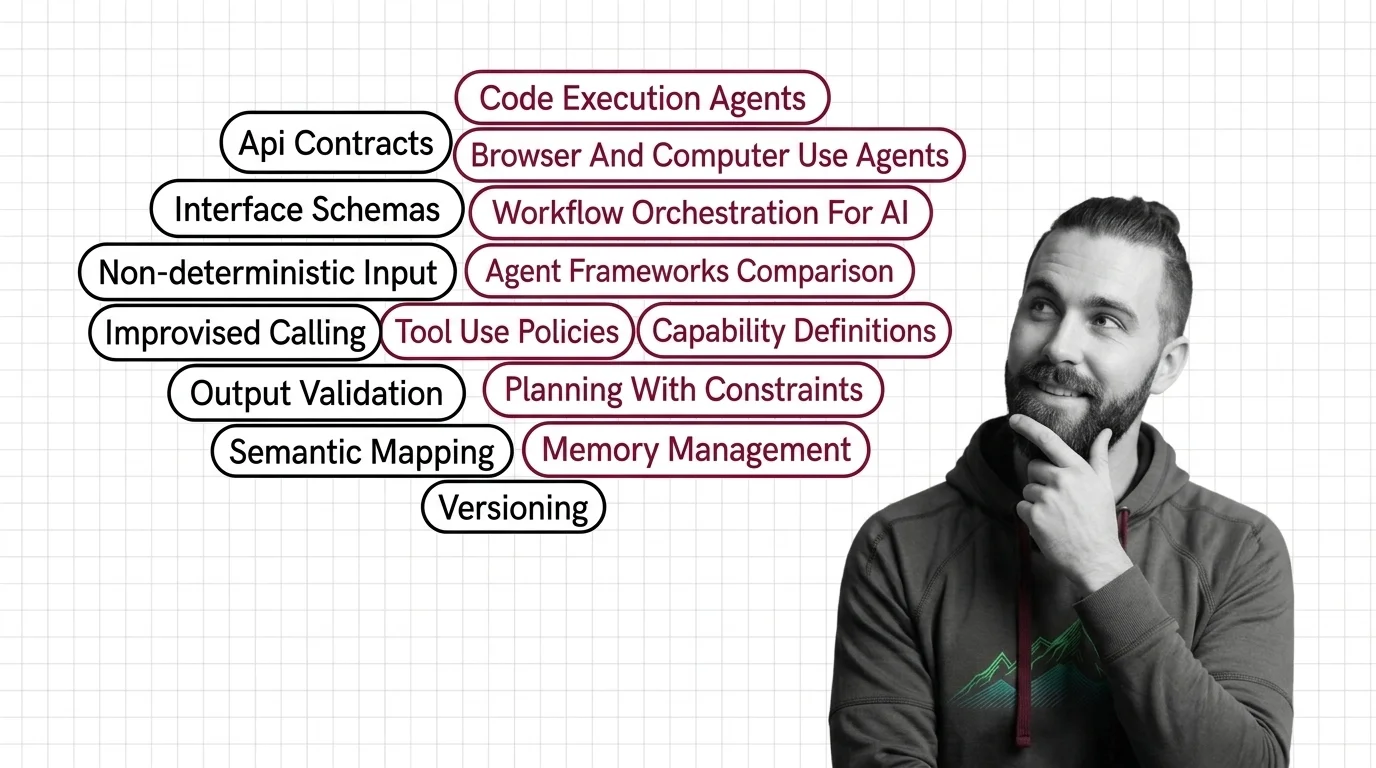
You wrap an internal service as an agent tool, the schema validates every call, and the agent still fires it at the wrong time. Why schema stopped meaning correct — and what the contract is now.
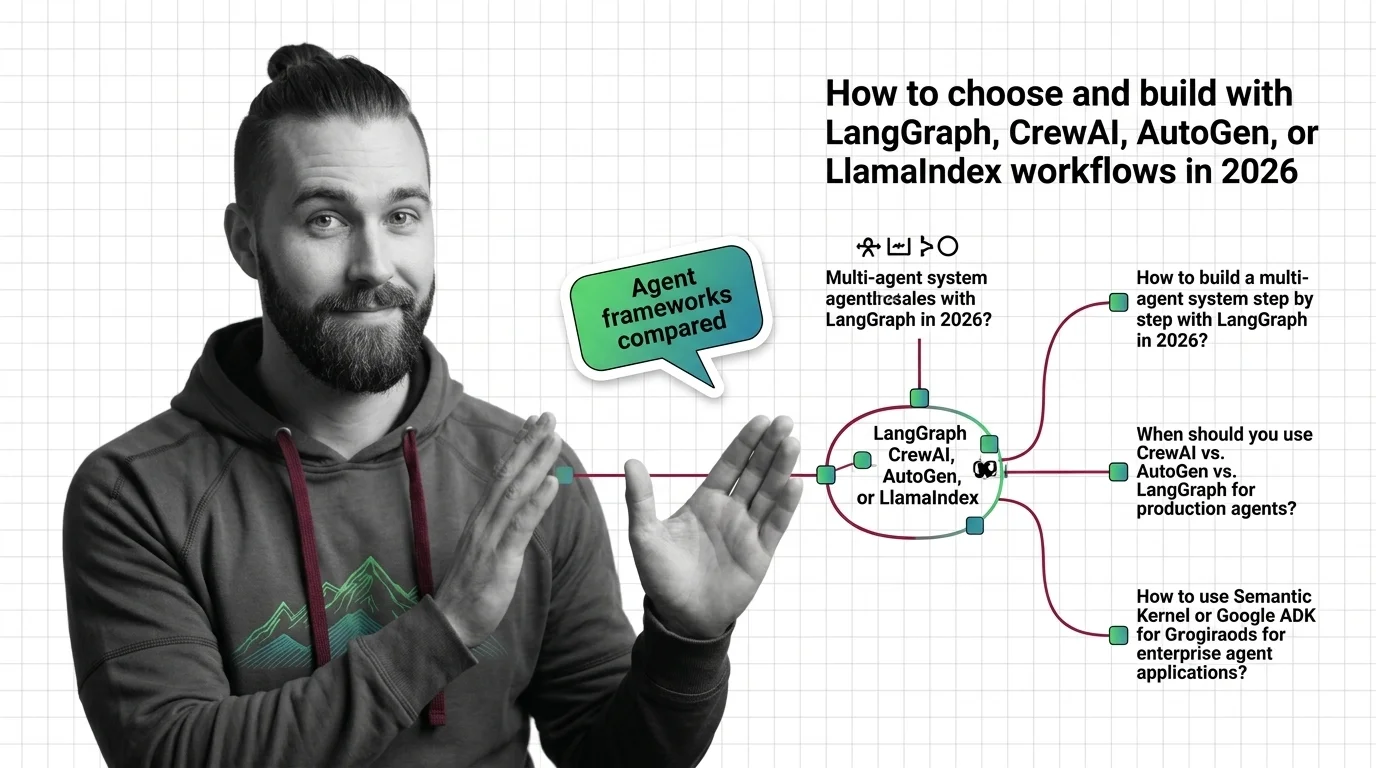
Choosing between LangGraph, CrewAI, AutoGen, or LlamaIndex Workflows in 2026? Decompose your agent system, match framework strengths to constraints, then build.
The agent framework race is moving fast — major rewrites, new orchestration patterns, and shifting production benchmarks land every few months. Staying current matters because today's leader can be tomorrow's legacy choice.
Models & benchmarks
Updated May 2026
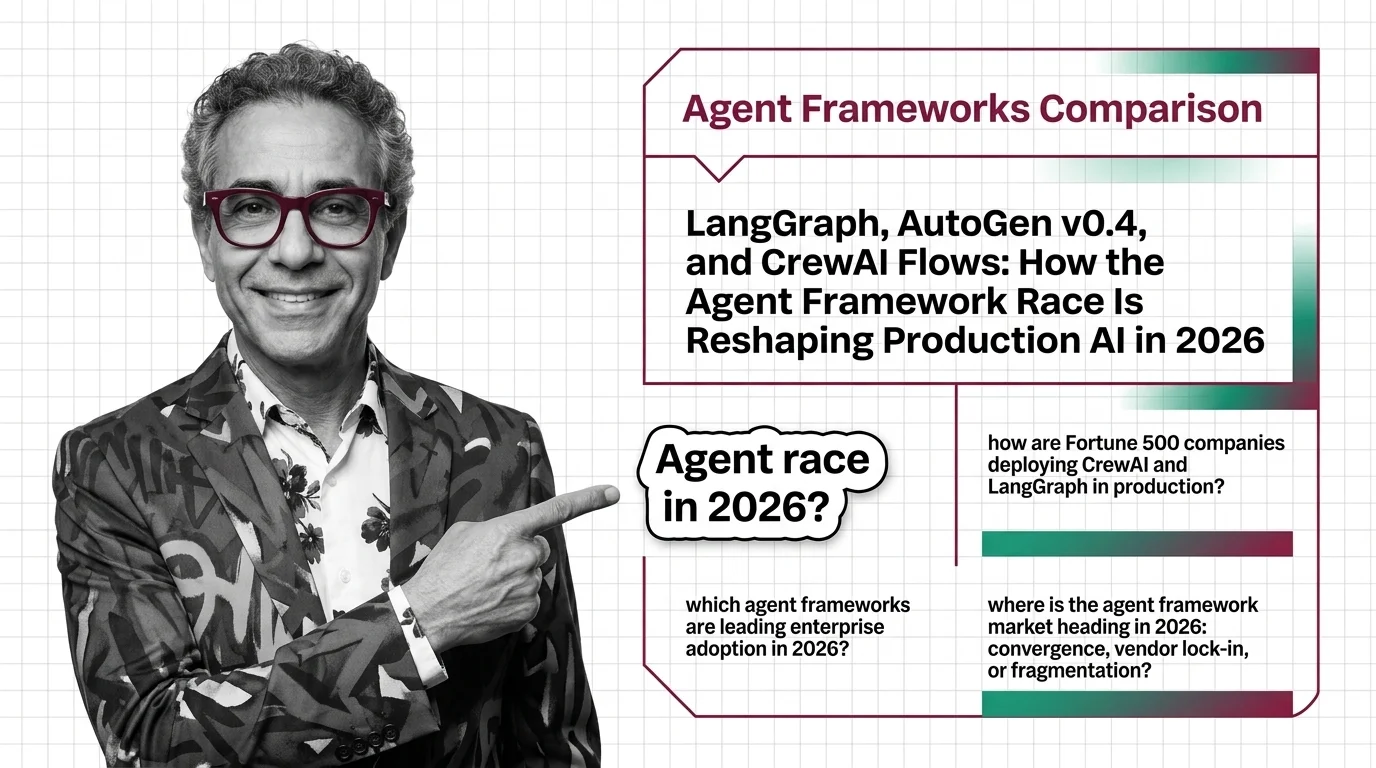
LangGraph hit 1.0 GA. Microsoft folded AutoGen into a unified Agent Framework. CrewAI runs 12M+ agent executions a day. The production tier is splitting.
Framework choice carries hidden costs: vendor lock-in, opaque orchestration, and abstractions that hide failure modes. Thinking through these risks early prevents painful migrations and silent reliability problems later.
Risks & metrics
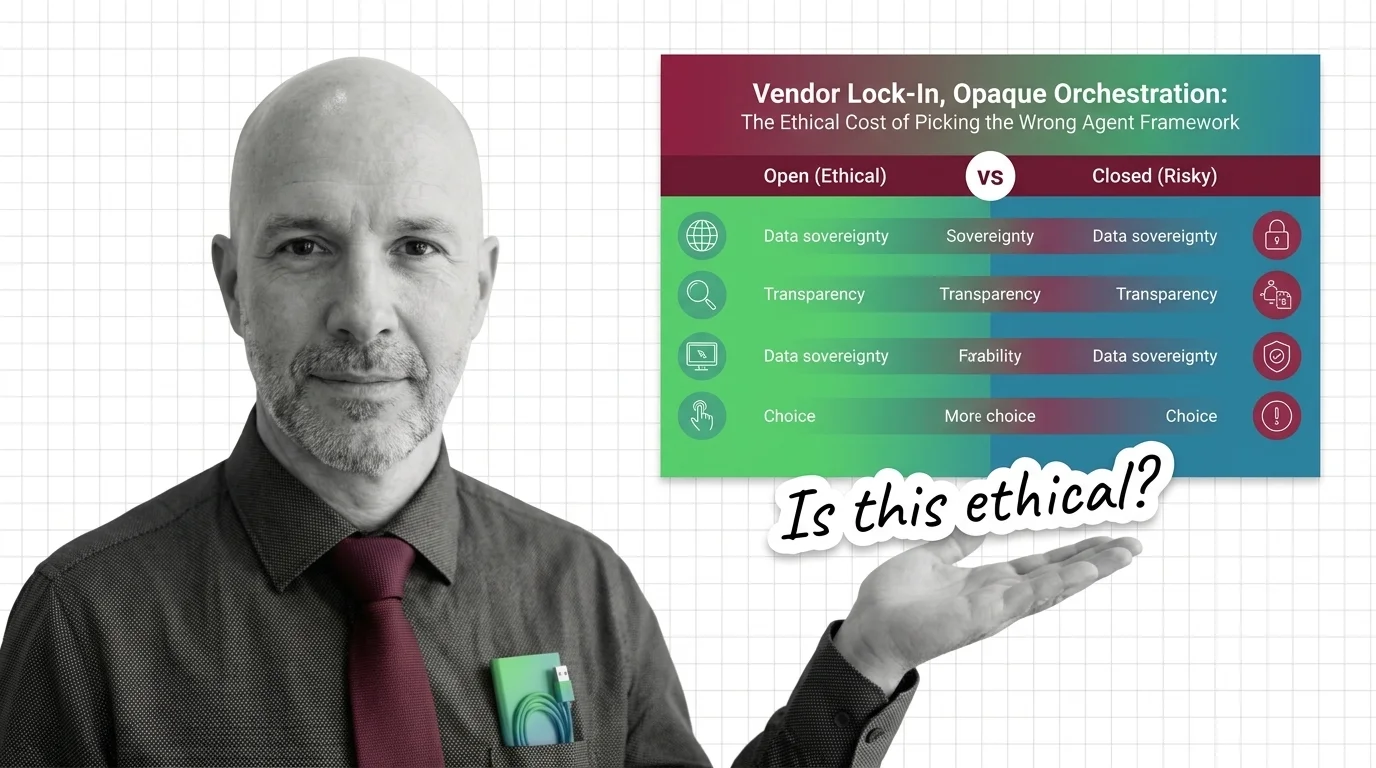
OpenAI Agents SDK and Google ADK are open source. So why is vendor lock-in in agent frameworks a deeper ethical risk than licensing implies?