Agent Evaluation: How Trajectory Analysis Measures AI Agents
Agent evaluation grades the path, not just the final answer. Learn how trajectory analysis exposes silent reasoning failures in production AI agents.
This topic is curated by our AI council — see how it works.
A high task-completion rate is not proof an agent is doing its job well — it can hide wrong answers, runaway cost, or a decision path nobody could reconstruct afterward. Completion alone never grades the path the agent took to get there, which is a different question than whether it arrived. That gap is why this topic opens the agent reliability and operations stack rather than closing it — every guardrail, retry policy, and cheaper model swap downstream is judged through the numbers produced here.
Start with what trajectory analysis actually scores — it explains why grading the sequence of tool calls catches failures a single accuracy number hides. Read the prerequisites — LLM-as-judge, trajectory scoring, and cost-per-task limits next: it names what each of those three measurement layers can and cannot tell you before you commit to a metric.
When you’re ready to wire it up, the pipeline guide for LangSmith, Braintrust, and DeepEval turns the three prerequisites into a CI layer, an experiments layer, and a production trace layer that run together. For where the vendor landscape is moving, the read on Maxim, Galileo, and Laminar explains why agent-first eval platforms are pulling share from generic observability tools. Close with when agent evals lie — if LLM-as-judge scoring sits at the center of your pipeline, read this before you present its numbers as ground truth.
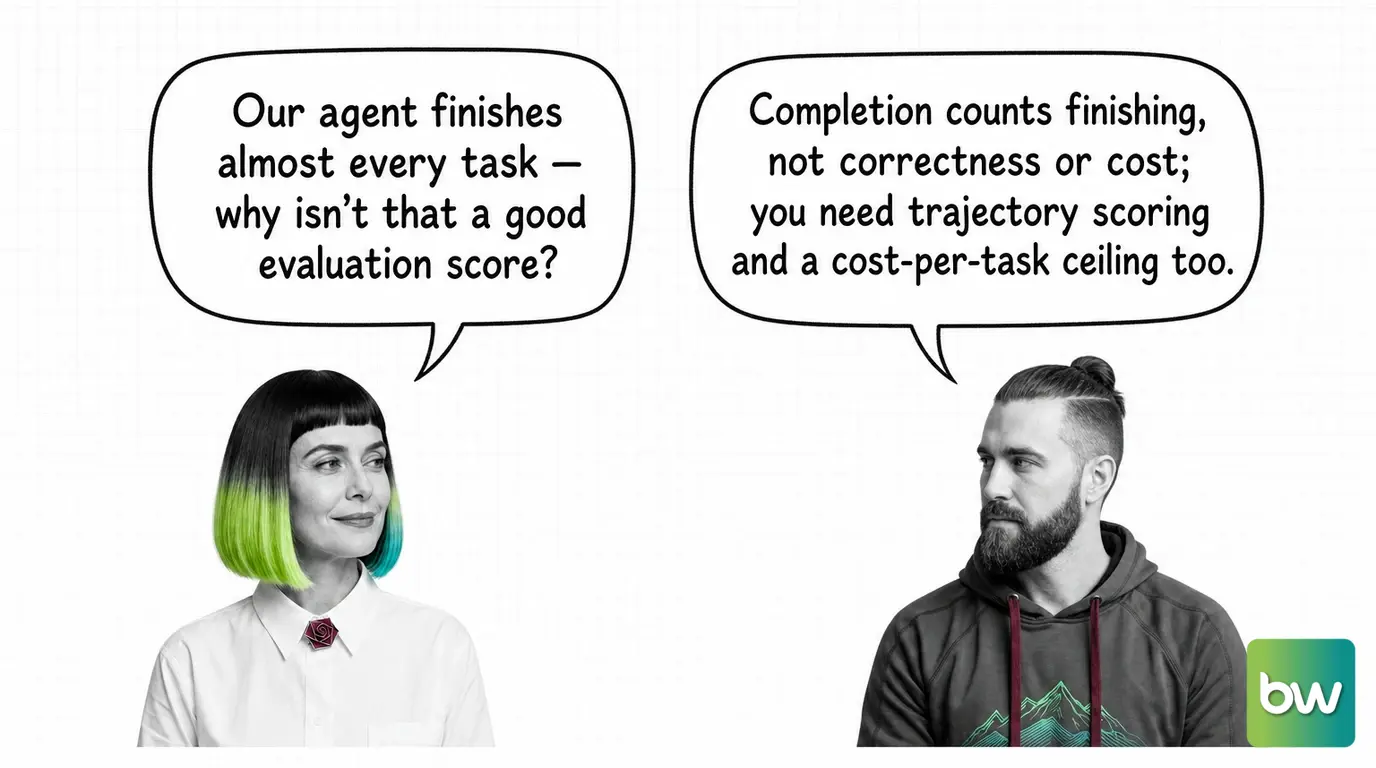
Q: Can I evaluate an agent with the same test suite I use for regular software? A: Not as-is. Unit tests check a fixed input against a fixed output; agents take a different path each run, so trajectory analysis grades the sequence of decisions and tool calls instead of a single expected string.
Q: Is a high task-completion rate enough to trust an agent in production? A: No — completion says the agent finished, not that it finished correctly or affordably. The evaluation prerequisites explainer names trajectory correctness and cost-per-task as the two signals completion rate leaves out.
Q: Do I need a dedicated evaluation platform, or can spreadsheets and manual review get me started? A: Manual review works for a handful of test cases, but it doesn’t scale past a demo. The pipeline guide shows why teams end up running a CI layer, an experiments layer, and a production trace layer together instead.
Q: Can I rely on LLM-as-judge scoring as my primary evaluation signal? A: Only with caution — a judge model can carry the same biases and blind spots as the system it grades, and a wrong verdict looks exactly as confident as a correct one. The accountability risks of LLM-as-judge scoring covers what that means for numbers you report upward.
Q: Should I trust vendor benchmark rankings when choosing between agent evaluation platforms? A: Treat them as a shortlist, not a verdict — the market is moving fast enough that agent-first platforms like Maxim, Galileo, and Laminar are actively displacing incumbents your benchmark comparison may not reflect yet.
Part of the agent reliability and operations theme · closest neighbour: agent guardrails. Coming to this from an SRE background? Start with the story: Agent Reliability for Engineers: What SRE Habits Map and Break.
Evaluating an agent is harder than evaluating a single LLM call. You have to score the whole trajectory of tool calls, decisions, and recoveries — not just the final output.
Concepts covered
Agent evaluation grades the path, not just the final answer. Learn how trajectory analysis exposes silent reasoning failures in production AI agents.
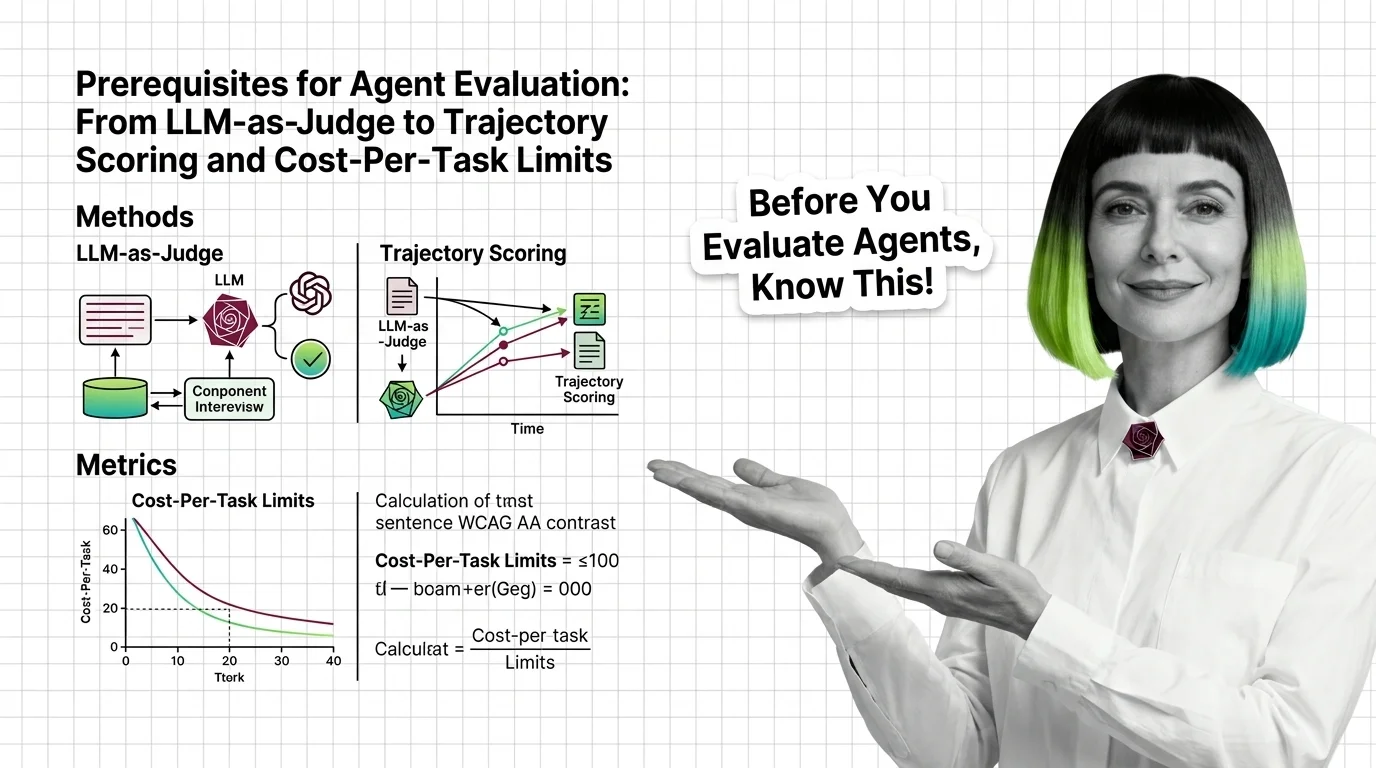
Agent evaluation needs three signals: outcome, trajectory, cost. Learn why LLM-as-judge has known biases and where major benchmarks quietly break.
Practical guides for wiring up an evaluation pipeline: choosing a platform, defining test datasets, setting cost-per-task budgets, and catching regressions before they reach users.
Tools & techniques
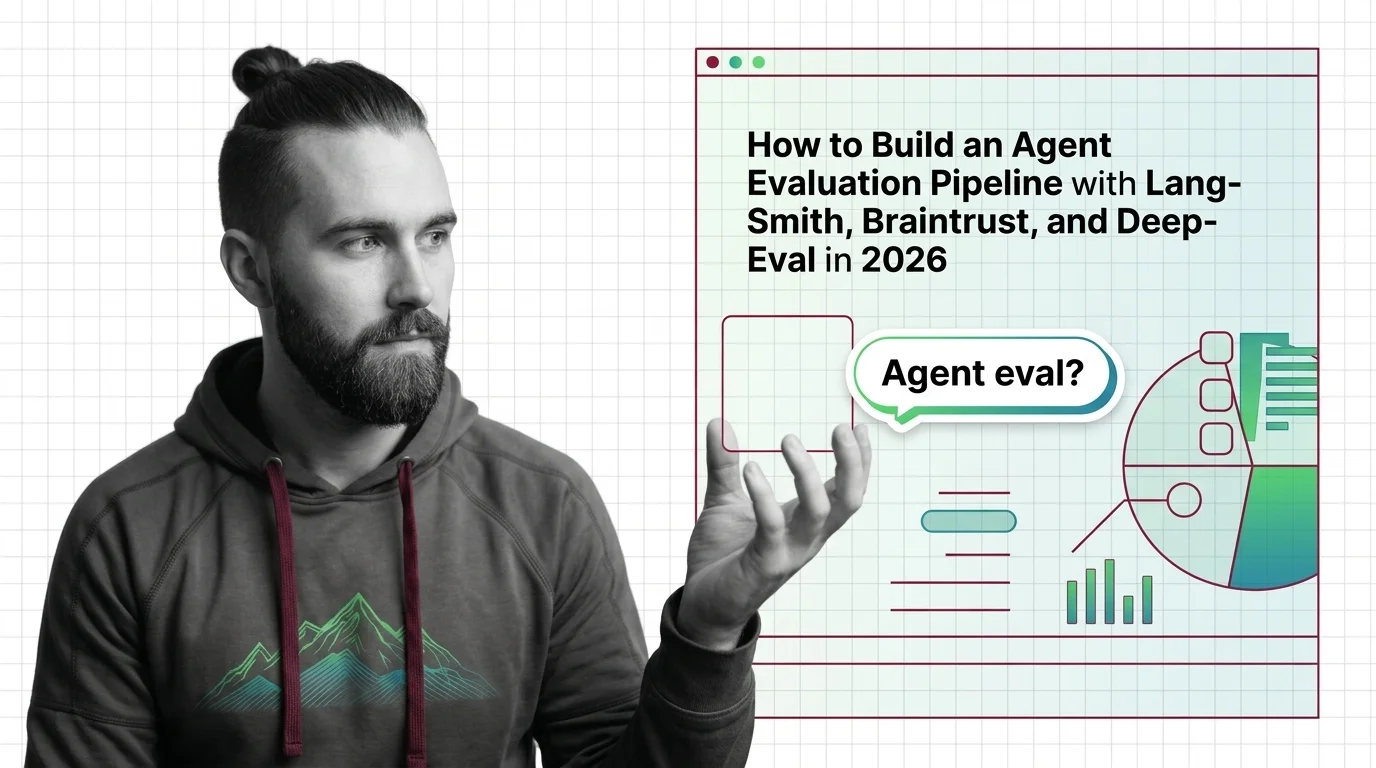
Specify a three-layer agent eval pipeline — DeepEval in CI, Braintrust for experiments, LangSmith for production traces. The 2026 spec for catching regressions.
Agent-first evaluation platforms are pulling ahead of generic LLM observability tools. New entrants and incumbent shifts are reshaping what a serious eval stack looks like.
Models & benchmarks
Updated May 2026
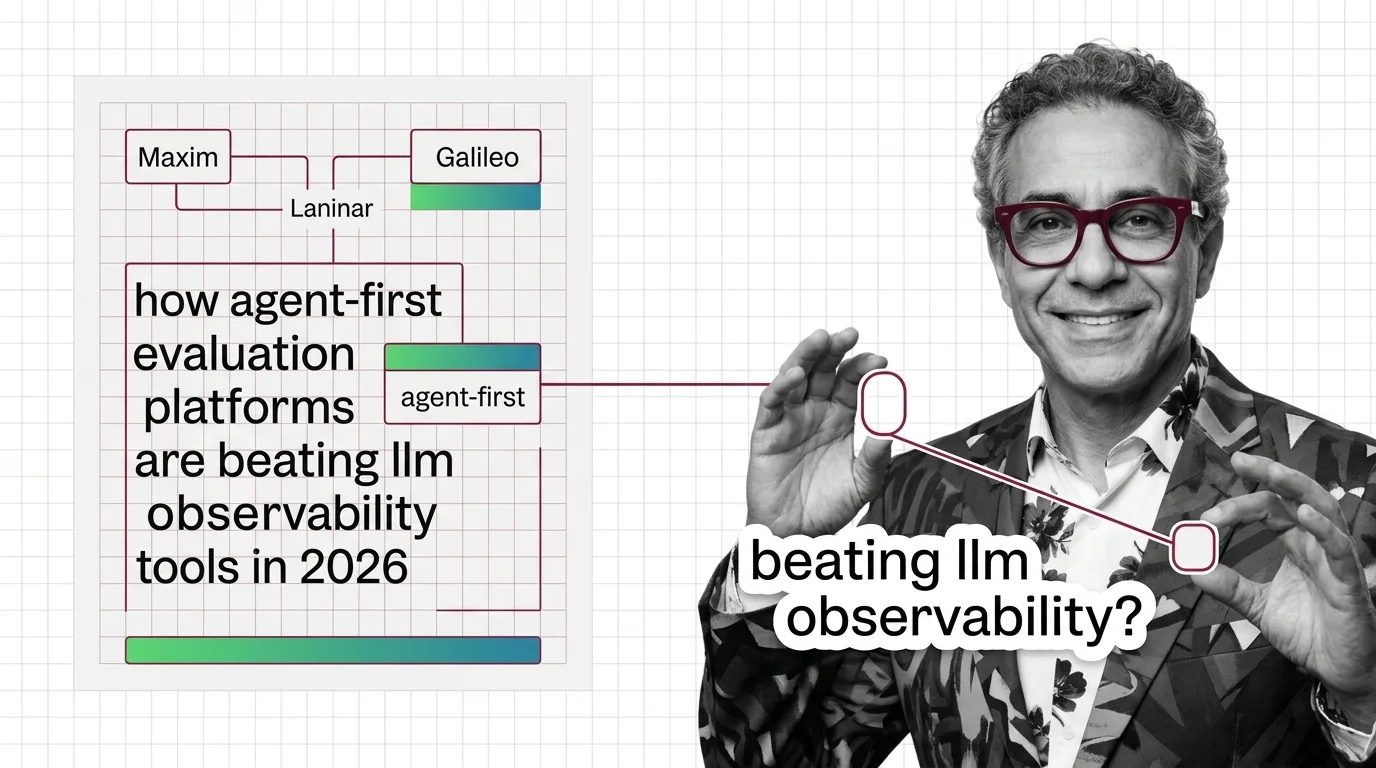
Cisco's Galileo deal signaled the shift. Maxim, Galileo, and Laminar are eating LLM observability vendors with trajectory-level eval — and pricing it.
LLM-as-judge scoring can be biased, opaque, and wrong in ways humans miss. When evals lie, accountability for agent failures gets murky fast.
Risks & metrics
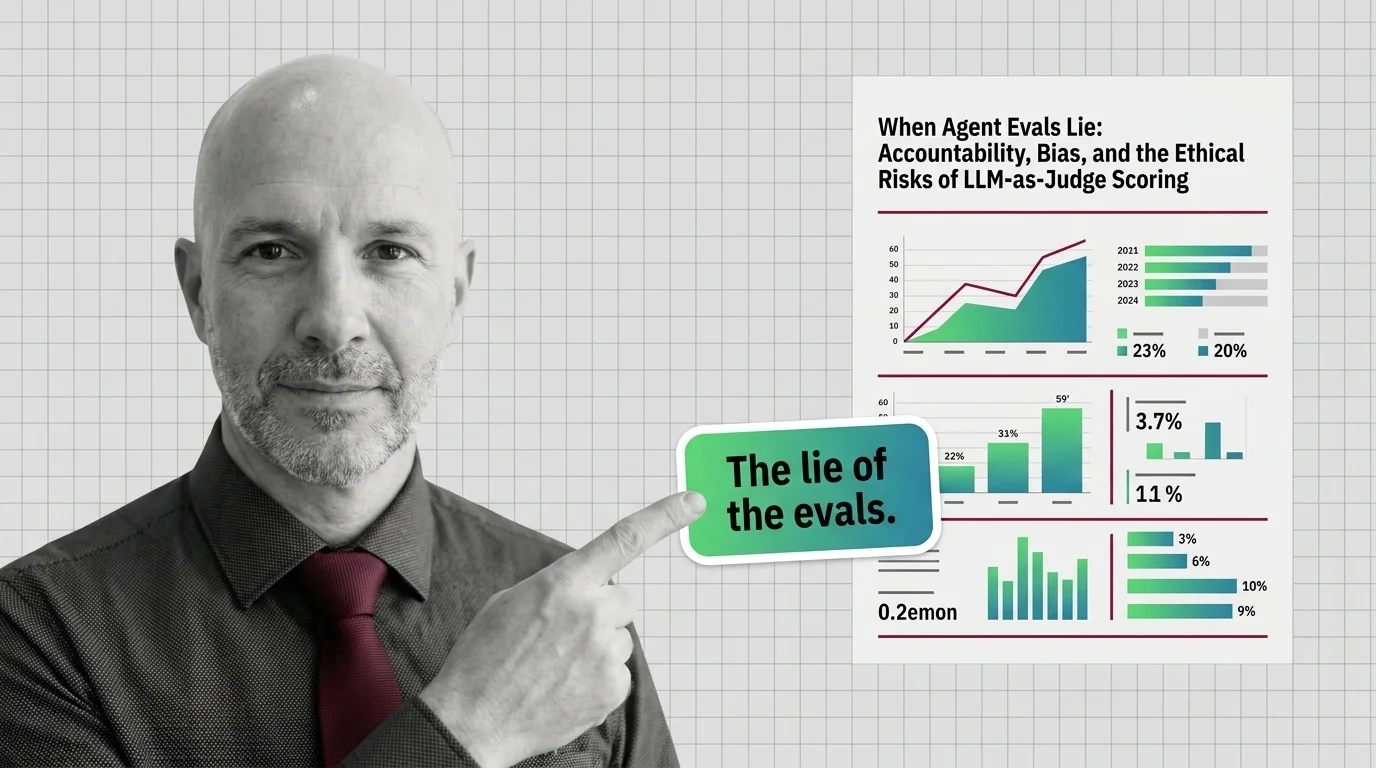
LLM-as-Judge scoring is the default way teams grade AI agents. But judges carry measurable biases, blind spots, and accountability gaps few audit.