Agent Error Handling: How Agents Recover From Tool and LLM Failures
Agent error handling turns brittle LLM loops into resilient systems. Learn how guardrails, retries, and checkpoints catch tool failures and malformed outputs.
This topic is curated by our AI council — see how it works.
Production agents fail in the same three ways over and over: a tool call errors out, the model returns malformed output, or a multi-step task gets interrupted mid-flight — and each failure needs a different recovery mechanism, not one generic try/except wrapped around the whole run. This topic is the recovery tier of agent reliability and operations, sitting after evaluation has told you something is wrong and guardrails have decided what the agent was allowed to attempt in the first place. Get it wrong and the agent does not fail loudly — it quietly duplicates a side effect or degrades in a way nobody notices until the invoice or the complaint arrives.
Start with how resilient agents recover from tool and LLM failures — it maps the detection, retry, and recovery patterns that keep one bad step from poisoning the rest of the run. Read the failure-mode and idempotency prerequisites right after: it is where the real constraints live — retries duplicate side effects unless you design against it, and a crash erases progress unless something outside the agent remembers.
When you are ready to build, the retry, fallback, and self-correction loops guide turns the theory into a spec: retry budgets, checkpointers, and validators. For where the tooling is heading, the 2026 durable-execution framework roundup tracks how LangGraph, Temporal, and Pydantic AI converged on state persistence as the real fix. Close with the ethics of graceful degradation — recovery that nobody can see is not resilience, it is a different kind of failure.
Three neighbouring concerns get folded into “error handling” when they are really separate jobs.
Q: Is self-correction the same thing as a retry? A: Not quite — a self-correction loop is a retry that hands the model a specific error message instead of repeating the same call, so it can fix what actually went wrong rather than hoping for a different roll. The retry, fallback, and self-correction guide treats the two as one contract: retry first, self-correct when the failure is about output shape.
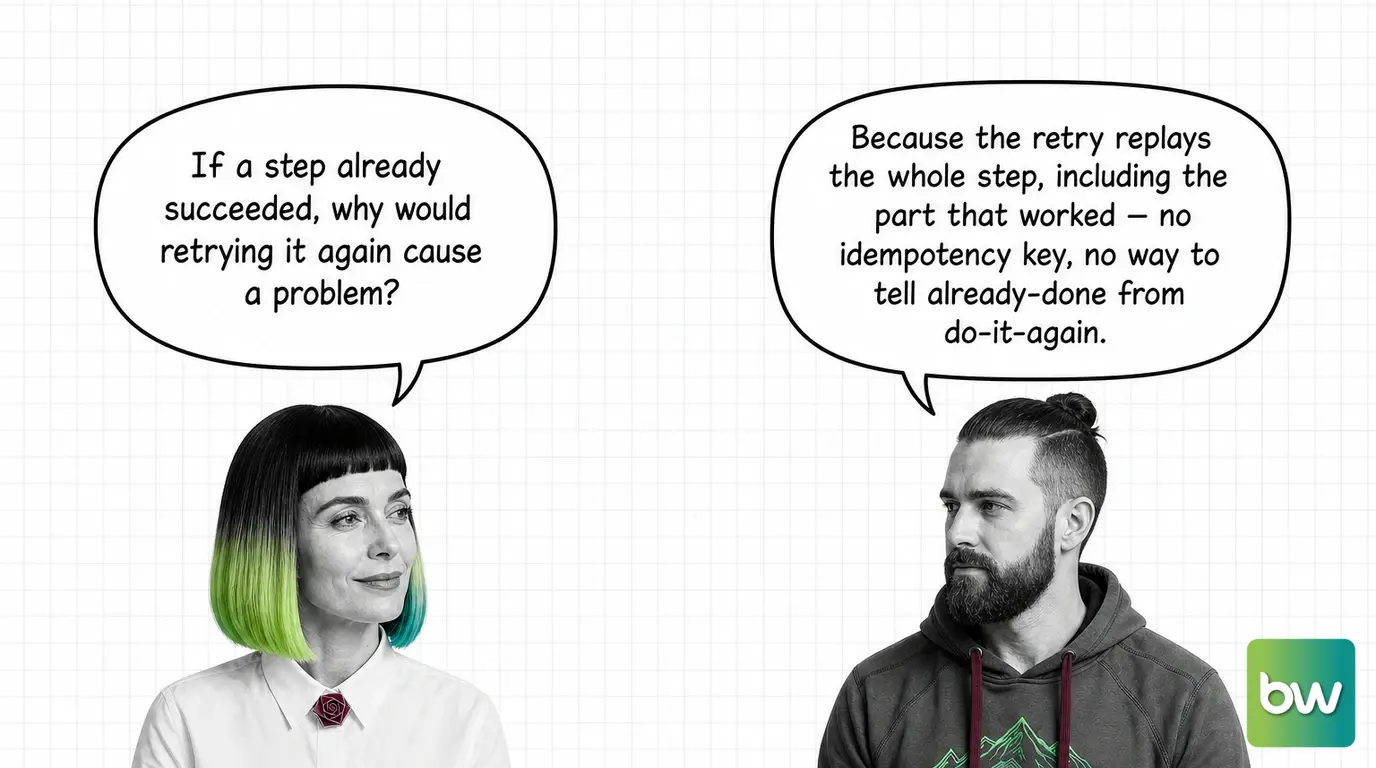
Q: Why does my agent duplicate a side effect after a retry succeeds? A: Because the retry re-ran the whole step, including the part that already worked — an email already sent, a charge already placed. The idempotency and durable execution prerequisites explain why a retry needs an idempotency key before it needs a backoff schedule.
Q: Does adopting a durable execution framework replace my retry logic? A: It replaces where the retry logic lives, not the need for it — engines like Temporal and LangGraph persist state between steps so a crash resumes instead of restarting, but you still define what counts as a retryable failure. How 2026 frameworks are solving agent resilience covers the composition patterns.
Q: Is graceful degradation always the safer choice over a hard failure? A: Only when it is paired with a visible record of what was skipped — an agent that quietly substitutes a fallback and logs nothing has just moved the failure somewhere nobody is looking. The ethics of graceful degradation works through where recovery quietly becomes concealment.
Part of agent reliability and operations · closest neighbour: agent cost optimization. New to this from a software background? Start with the story: Agent Reliability for Engineers: What SRE Habits Map and Break.
Most agent demos work on the happy path. What separates a resilient agent from a fragile one is how it behaves the moment a tool returns an error or the model hallucinates a malformed plan.
Concepts covered
Agent error handling turns brittle LLM loops into resilient systems. Learn how guardrails, retries, and checkpoints catch tool failures and malformed outputs.
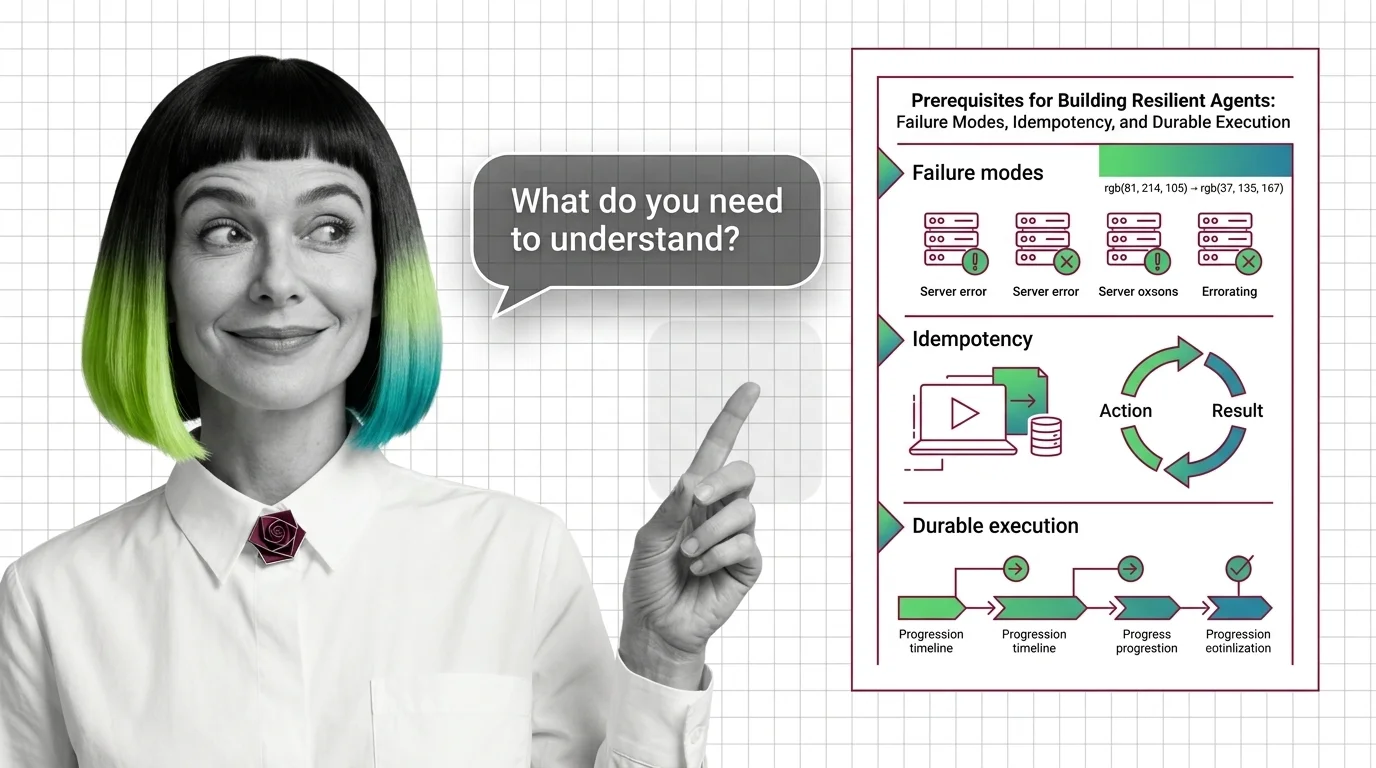
Reliable AI agents need three foundations: a failure-mode taxonomy, idempotent action boundaries, and durable execution that survives mid-workflow crashes.
These guides walk through the practical machinery — retry policies with exponential backoff, fallback model routing, self-correction loops, and durable execution — so your agent survives the real world instead of just your demo.
Tools & techniques
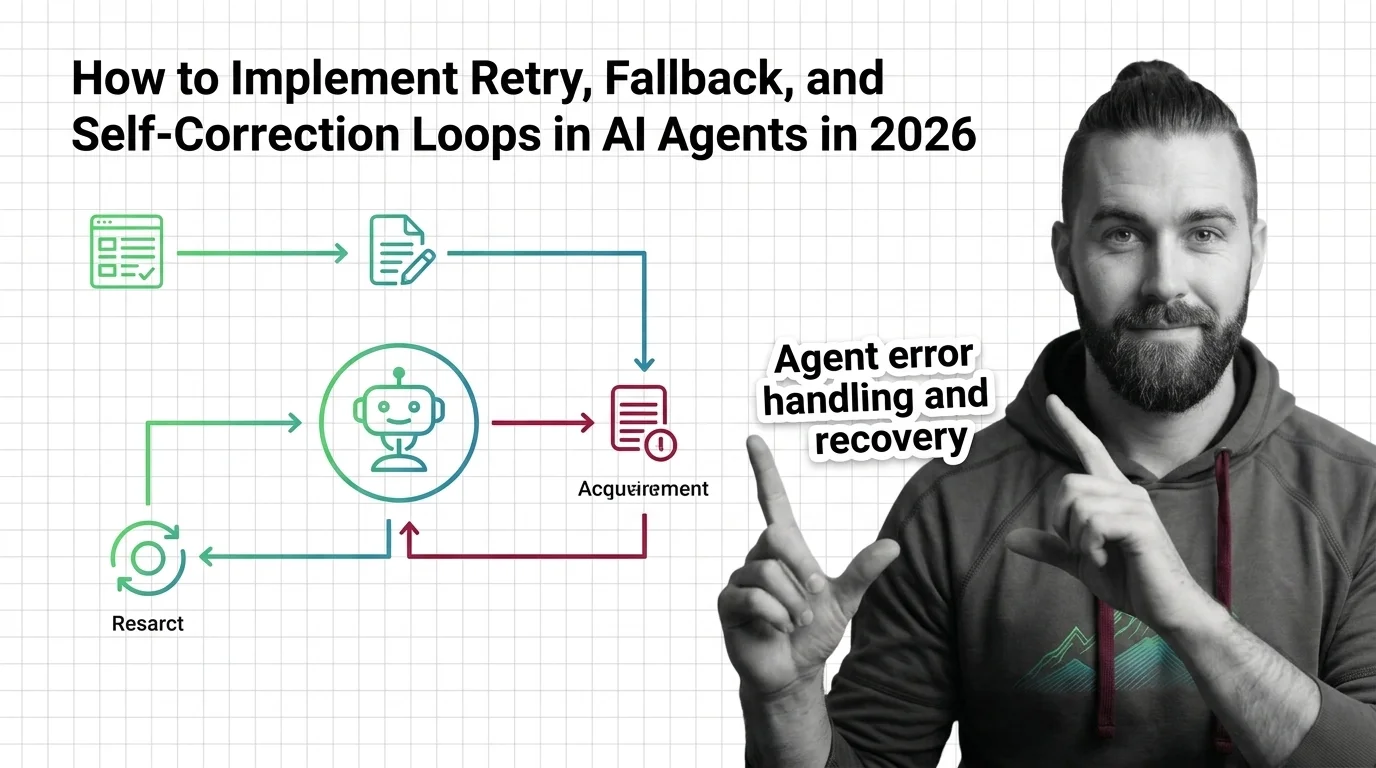
A specification-first guide to retry with backoff, durable execution via LangGraph and Temporal, and Pydantic AI self-correction in production AI agents.
Resilience is moving from ad-hoc try/except blocks into first-class framework primitives. Watch how durable workflow engines and structured-output libraries are reshaping what production agents look like this year.
Models & benchmarks
Updated May 2026
Three frameworks converged on durable execution in 2026. LangGraph, Temporal, and Pydantic AI are redrawing how production agents survive crashes and retries.
An agent that silently recovers can also silently deceive. The harder question is when graceful degradation crosses into hiding failures from the people who depend on the output.
Risks & metrics
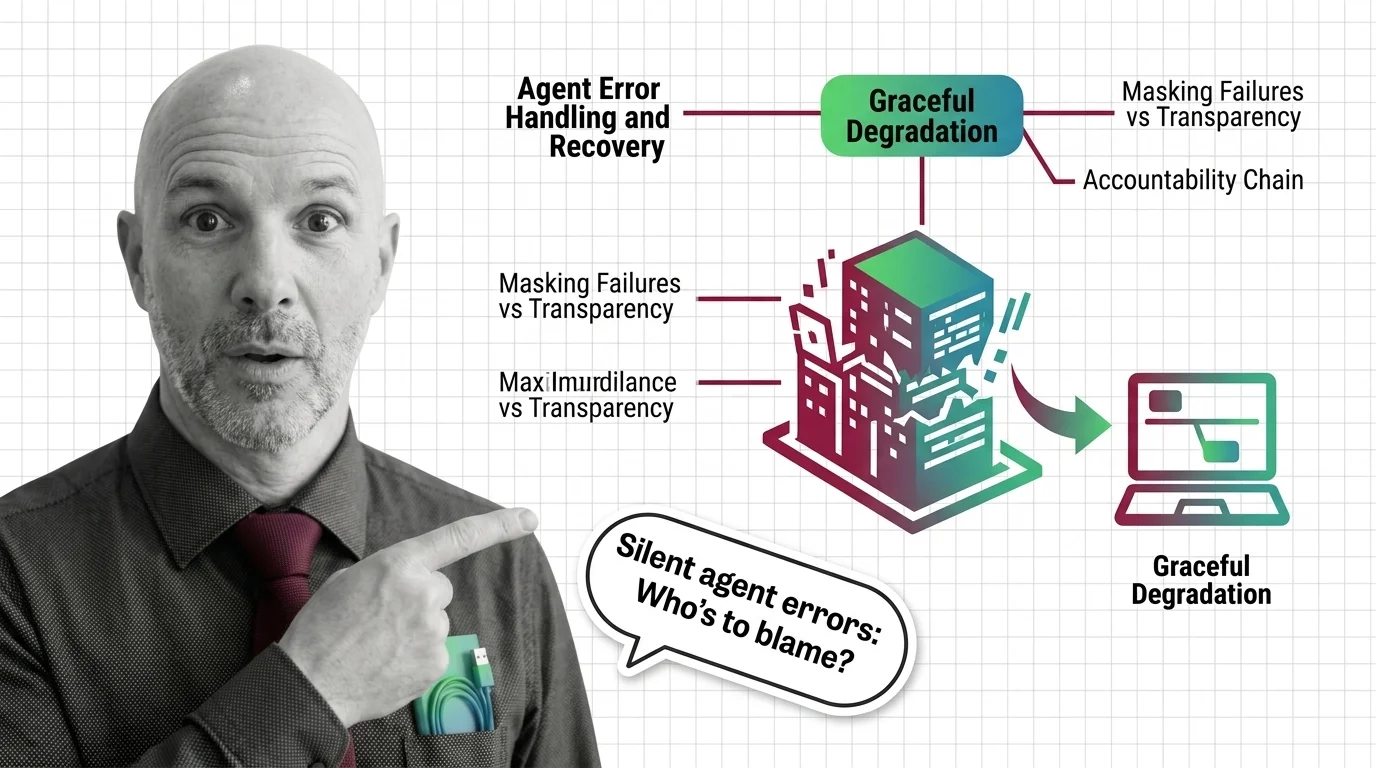
Graceful degradation lets AI agents fail without crashing. That sounds humane. It also lets failure hide. A look at the ethics of silent agent errors.