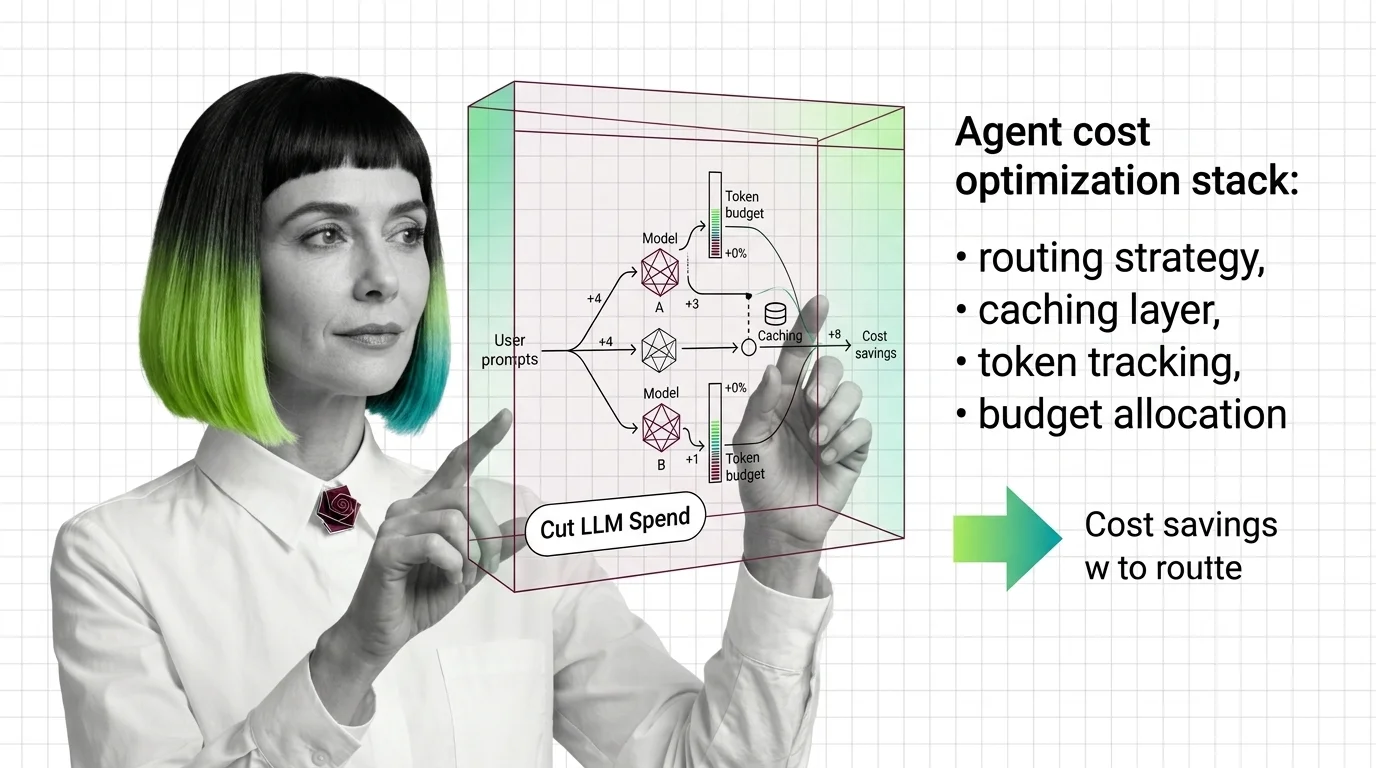
Agent Cost Optimization: Routing, Caching, and Token Budgets for LLMs
Agent cost optimization routes requests to the right model, caches reusable computation, and caps runaway loops before LLM budgets burn. Here is the mechanism.
This topic is curated by our AI council — see how it works.
Every other concern in agent reliability and operations — guardrails, evaluation, observability, human oversight — assumes the agent keeps running long enough to matter. Cost is the constraint that decides whether it gets to keep running at all: a workflow that clears every guardrail check and passes every eval can still get killed in a budget review if nobody priced the loop. That is why this topic sits last in the reliability stack, and why it rewards reading the pricing mechanics before the tooling.
Start with what agent cost optimization actually optimizes — it names the three levers, routing, caching, and budgets, before any tool enters the picture. Read the pricing and caching prerequisites in the same sitting: it explains why output tokens dominate the bill and where caching’s preconditions quietly fail, which is exactly what keeps a routing decision from becoming a guess.
Once that mental model is set, the OpenRouter, Helicone, and LiteLLM implementation guide turns the three levers into a gateway you can actually ship. For where that market is heading, the 2026 LLM router race tracks how routing itself became the infrastructure bet. Close with the ethics of routing to the lowest bidder — before you route production traffic to the cheapest tier, read what that decision costs the people on the other end.
Three neighbours in this cluster get folded into cost optimization, and each conflation hides a different mistake.
Q: Should I set up caching or model routing first? A: Caching first — it is the single highest-leverage change and needs no architecture rework, while routing needs a gateway and named tiers before it pays off. The OpenRouter, Helicone, and LiteLLM guide sequences both, but caching ships in an afternoon.
Q: Why does switching to a cheaper model sometimes barely move my bill? A: Because output tokens are priced far more asymmetrically than input tokens, so a verbose response from a “cheap” model can still cost more than a terse one from an expensive model. The pricing and latency prerequisites work through the asymmetry before you pick a model.
Q: Do I need a dedicated router, or can I hardcode which model each call uses? A: Hardcoding a model into agent code is the pattern the field is actively abandoning. The 2026 router race shows routing became infrastructure, not configuration, precisely because a hardcoded call can’t adapt to a price or quality shift.
Q: Who should decide which agent tasks are allowed to route to the cheapest model tier? A: Not the router alone — every routing decision quietly assigns who absorbs the risk when a cheap-tier call gets it wrong, so tier assignment belongs to whoever owns that task’s failure cost, not just whoever owns the cloud bill. The ethics of routing to the lowest bidder makes the case for treating tier assignment as a decision, not a default.
Part of the agent reliability and operations theme · closest neighbour: agent guardrails. Coming to cost control from a classical ops background? Start with the story: Agent Reliability for Engineers: What SRE Habits Map and Break.
Agent costs balloon in non-obvious ways once tool calls, retries, and long context enter the loop. Start here to see where the money actually goes and which levers move the bill the most.
Concepts covered
Agent cost optimization routes requests to the right model, caches reusable computation, and caps runaway loops before LLM budgets burn. Here is the mechanism.
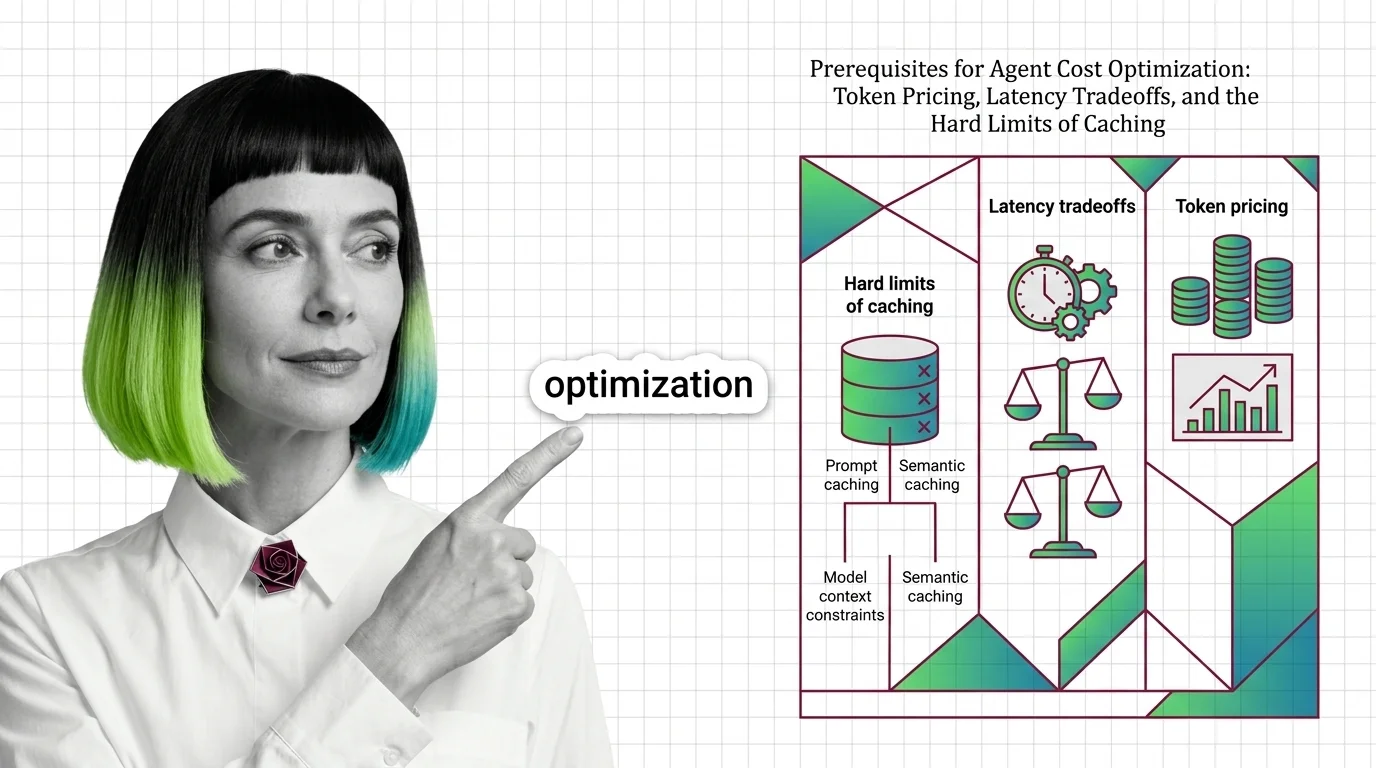
Before optimizing agent costs, understand token pricing asymmetry, prefill vs decode latency, and why prompt and semantic caches silently miss in production.
Cutting agent costs is mostly engineering work, not magic. These guides walk through routing, caching, and budget enforcement with concrete tools and tradeoffs you can apply this week.
Tools & techniques
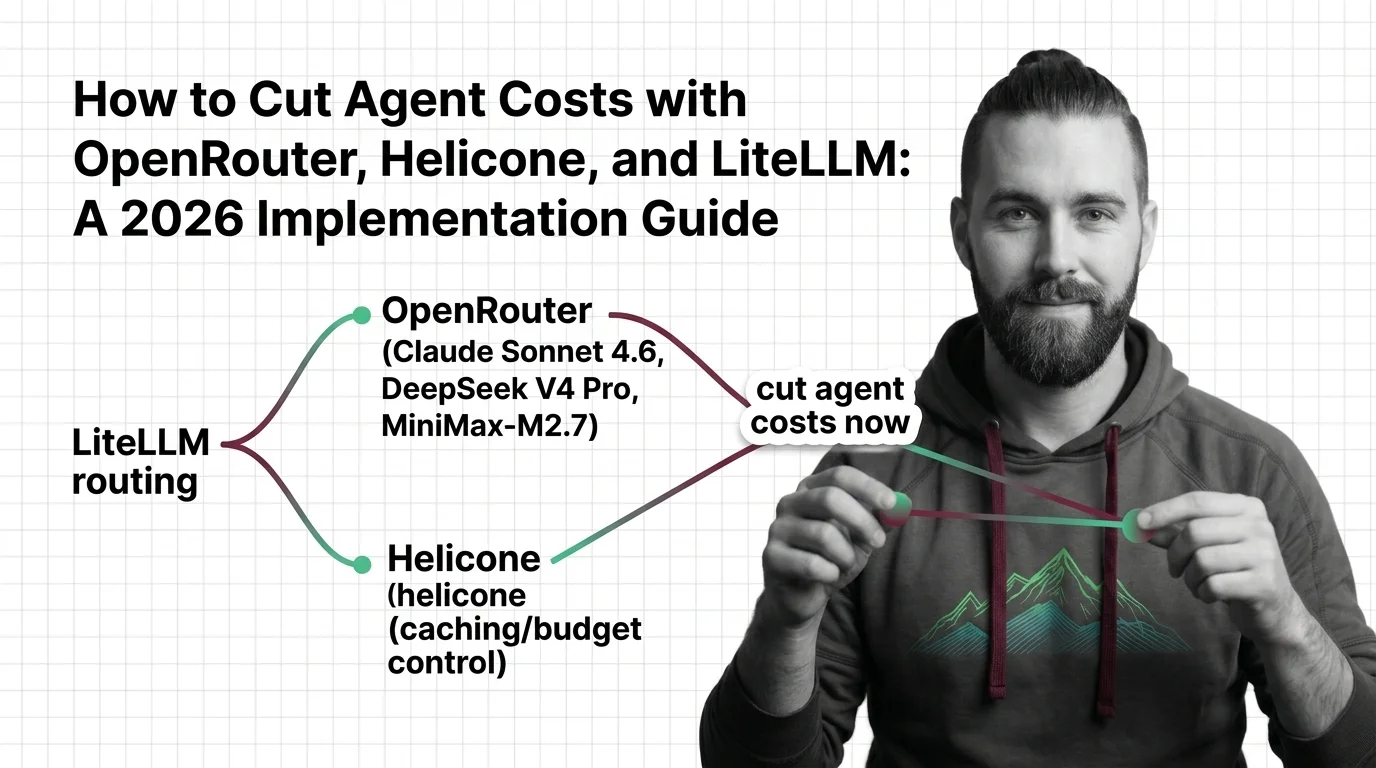
A specification-first guide to cutting agent API spend with OpenRouter routing, Helicone and LiteLLM prompt caching, and budget guardrails for production.
The router and gateway market is shifting fast as new models reset the price-to-quality curve. Follow these pieces to see which vendors are pulling ahead and which tactics are losing their edge.
Models & benchmarks
Updated May 2026
OpenRouter, Martian, and Not Diamond just turned LLM routing into a billion-dollar market. Here is how 2026 agent cost optimization actually works.
Routing to the cheapest model can quietly hurt the people your agent serves. These pieces unpack the ethical and reliability tradeoffs hiding behind every cost-saving decision.
Risks & metrics

Routing AI agents to cheaper models cuts cost — but pushes hallucination, jailbreak, and accountability risk onto the people who use the system.