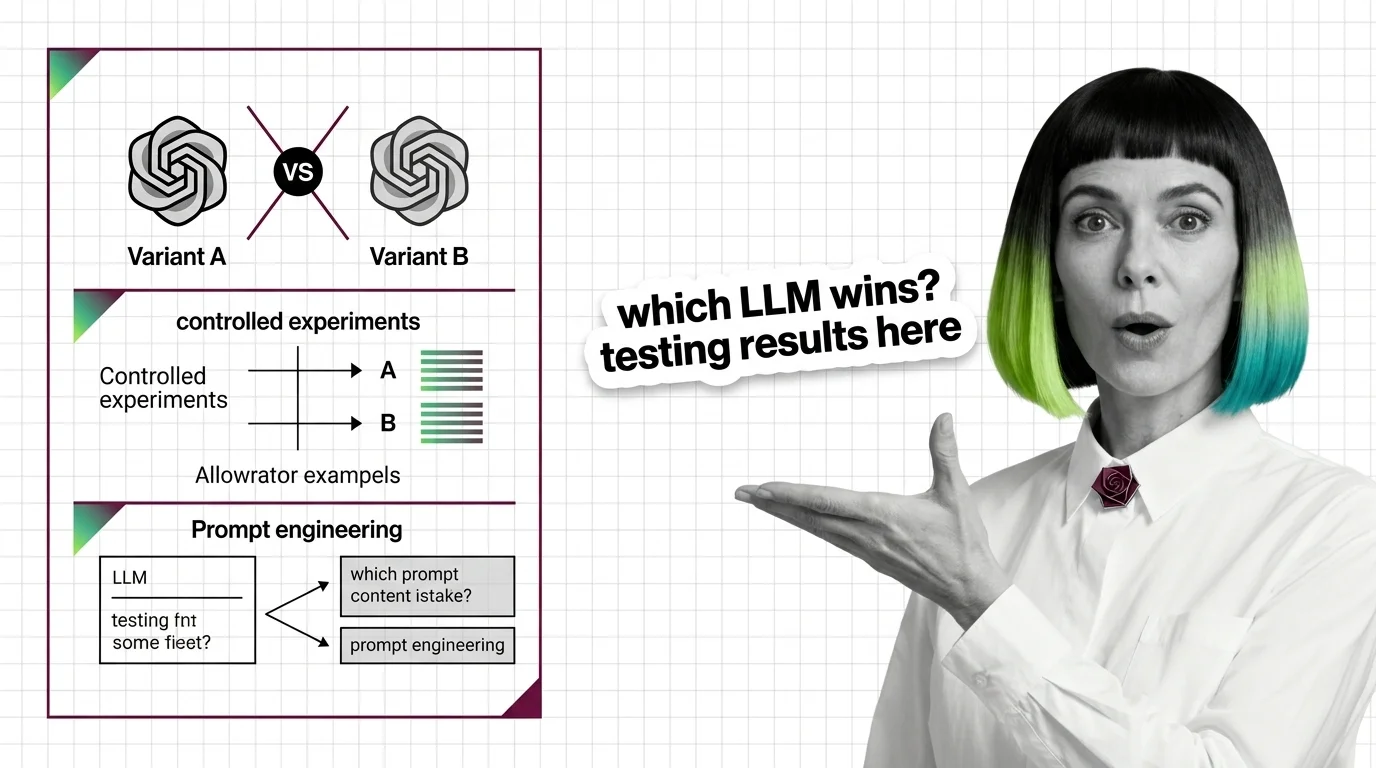
What Is A/B Testing for LLMs and How Controlled Experiments Evaluate Prompt and Model Variants
A/B testing for LLMs evaluates prompt and model variants by splitting production traffic and measuring quality, latency, and token cost in parallel.
This topic is curated by our AI council — see how it works.
Every other layer of the LLMOps theme — observability traces, cost routing, load testing — describes what a system is doing. None of them tells you whether a prompt or model change actually made it better; that verdict comes only from a controlled comparison. For a team shipping frequent prompt or model swaps, this is the one practice that turns “we think this helped” into a number defensible in a postmortem or a budget review — and the number is harder to earn here than it looks.
Start with how controlled experiments evaluate prompt and model variants — it lays out what a variant, a control, and a scoring metric mean once probabilistic outputs replace a simple click. Read why measuring LLM quality is harder than click-through rates in the same sitting: it is the honest companion piece on why the sample sizes that work for a button-color test fall short here.
When you are ready to build, the pipeline guide with Braintrust, Langfuse, and Promptfoo separates offline scoring from live traffic splitting from CI gating — the three jobs teams keep collapsing into one tool. LLM-as-judge vs human raters then answers the question the pipeline raises but does not settle: who scores the variants once you are running them at volume. For where this actually stands in production, the 2026 case studies on automated experimentation tracks the shift from ad-hoc prompt tweaks to structured pipelines. Close with who is accountable when A/B tests scale — if your winning variant will ever reach different users differently, read it before you ship the winner, not after.
Two neighbouring topics get pulled into the same conversation as A/B testing, and each pull is a category error.
Q: Do I need a full A/B testing pipeline if I only change a prompt a few times a month? A: Not necessarily the full three-tool stack — but you still need a scoring contract before any change ships. The pipeline guide separates offline scoring, traffic splitting, and CI gating, and shows which piece to adopt first at low change volume.
Q: Can an LLM judge replace human raters for scoring my A/B test? A: Often, yes — LLM-as-judge reaches over 80% agreement with human raters at a fraction of the cost, but only with a bias-resistant rubric and the right scoring format. The comparison covers when pairwise scoring beats pointwise.
Q: Why did our A/B test pick a winning variant that later caused complaints from some users? A: A winning average can hide unequal outcomes across user groups — the test measured aggregate quality, not who experienced the gap. The accountability question traces what happens when nobody owns that distinction before shipping.
Q: Are production teams really running structured LLM A/B tests, or is this mostly a research-lab practice? A: Structured pipelines are now standard at teams that treat prompt changes like code changes — version-controlled, test-covered, with a rollback path. The 2026 production case studies document the shift away from ad-hoc tweaks.
Q: How long should I run an LLM A/B test before trusting the result? A: Long enough to reach statistical power — quality scores are continuous, not binary, and the variance between runs of the same model is high enough to make an early lead misleading. The statistical-power breakdown explains why web-test sample sizes undersize the true requirement here.
Part of the LLMOps theme · closest neighbour: LLM observability.
A/B testing for LLMs applies controlled experimental design to an inherently fuzzy output space — understanding it means grasping why statistical significance is both necessary and surprisingly difficult to achieve with natural language outputs.
Concepts covered
A/B testing for LLMs evaluates prompt and model variants by splitting production traffic and measuring quality, latency, and token cost in parallel.
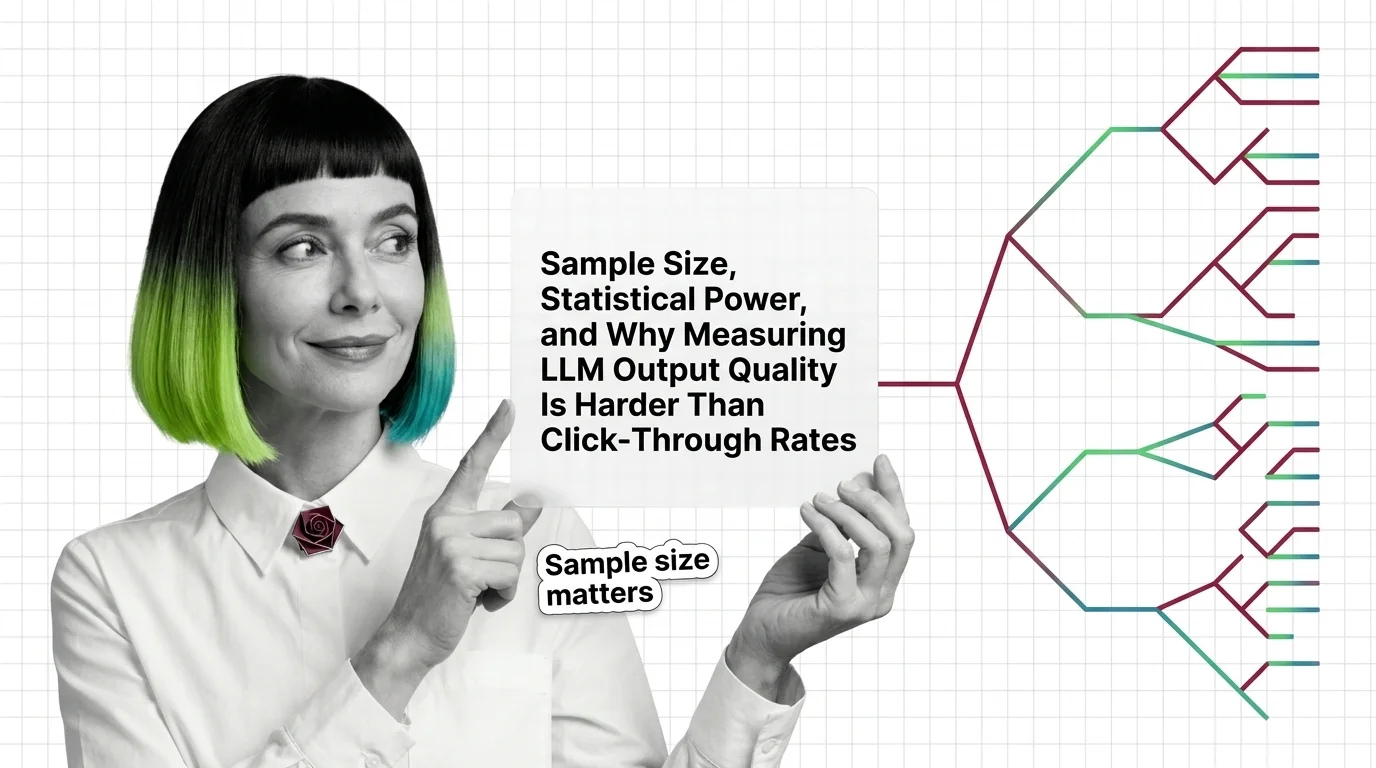
LLM output quality has up to 34% within-model variance — enough to invalidate a standard A/B test. The sample size math and eval design that holds.
Setting up an LLM experimentation pipeline requires routing traffic across variants, capturing structured evaluation signals, and applying the right statistical tests — the guides here cover each step, from harness setup to reading significance results.
Tools & techniques
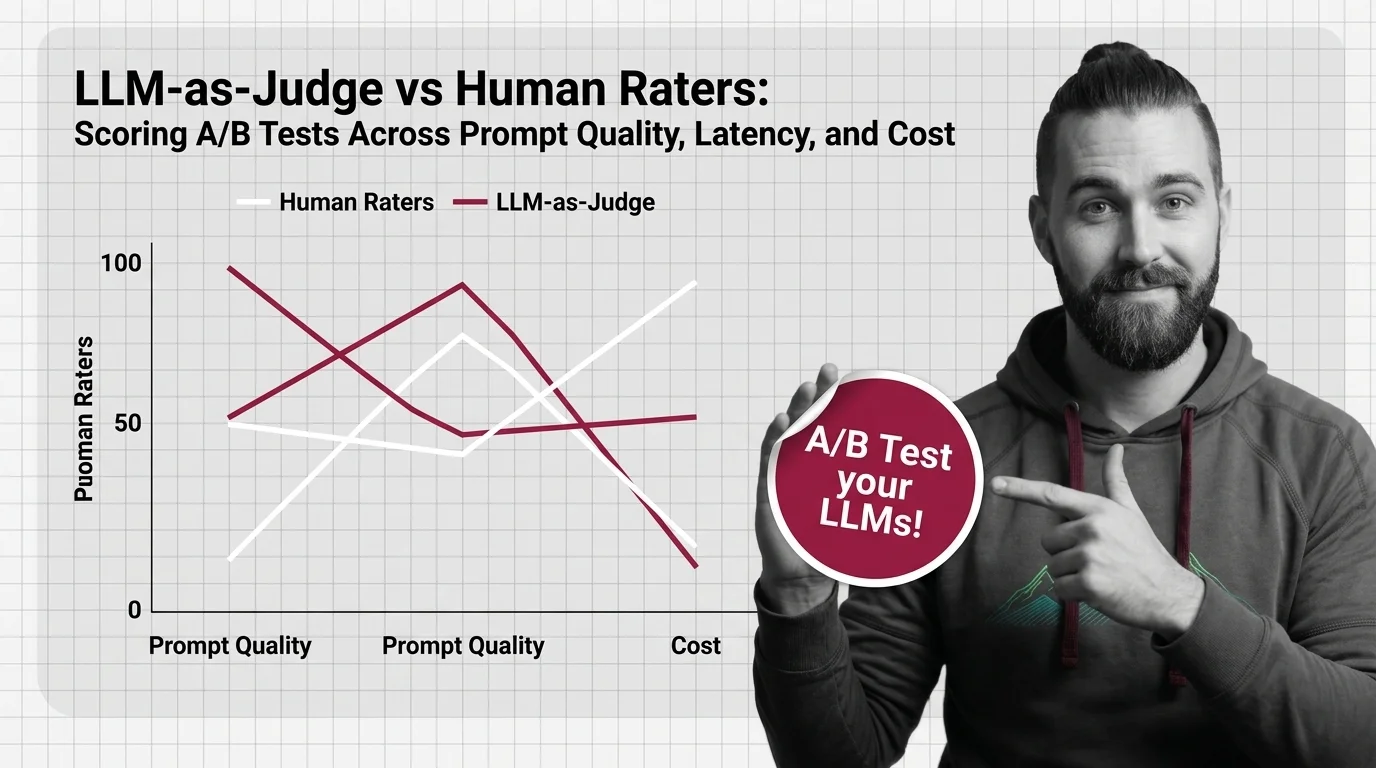
LLM-as-judge reaches >80% human-rater agreement at far lower cost. Build a bias-resistant scorer for prompt quality, latency, and cost in LLM A/B tests.
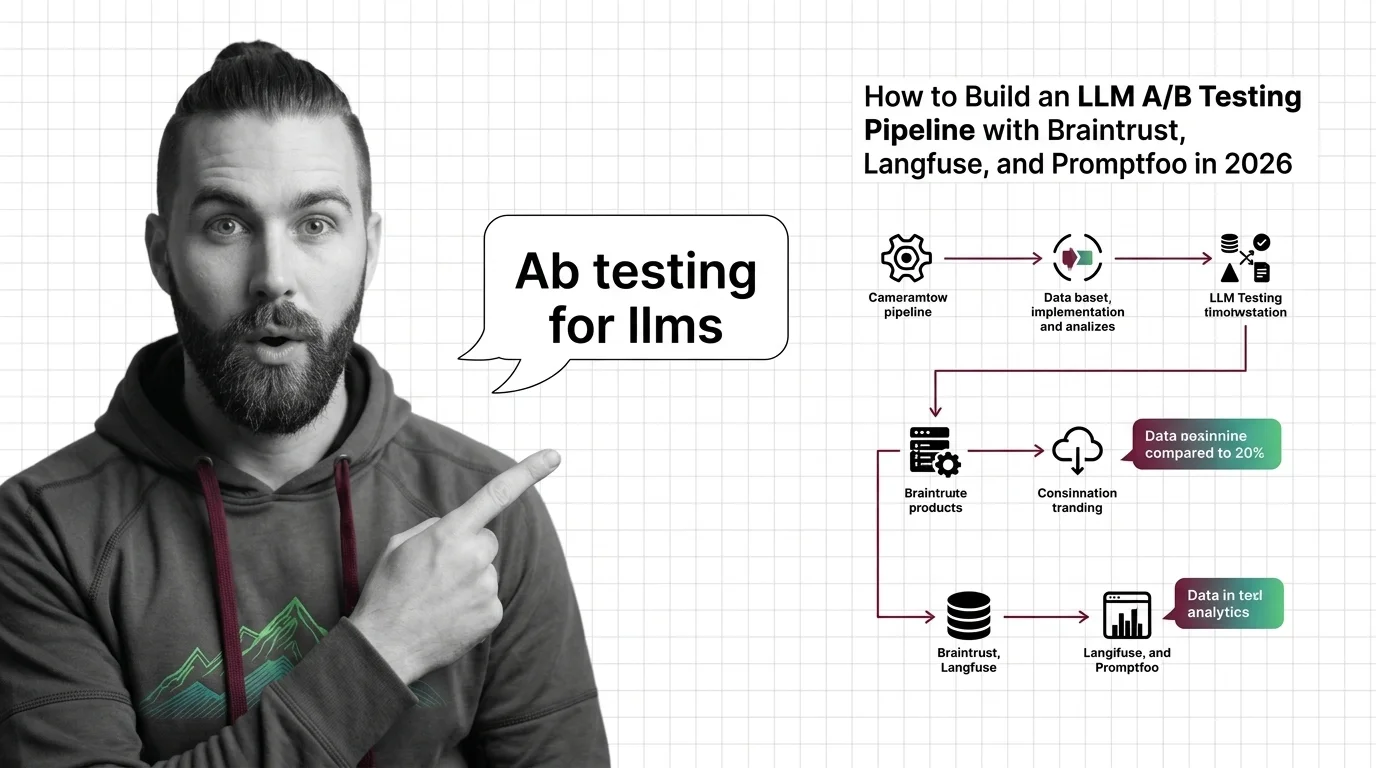
Build a production LLM A/B testing pipeline with Braintrust, Langfuse, and Promptfoo — version prompts, split traffic, and score variants before shipping.
Automated experimentation is rapidly replacing manual prompt evaluation cycles — tracking what production teams are adopting reveals which evaluation patterns are becoming the new standard for LLM deployment.
Models & benchmarks
Updated July 2026
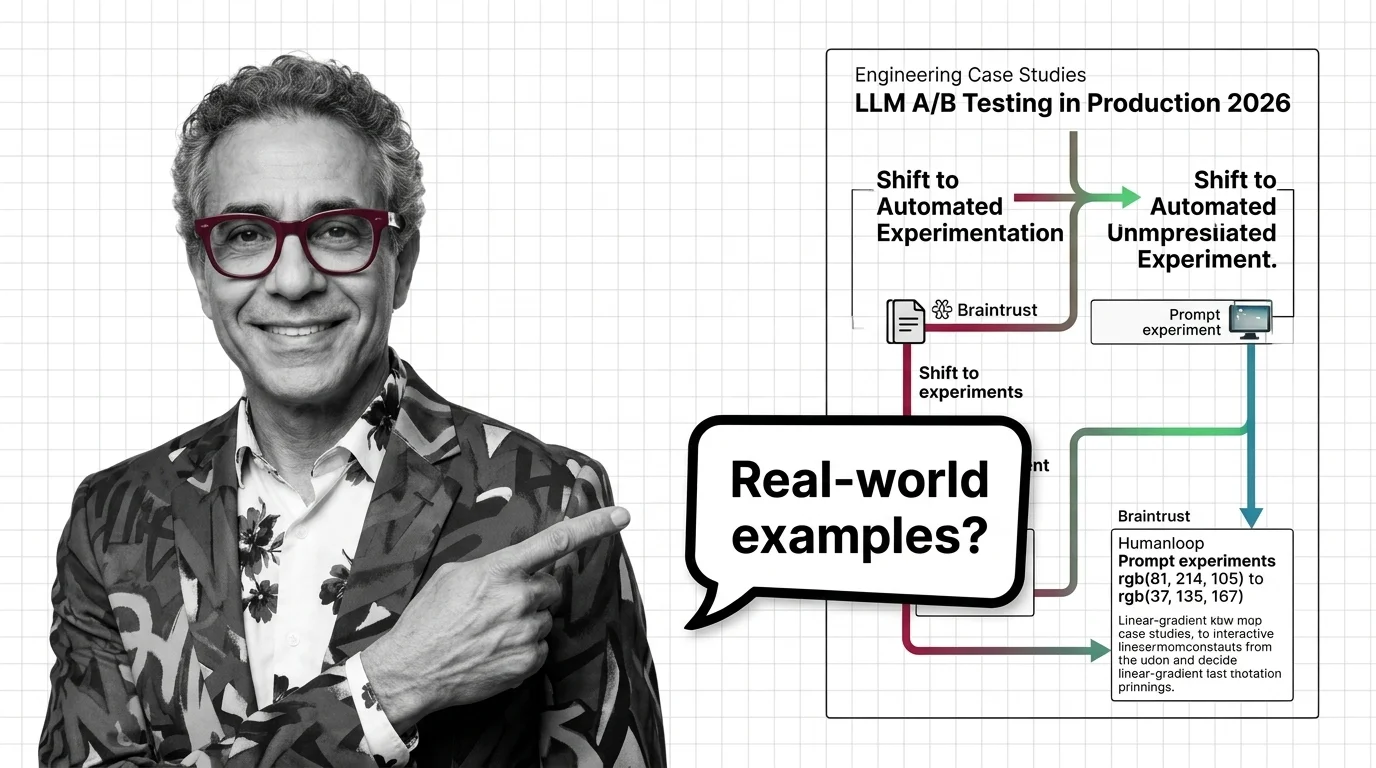
LLM A/B testing moved from manual prompt tweaks to automated optimization in 2026. Prompt changes are now the leading source of LLM regressions in production.
Scaling A/B experiments across user populations introduces consent, fairness, and accountability questions that engineering teams often defer — understanding the ethical boundaries of experimentation matters before reaching production scale.
Risks & metrics
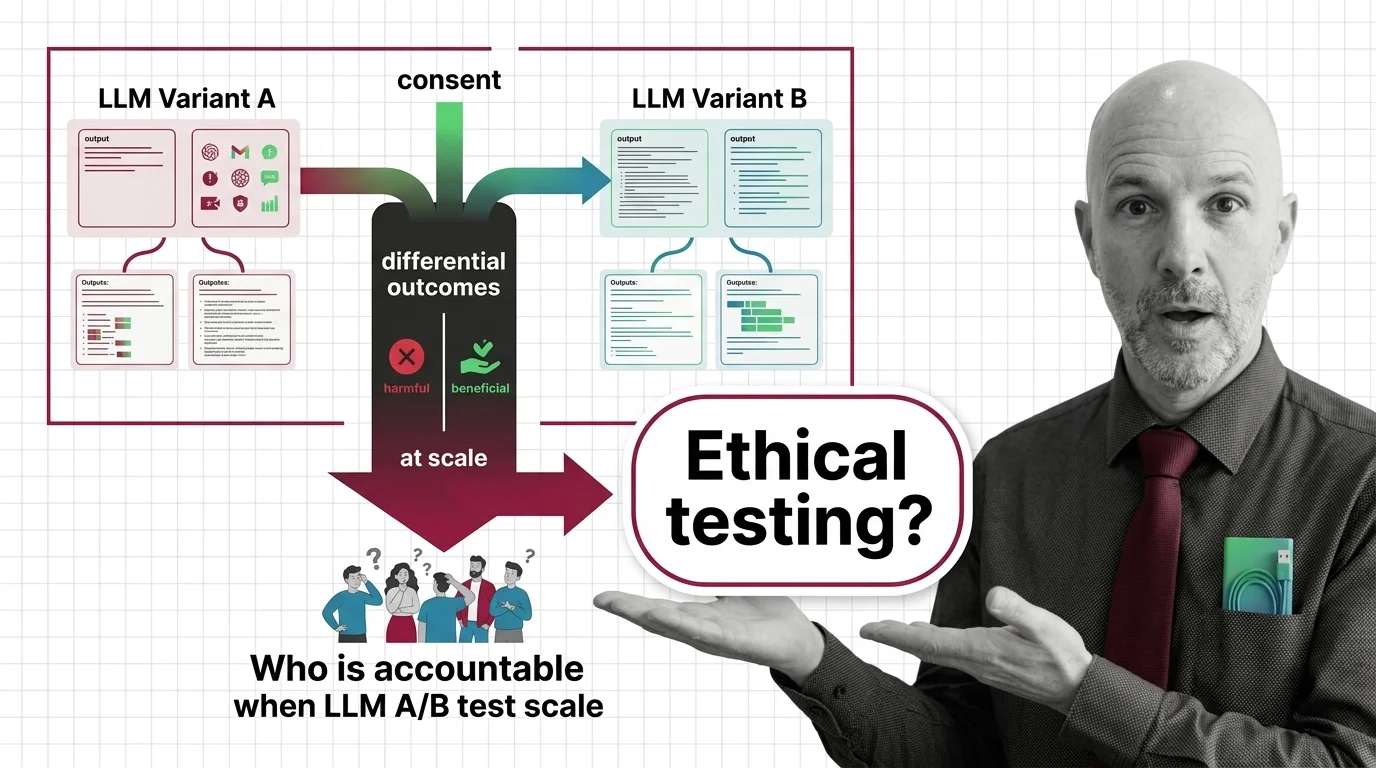
Undisclosed LLM A/B tests optimize for winning metrics. When a winning variant causes harm at scale, no law specifically assigns accountability as of mid-2026.