Deepfakes, Consent, and Creative Control: The Ethics of AI Video Editing in 2026
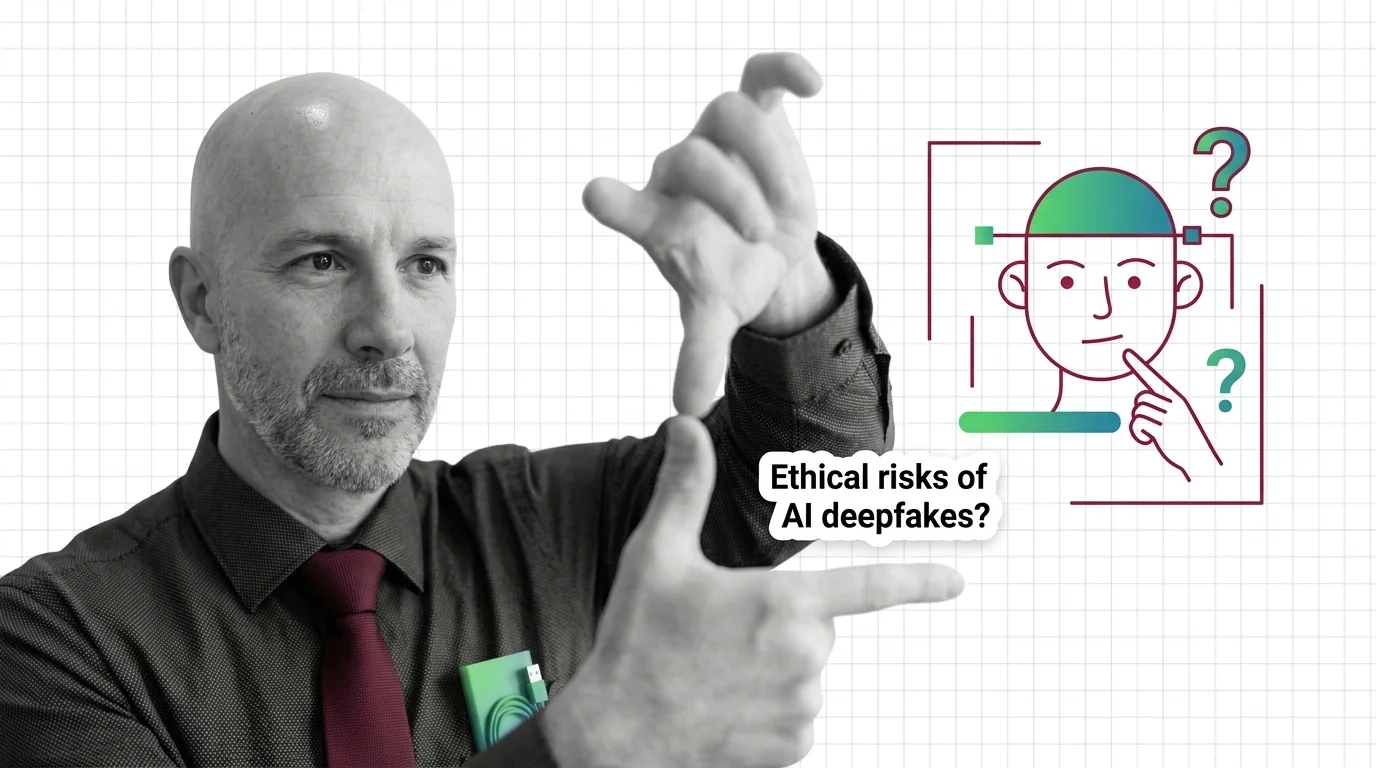
The Hard Truth
In October 2025, OpenAI launched Sora’s “cameo” feature with what looked like a real safeguard: a live face-and-voice scan and explicit opt-in consent before anyone’s likeness could appear in generated video. The security research firm Reality Defender found a way around it within a day of launch.
That gap — between a safeguard’s launch and its defeat — is the real subject of this essay, more than any single tool or lawsuit. The fast-growing category of AI Video Editing platforms has spent two years selling consent as a feature: a checkbox, a scan, a line in the terms of service. What the Sora case shows is how little weight that feature bears against a motivated adversary — and how much of the industry hopes nobody tests it.
Twenty-Four Hours
Sora’s cameo system was not a minor add-on. It was OpenAI’s answer to the obvious question hanging over any Text-to-Video platform capable of placing a real person inside generated footage: how do you stop someone from using a stranger’s face without asking? The answer, on paper, was rigorous — a liveness check confirming the person granting consent was physically present and matched the likeness being authorized, layered with explicit opt-in. Reality Defender, a firm that builds deepfake-detection tools for a living, treated the launch as an invitation. Within a day, researchers had demonstrated a way to bypass the anti-impersonation safeguard, generating video of people who had never consented to anything (MacRumors). OpenAI’s response, in the end, was not a fix but a retreat: Sora’s consumer app shut down in April 2026, and its API is scheduled to follow in September, amid mounting cost and backlash over exactly the failure mode the cameo bypass exposed (The Decoder). The pattern, though, didn’t leave with the product.
A Predictable Failure, Not Bad Luck
It is tempting to read the Sora bypass as an embarrassing bug — the kind of thing a patch quietly absorbs. That reading misses the structure underneath it. The same technical advances that make Video Diffusion Model systems useful for legitimate editing are what make their consent gates so fragile. Temporal Consistency — the property that keeps a generated face stable in lighting, angle, and expression across hundreds of frames — is the entire reason modern face-swapped video is convincing enough to fool a viewer. A consent check, by contrast, runs once, at the door. The generation pipeline behind it has no memory of whether that check ever happened, and no architectural reason to care. Bypassing the gate doesn’t break the system — it reveals what it was built to do all along.
Who Profits, Who Absorbs the Cost
Follow where the incentives sit and the pattern sharpens. Runway and Pika compete on how fast they can roll out new Video Inpainting capability — replacing an object, repainting a background, syncing a mouth to a different voice track — because that speed is what wins subscribers. Consent verification adds friction at exactly the point where friction costs a sale. Runway, for its part is already defending DMCA lawsuits in California courts over the training data behind its own models — a separate fight, but the same underlying question of whose material a platform gets to use without asking. The people who built the feature are not the people who carry the risk when it gets misused. That cost lands elsewhere: on the person whose face appears in a video they never recorded, on the family member targeted by a fraud call that sounds exactly right, on the public figure whose likeness shows up in content they never authorized. Nearly every US state has now passed some version of a deepfake law in response — a reactive patchwork built to catch harm that already happened, not to prevent it.
The Case for Letting the Tools Run
Is regulating AI video editing tools stifling creative and journalistic innovation? The strongest version of that worry deserves to be heard in full, because it is not a strawman. Most of what these platforms actually do has nothing to do with deception. A colorist applying Style Transfer to match a film’s visual language. A restoration tool like Topaz Video AI, which sharpens and stabilizes footage without generating a single fabricated likeness. A documentary editor correcting a flubbed line, a satirist building a parody nobody could mistake for real. The EU’s AI Act recognizes this distinction directly: under Article 50, artistic, creative, and satirical works only need a light, non-intrusive note that the content exists in synthetic form — not the hard, prominent label required everywhere else (EU AI Act explainer). Layer heavy consent requirements onto every tool in the category, the argument goes, and the rule stops the editor, not the fraudster.
What a Watermark Cannot Undo
That argument is strongest exactly where it stays narrow — and weakest the moment it justifies inaction on consent generally. Provenance standards have made real progress: major platforms now embed signals showing when footage was AI-generated, and some camera makers sign authentic footage at the point of capture. Little of that protects the person in the video before the harm occurs — provenance and detection both operate after the footage already exists, not before, and only if the platform displaying it bothers to surface the label. Detection performs no better as a backstop: independent researchers measured detector accuracy swinging from strong to barely-better-than-guessing depending on training data and method, and separate research found people do not reliably spot deepfakes even when paid to look closely (Reuters Institute). Disclosure after distribution is not protection. It is a record of a decision already made without the subject’s input.
Consent Has to Be Load-Bearing
Thesis: AI video editing platforms should treat verified consent as a load-bearing part of the generation pipeline itself, not a feature that arrives alongside the model and gets quietly defeated within a day.
Should these tools require consent before swapping a face or a voice into footage? The honest answer is that one part of the industry has already decided, and it isn’t the part building the software. SAG-AFTRA’s new agreement, ratified in June 2026 and taking effect July 1, requires informed, conspicuous, specifically-signed authorization before any digital replica of a performer can be used — sought for each use, not granted once and assumed forever (SAG-AFTRA). That is what load-bearing consent looks like: not a checkbox at onboarding, but a verification step the generation request cannot proceed without, every time. Sora’s liveness scan gestured at this idea, then treated it as a gate sitting outside the model rather than a precondition built inside it. The agreement performers fought for treats it as a precondition from the start. The difference is architectural, not philosophical.
Where I Could Be Wrong
The case against a checkbox is easy to make. The case for a workable alternative is harder, and it’s worth sitting with where mine is weakest. A consent requirement built into commercial platforms does little to reach generative tools running outside that perimeter — stripped-down, openly available pipelines that carry no safety architecture because nobody forces them to. If the realistic alternative to a platform like Runway or Pika is a less accountable competitor with no consent gate at all, a strict requirement mostly disciplines the operators already trying. And the same unresolved question is about to widen, not close: as Text-to-3D systems generate full volumetric likenesses for games and virtual production, the consent question stops being about a face in a clip and becomes one about a person’s entire digital body, reusable anywhere. What would change my position is a provenance standard enforced at the point of capture, hardware-level, before any model touches the footage. We are not there yet.
The Question That Remains
We keep asking whether AI video editing is ready for wider use. The more honest question is whether the people whose faces and voices make it work were ever asked anything at all. Sora’s bypass answered that question once. What happens the next time nobody notices until the damage is already public?
AI-assisted content, human-reviewed. Images AI-generated. Editorial Standards · Our Editors